 Installation guide
 Owner’s manual


What is the most common problem with dryers?
The most common dryer problem is poor drying caused by restricted airflow, usually from a clogged lint screen or venting that is kinked, crushed, or the wrong type. On Admiral dryer model AGD4475TQ0, proper venting and lint-screen cleaning prevent long dry times and overheating.
- Clogged lint screen or lint buildup: clothes take too long to dry, cabinet feels hotter than normal
- Restricted or incorrect venting (plastic or foil, long runs, too many elbows): long dry times, overheating, burning smell
- Power supply problem (especially electric dryers needing full 240V): drum may run but no heat
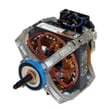
- Worn drum drive parts: squealing, thumping, drum not turning
- Gas heat ignition problems (gas models): tumbles but won’t heat, heat starts then stops
- Clean the lint screen before every load and make sure it seats firmly.
- Confirm the vent is 4-inch metal (rigid or flexible metal), fully extended, and not kinked or crushed.
- Check the outside exhaust hood for strong airflow and a flap that opens freely.
- If the dryer won’t run, verify the door is fully closed and the Start button is pressed firmly.
- If it’s an electric dryer with no heat, check both household fuses or breakers.
| Symptom | Common cause | Example part for this model |
|---|---|---|
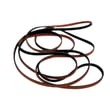
| Drum won’t turn, motor runs or hums | Broken belt | Dryer drum belt 341241 |
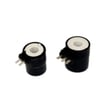
| No heat on gas dryer, intermittent heat | Weak gas valve coils | Dryer valve coil kit 279834 |
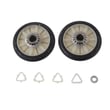
| Loud rumble or scraping | Worn drum support components | Dryer repair kit 4392065 |
Restricted airflow is the root cause behind many dryer complaints because it increases drying time and can overheat the dryer. Your AGD4475TQ0 is designed to use a 4-inch metal vent and needs consistent lint-screen cleaning for safe, efficient drying; see the installation guide for venting requirements.
For replacement parts for AGD4475TQ0, use the parts list for this model or search by model number on Sears PartsDirect.
Last updated: February 2026
Where is the model number on an Admiral dryer?
On the Admiral dryer model AGD4475TQ0, the model and serial number label is located at the top inside the dryer door well (open the door and look along the upper inside frame). For the exact wording and a diagram-style reference, check the owner's manual.
- Open the dryer door fully.
- Look at the top edge inside the door opening (the door well).
- Check the upper left and upper right areas of the frame.
- Wipe dust off the label so the full model number is readable.
- Write down both the model number and serial number for parts lookup.
The model/serial label helps us match the correct parts list and diagrams for your exact dryer configuration.
| You need | Why it matters | Example for this page |
|---|---|---|
| Model number | Identifies the correct parts breakdown | AGD4475TQ0 |
| Serial number | Helps confirm production details for some parts | Found on same label |
Many Admiral dryers share similar styling, but internal components (like the belt, igniter, or motor pulley) can vary by model series. Using the label in the door well prevents ordering the wrong replacement part.
If you’re ordering common wear items for AGD4475TQ0, examples include the dryer drum belt 341241 and the dryer push-to-start switch WP3977456. You can also search by model number on Sears PartsDirect.
Last updated: February 2026
Why is my Admiral dryer heating but not drying?
If your Admiral AGD4475TQ0 dryer heats but clothes stay damp, the dryer is usually not moving enough air through the drum. The most common cause is a restricted exhaust vent or outside hood; the burner can run, but moisture cannot escape, so drying times get very long.
- Clean the lint screen before every load.
- Check the outside exhaust hood for a strong, steady blast of air.
- Inspect the vent run for crushed sections, kinks, or heavy lint buildup.
- Confirm you are using 4-inch metal or flexible metal vent (not plastic or foil).
- Keep the vent path as short and straight as possible.
For vent length, routing, and clearance requirements specific to this dryer, follow the installation guide.
- Run the dryer for 5 to 10 minutes on a heated cycle.
- Go outside and hold your hand under the exhaust hood.
- If airflow feels weak or intermittent, clean the entire exhaust system and correct any kinks or crushed duct.
If airflow is strong and the dryer still “heats but won’t dry,” these issues are common:
- Blower wheel slipping or damaged (air is not being pushed effectively).
- Lint buildup inside the blower housing or lint chute.
- Drum not tumbling correctly (clothes do not lift and fall through the heat).
- Overloading or tightly balled items (blankets, sheets) trapping moisture.
| Symptom | What it points to | Example part for AGD4475TQ0 |
|---|---|---|
| Weak airflow, rattling, poor drying | Blower wheel issue | Dryer blower wheel WP694089 |
| Drum not turning, heat present | Broken belt | Dryer drum belt 341241 |
Proper venting is what turns heat into drying performance. When the vent is restricted, the dryer can overheat the load, waste gas, and still leave clothes damp because humid air cannot exit the cabinet.
For cycle and loading guidance, use the owner's manual. You can also order AGD4475TQ0 replacement parts from the parts list for this model, or search by model number on Sears PartsDirect.
Last updated: February 2026








