Installation guide
 Owner’s manual
 Error Codes

What is the disadvantage of a wall oven?
A wall oven like the KitchenAid KEBK101BSS01 is convenient and ergonomic, but the main disadvantages are higher total cost (appliance plus cabinet cutout and electrical work), more involved installation and service access, and the need for a separate cooktop.
- Higher upfront cost: you typically pay for the wall oven plus a separate cooktop.
- Installation complexity: built-in mounting, cabinet cutout sizing, and dedicated wiring often add labor.
- Harder to service: built-in units can require partial removal from the cabinet for some repairs.
- Less flexibility later: changing brands or sizes can mean cabinet modifications.
- Heat and ventilation considerations: tight cabinetry makes proper clearances and airflow more important.
| Factor | Wall oven | Freestanding range |
|---|---|---|
| Cooking layout | Separate oven and cooktop | All-in-one |
| Install effort | Higher (cabinet + wiring) | Lower (typically slide in) |
| Repair access | Often harder | Often easier |
| Kitchen flexibility | Depends on cutout size | Easier to swap |
Wall ovens are a great fit when you want the oven at a comfortable height or a built-in look, but the built-in design can increase total project cost and make future replacement or repairs more involved. For model-specific installation requirements, we follow the clearances and electrical details in the KEBK101BSS01 installation guide.
- Confirm cabinet cutout dimensions and required clearances before ordering.
- Plan for service access (enough slack in wiring and room to pull the oven if needed).
- Use a dedicated circuit and correct wire connections to prevent overheating issues.
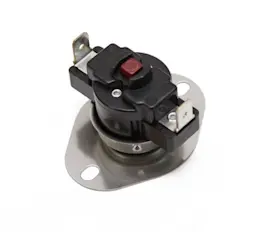
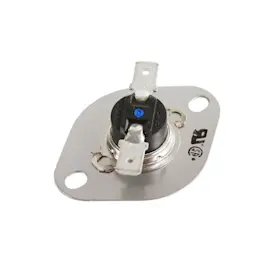
- If the oven overheats or shuts down, check protection devices such as the thermal fuse WPW10545255 during troubleshooting.
Last updated: January 2026
How many years should a wall oven last?
A wall oven typically lasts about 16 years with normal use and basic maintenance. For a KitchenAid wall oven like model KEBK101BSS01, keeping airflow clear, cleaning correctly, and fixing heating or control issues early helps you reach (or exceed) that typical lifespan.
Most electric wall ovens fall into a similar range, assuming average household cooking and no major installation problems.
- Typical lifespan: about 16 years
- Common real-world range: 12 to 20 years
- Biggest lifespan factors: heat stress, self-clean frequency, ventilation, and power quality
| Usage and care level | What we typically see | What shortens life most |
|---|---|---|
| Light to average use + routine care | 16 years (typical) | Neglected cleaning, blocked vents |
| Heavy use (daily baking/roasting) | 12 to 16 years | Overheating, worn heating parts |
| Excellent care + quick repairs | 18 to 20 years | Repeated high-heat self-clean cycles |
Use these practical habits to reduce heat damage and prevent avoidable failures.
- Keep the oven vent area clear so heat can escape properly.
- Wipe spills after the oven cools; baked-on spills hold heat and odors.
- Use self-clean only when needed; high heat is hard on wiring and controls.
- If preheat times suddenly get longer, check the bake system early (a weak element can strain other parts).
- If the oven goes dead after overheating, check protection parts such as the thermal fuse WPW10545255.
Catching these early often turns a “replacement” situation into a straightforward repair.
- Uneven baking or frequent temperature swings
- Slow preheat or no heat in Bake (possible bake element issue)
- Display resets, dead control panel, or intermittent power loss
- Door not closing tightly (heat loss and longer cook times)
- Burning smell or repeated shutdowns after high-heat use
A wall oven that is overheating, underheating, or shutting down can waste energy, cook inconsistently, and accelerate wear on expensive components like the electronic control. Following the care and operating guidance in the KEBK101BSS01 owner’s manual helps protect the oven and improve long-term reliability.
Last updated: January 2026
Are KitchenAid wall ovens good?
KitchenAid wall ovens, including model KEBK101BSS01, are a strong choice for most kitchens because they typically deliver even baking, solid build quality, and a premium look. Overall satisfaction is usually high, with the most common complaints centered on preheat time and temperature accuracy.
When customers say a wall oven is “good,” they usually care about these day-to-day results:
- Consistent baking temperatures across racks
- Reasonable preheat time for bake and convection
- Reliable controls and clear display
- Smooth door operation and sturdy racks
- Easy cleaning (especially after heavy use)
For model-specific features, operating tips, and care recommendations, use the KEBK101BSS01 owner’s manual.
Here’s a practical way to weigh KitchenAid wall ovens for real-world use.
| Category | What owners often like | What can be frustrating |
|---|---|---|
| Cooking performance | Even baking and roasting | Temperature calibration may need checking |
| Convenience | Convection options on many models | Longer preheat on some designs |
| Design | Premium styling and finishes | Fingerprints on stainless surfaces |
| Ownership | Parts support and serviceability | Repairs can be more involved than a range |
Before assuming the oven is “bad,” we recommend a simple check and a few setup steps:
- Verify the oven is fully preheated (wait for the preheat signal, then give it 5 to 10 minutes)
- Test temperature with a quality oven thermometer (center rack, not touching metal)
- Avoid frequent door openings during preheat and baking
- Confirm the oven is installed level and has proper airflow per the KEBK101BSS01 installation guide
- If temperatures swing widely, a failing sensor can be a cause; this model uses a sensor probe WP74008369
A wall oven can bake unevenly or feel “slow” when airflow is restricted, the oven isn’t fully preheated, or the temperature sensor is drifting. Addressing those basics first helps you judge the oven fairly and avoid unnecessary parts replacement.
Last updated: January 2026
How to know if the KitchenAid wall oven thermostat is bad?
If your KitchenAid KEBK101BSS01 wall oven consistently overbakes, underbakes, or swings temperature widely even after you calibrate the oven temperature settings, the temperature-control system is failing. In many cases the root cause is the oven temperature sensor circuit or an overheat safety device, not a simple “thermostat.”
- Confirm the oven is fully preheated before testing (most ovens need 15 to 25 minutes).
- Test temperature stability: place an oven-safe thermometer in the center and record readings every 5 minutes for 20 to 30 minutes; normal cycling is typically about plus or minus 25°F.
- Compare Bake vs. Broil performance; if Broil heats normally but Bake is weak, the bake circuit is the likely issue.
- Check for error codes or beeping; those often point to a sensor or control problem.
- Verify the door closes tightly; heat loss can mimic a control issue.
| Symptom you see | Most common cause | What to inspect next |
|---|---|---|
| Oven overheats or runs away hot | Temperature sensor circuit issue or control issue | Sensor wiring, connectors, control board |
| Oven won’t reach set temp | Weak bake element or sensor reading wrong | Range bake element W11545804, sensor probe |
| Oven shuts off, dead display after overheating | Blown thermal fuse | Thermal fuse WPW10545255 |
| Temperature is erratic (big swings) | Sensor probe out of range or loose connection | Sensor probe WP74008369, harness connections |
Many modern KitchenAid wall ovens regulate temperature using an electronic control and a sensor probe. That means these issues often get blamed on a thermostat when the real failure is one of these:
- A failing sensor probe WP74008369 (reads temperature incorrectly)
- A damaged wire harness or loose connector at the sensor or control
- A weak range bake element W11545804 (heats, but not enough)
- A blown thermal fuse WPW10545255 after an overheat event
- A failing electronic control (user interface or control board)
Accurate temperature control prevents overcooking, protects the oven cavity from overheating, and helps avoid nuisance shutdowns from safety devices like a thermal fuse.
For model-specific calibration steps and any displayed fault codes, follow the KEBK101BSS01 owner’s manual.
Last updated: January 2026