Owner’s manual
 Error Codes


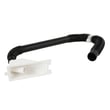
Does my Kenmore top load washer have a filter?
Yes. Your Kenmore top load washer model 11028922790 uses a self-cleaning lint filter that automatically traps lint during wash and deep rinse, then flushes it out through the drain. There is no removable, customer-cleanable filter on this design (see the 11028922790 owner's manual).
On this Kenmore direct-drive style top-load washer, the filter is built into the wash system, so routine cleaning is not part of normal maintenance.
- Lint is captured while the washer agitates and rinses
- The washer flushes the trapped lint out automatically
- You will not find a twist-out or pull-out filter like many front-load washers
- Drain performance depends more on the pump and hose than on a serviceable filter
If you are seeing slow draining, standing water, or lint left on clothes, we focus on the drain path and agitation components.
- Check the drain hose for kinks or a crushed section
- Make sure the standpipe is not backing up
- Look for small items (socks, coins) restricting the pump inlet
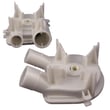
- If the washer will not drain, the washer drain pump WP3363394 is a common fix
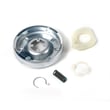
- If agitation is weak and lint is not moving well, worn agitator dog 80040 can contribute
| Symptom | Most likely area to check | Typical next step |
|---|---|---|
| Water won’t drain | Drain pump, drain hose | Inspect hose, then test/replace pump |
| Drains slowly | Hose restriction, partial pump blockage | Clear restriction, verify strong flow |
| Lint on clothes | Overloading, detergent, weak agitation | Reduce load size, verify agitation |
| Won’t spin and won’t drain | Lid switch circuit | Check lid switch operation |
Because the lint filter is self-cleaning, “filter cleaning” usually does not solve performance issues on model 11028922790. Checking the drain hose, pump, and agitator wear points gets you to the real cause faster.
Last updated: February 2026
How to force a Kenmore Elite washer to drain?
On Kenmore washer model 11028922790, the fastest way to force a drain is to run a Spin cycle (or Rinse and Spin) so the drain pump runs; if the tub is full and the washer will not start, you’ll need to manually lower the water level first, then correct the drain restriction.
- Set the timer to SPIN and pull the knob out to start; this runs the drain pump and then spins.
- If you want water movement before spin, set the timer to a RINSE setting first, then move to SPIN.
- If the washer will not drain at all, check for a kinked or clogged drain hose and correct the hose routing.
- If the washer drains slowly or leaves water behind, inspect the pump area for debris and consider replacing the pump.
- Set RINSE OPTIONS to ONE RINSE.
- Set SPEEDS to HEAVY DUTY (fast spin) or EXTRA DELICATE (slow spin).
- Turn the cycle selector (timer) to a SPIN setting.
- Pull the timer knob out to start.
These control steps match the operating instructions in the 11028922790 owner's manual.
A bad drain hose setup can cause siphoning, slow drain, or repeated drain problems.
- Keep the hooked end on the hose; do not straighten it.
- Do not force excess hose down into the standpipe.
- Rotate the hook to remove kinks.
- Secure the hose to the standpipe or laundry tub so it cannot slip out.
For the correct connection and securing method, follow the 11028922790 owner's manual.
| Symptom | Most common cause | What we replace most often |
|---|---|---|
| Hums but won’t drain | Pump jammed or failing | Washer drain pump WP3363394 |
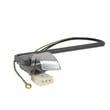
| Won’t drain and won’t spin | Lid switch not closing | Washer lid switch WP3949238 |
| Drains slowly | Kinked hose or partial clog | Reroute hose; clear obstruction |
Forcing a drain the right way protects the drive system, prevents overflow, and avoids backflow into the tub. A proper drain hose setup also reduces leaks and repeat clogs.
Last updated: February 2026
How to identify a Kenmore washer model?
Your Kenmore washer model number is printed on the model and serial number plate; on Kenmore model 11028922790, that plate is the reference you use anytime you order parts or request service. Use the exact model number (and serial number) from the plate to match the correct diagrams and replacement parts.
Most Kenmore washers place the model and serial number plate in one of these spots:
- Under the lid near the tub opening (common on top-load washers)
- Inside the door opening on the cabinet frame (common on front-load washers)
- On the back panel near the power cord entry
- Along the side of the cabinet near the control console
For model-specific labeling notes and how the plate is referenced in documentation, use the 11028922790 owner's manual.
When you find the plate, copy the model number exactly as shown.
- Use all digits; do not drop leading zeros
- Keep any dashes or extra characters if they appear
- Record the serial number too; it helps confirm production details
- Take a clear photo so you can zoom in later
| Item | What to capture | Why it helps |
|---|---|---|
| Model number | Full model (example: 11028922790) | Ensures correct part fit |
| Serial number | Full serial from the same plate | Helps match revisions |
| Brand | Kenmore | Confirms product family |
Kenmore model numbers control which parts list applies; even small differences can change the correct lid switch, drain pump, or agitator components. Using the exact model number prevents ordering the wrong replacement part and avoids repeat repairs.
Last updated: February 2026
What is a suds saver?
A suds saver is a washer setup that lets you drain used, soapy wash water into a separate tub so you can reuse it for the next load. It was designed to save water and detergent, and it is typically found on older top-load washers.
In a classic suds saver arrangement, the washer diverts the drain water to a nearby laundry tub instead of sending it straight to the household drain.
- Wash Load 1 normally (often whites first)
- Drain the sudsy wash water into a separate tub
- Refill the washer using that saved suds water for the next load
- Finish with a fresh rinse as usual
- Repeat until the suds are too weak to clean well
Kenmore washer model 11028922790 uses standard wash controls like water level and water temperature selection; those settings help you manage water use on small or medium loads. For the exact control functions and cycle behavior on this model, follow the 11028922790 owner's manual.
Even without a suds saver, you can reduce water and improve cleaning by using the built-in controls correctly:
| Control | What it changes | Best practice |
|---|---|---|
| Water level | How much water fills the tub | Choose the smallest level where clothes still move freely |
| Water temperature | Cleaning power and fabric care | Use hot for heavy soil, warm for most loads, cold for delicate colors |
| Rinse options/speeds | Rinse performance and wrinkling | Slower spins help reduce wrinkling on delicate items |
Reusing wash water can reduce water consumption, but it can also redeposit soil and dyes as the water gets dirtier. Using the correct water level and temperature on your Kenmore washer helps you get better cleaning results without relying on reused suds.
Last updated: February 2026
What is the average lifespan of a Kenmore washer?
Most Kenmore washers average 10 to 15 years of service life with normal household use and basic maintenance. For Kenmore washer model 11028922790, keeping loads balanced, avoiding overloading, and following the care steps in the 11028922790 owner's manual helps you reach the upper end of that range.
A washer’s life is mostly driven by usage and wear on drive and drain components.
- Light use (1 to 3 loads/week): often closer to 15 years
- Average use (4 to 7 loads/week): typically 10 to 15 years
- Heavy use (multiple loads/day): often closer to 8 to 12 years
- Hard water and frequent hot washes: can shorten seal and valve life
- Chronic overloading: accelerates wear on the drive system and suspension
On this style of Kenmore top-load washer, these parts commonly drive “repair vs. replace” decisions:
| Symptom | Common wear area | Example part for this model |
|---|---|---|
| Won’t spin or stops when lid opens | Lid safety circuit | Washer lid switch WP3949238 |
| Won’t drain or drains slowly | Drain pump or hose restriction | Washer drain pump WP3363394 |
| Agitates poorly or “slips” | Agitator drive components | Agitator dog 80040 |
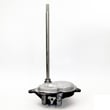
| No agitation/spin but motor runs | Motor-to-transmission coupling | Coupling 285753A |
These steps reduce strain on the gearcase, clutch, and tub system.
- Load items loosely; do not wrap items around the agitator
- Keep loads balanced to reduce vibration and suspension wear
- Use the right amount of detergent; excess suds can affect draining and rinsing
- Periodically inspect fill hoses and the drain hose for cracking or kinks
- If you use fabric softener, dilute it as directed to reduce dispenser residue
A washer that is near the end of its expected lifespan can still be a great candidate for repair when the issue is a single, high-wear part (like a lid switch, drain pump, or coupling). Knowing the typical 10 to 15 year range helps us judge whether a repair restores reliable operation or if multiple age-related failures are likely.
Last updated: February 2026