Owner’s manual


How to read Kenmore model numbers?
Kenmore model numbers are read left to right: the first three digits identify the original manufacturer, and the remaining digits identify the specific product series and configuration. For your Kenmore washer model 11026914690, the 110 prefix indicates a Whirlpool-built washer; use the full number when matching parts and manuals like the owner's manual.
Where to find the model number on your washer
We recommend locating the model and serial number plate before ordering parts or troubleshooting.
- Look under the washer lid around the tub opening
- Check the back panel of the cabinet
- Look near the control console area (depending on design)
- Record both the model number and serial number for future reference
How to interpret the digits (quick guide)
The prefix is the most important part for identifying who built the appliance; the rest narrows down the exact design.
| Model number section | Example from 11026914690 | What it tells you |
|---|---|---|
| Manufacturer prefix | 110 | Who built the Kenmore appliance (Whirlpool-built) |
| Base model + variation | 26914690 | The exact washer design, features, and production variation |
Why it matters for parts and repairs
Kenmore used multiple manufacturers over the years, so the prefix helps ensure you get compatible parts for the drive system, water inlet, and drain components. Using the complete model number also helps you pull the correct diagrams and procedures in the owner's manual.
Common examples of parts that depend on the exact model
Even small model variations can change fitment for mechanical and water-handling parts.
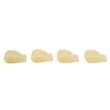
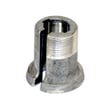
- Agitation components such as the agitator dog 80040
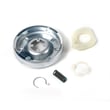
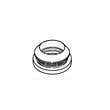
- Drive system parts such as the coupling 285753A
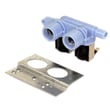
- Water fill components such as the inlet valve 285805
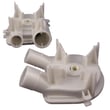
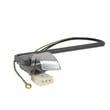
- Drain components such as the washer drain pump WP3363394
Last updated: February 2026
What does HF error mean?
On Kenmore washer model 11026914690, an HF error means the washer is detecting a water fill (high fill or fill fault) problem. In most cases, the washer is not sensing the expected water flow into the tub, so it stops the cycle to prevent poor washing or overflow.
What to check first (no parts needed)
- Make sure both hot and cold water supply valves are fully open.
- Check for kinked inlet hoses behind the washer.
- Remove the hoses and clean the inlet screen filters at the washer’s water valve ports.
- Confirm the drain hose is installed correctly; a drain hose that is too low or sealed into the standpipe can cause siphoning and refill issues.
- Try a fresh cycle after restoring water flow and power.
Common causes and likely fixes
| What’s happening | Most common cause | What usually fixes it |
|---|---|---|
| Washer fills slowly or not at all | Clogged inlet screens | Clean screens; restore water pressure |
| Water turns on but fill is erratic | Hose kink or restricted supply | Straighten hose; verify strong flow at the faucet |
| Washer keeps trying to fill | Drain hose siphoning | Correct drain hose height and air gap |
| No water enters on any temp | Failed water inlet valve | Replace the inlet valve 285805 |
When a part replacement is the right move
If you have strong water pressure at the faucets, hoses are clear, and the inlet screens are clean but the washer still throws HF, the water valve can be sticking or electrically failing. For this model, the correct replacement is the inlet valve 285805.
Why it matters
HF is a fill-sensing protection. Fixing the water supply, hose routing, or inlet valve restores proper water level control so the washer can agitate, rinse, and spin normally.
For model-specific operating and installation checks (including hose routing and basic troubleshooting), use the owner's manual.
Last updated: February 2026
How to hard reset a Kenmore washing machine?
For Kenmore washer model 11026914690, the most reliable “hard reset” is a power reset: unplug the washer (or switch off the breaker) for 2 minutes, then restore power. This clears a temporary control or timer hang and is the first step before deeper troubleshooting.
Hard reset steps (power reset)
- Turn the cycle selector knob to Off.
- Press the knob in to stop the washer if it is running (this model uses a timer-style cycle selector).
- Unplug the washer (or turn off the circuit breaker).
- Wait 2 minutes.
- Restore power.
- Select a cycle and pull the timer knob out to restart.
If the washer still will not start or finish a cycle
These checks fix the most common “stuck” symptoms on timer-controlled Kenmore top-load washers:
- Make sure the lid is fully closed (an open lid can stop spin and drain).
- Reduce detergent if you see heavy suds; too much detergent can prevent proper drain and spin.
- Check the drain hose for kinks or clogs; a restriction can cause “won’t drain/won’t spin” symptoms.
- Confirm the drain hose height is not too high (many washers will not drain well if the hose is routed too high).
- If agitation is weak or intermittent, inspect common drive items like the agitator dog 80040 and coupling 285753A.
What “reset” means on this model
This washer uses a mechanical timer-style cycle selector, so “reset” usually means stopping and restarting the timer, plus removing power to clear a temporary stall.
| Reset method | What it does | When to use it |
|---|---|---|
| Power reset (unplug 2 minutes) | Clears a temporary hang | Washer unresponsive, cycle stuck |
| Stop/restart with timer knob | Pauses then resumes the cycle | You need to interrupt a cycle |
| Reselect cycle from Off | Repositions the timer | Wrong cycle selected, timer out of sync |
Why it matters
A quick hard reset prevents unnecessary part replacement when the issue is only a temporary control stall. If symptoms return after a reset, it points to a repeatable problem such as draining restrictions, oversudsing, or worn drive components.
For model-specific operating steps (including stopping and restarting with the timer knob), use the owner's manual.
Last updated: February 2026
How many cubic feet is a Kenmore Model 11026914690 washer?
The 11026914690 owner's manual for this Kenmore washer does not list a cubic-foot tub capacity. For washers in this 3-speed, agitator-style design, capacity is typically about 3.0 to 3.5 cu. ft.; measuring your basket gives the most accurate number.
How to measure tub capacity (most accurate)
Use the inside of the wash basket (not the outer tub).
- Unplug the washer for safety.
- Measure the inside diameter of the basket (in inches).
- Measure the usable depth from the basket bottom to the top rim (in inches).
- Convert inches to feet (divide by 12).
- Calculate: Capacity (cu. ft.) = π × (radius in feet)² × (depth in feet).
Typical capacity range for this washer style
This model is a traditional top-load washer with an agitator; most units of this type fall into a narrow range.
| Washer style | Typical capacity (cu. ft.) | Common label you may see |
|---|---|---|
| Standard agitator top-load | 3.0 to 3.3 | Standard capacity |
| Large agitator top-load | 3.3 to 3.5 | Super capacity |
Why it matters
Knowing capacity helps prevent overloading. Overloading reduces agitation and rinse performance and increases out-of-balance spinning, which can strain the drive system and suspension.
Parts that affect how well it handles larger loads
If the washer struggles with heavy loads, these common wear parts are worth checking.
- Washer suspension spring WP63907 to control tub movement during spin
- Clutch 285785 to help the basket reach full spin speed
- Coupling 285753A to transfer power from the motor to the drive system
Last updated: February 2026
Is it worth repairing a Kenmore washing machine?
Yes; repairing a Kenmore washer is worth it when the problem is a common wear item and the rest of the machine is in good shape. For Kenmore model 11026914690, repairs like a pump, coupling, or agitator parts typically restore reliable washing for far less than replacement.
Quick way to decide (repair vs. replace)
- Repair when the issue is isolated (no repeated leaks, no severe tub damage).
- Repair when the fix is a typical wear part (pump, coupling, clutch, agitator components).
- Replace when multiple major systems fail at once (drive plus leaks plus electrical problems).
- Replace when the washer has persistent out-of-balance issues even after leveling and suspension checks.
Common, cost-effective repairs on model 11026914690
| Symptom | Often-related part | What you notice |
|---|---|---|
| Won’t drain or leaves water | Washer drain pump WP3363394 | Hums, slow drain, water left in tub |
| Won’t spin/agitate, motor runs | Coupling 285753A | Motor sound but basket does not move |
| Agitates poorly or “slips” | Agitator dog 80040 | Clothes barely move during wash |
| Weak spin or intermittent spin | Clutch 285785 | Damp loads, slow ramp-up to spin |
Why setup matters
An unlevel washer can vibrate, bang, and spin poorly, which looks like a parts failure. Our owner's manual walks through leveling and basic operating checks that prevent unnecessary part replacement.
Cost rule we use
- Repair when the total repair cost is under about 50% of a comparable new washer.
- Replace when the repair requires multiple high-cost assemblies (for example, drive motor plus basket/tub components).
Last updated: February 2026