 Owner’s manual



How to tell AC tonnage by model number?
For most central AC and heat pump outdoor units, you can estimate tonnage from the model number by finding the capacity code (often 18, 24, 30, 36, 42, 48, 60) and dividing by 12. For Goodman model CK42-1, the “42” typically indicates about 42,000 BTU/hr, which is 3.5 tons (42 ÷ 12 = 3.5). For the exact rated capacity, confirm on the unit data plate and in the owner's manual.
Quick tonnage math (BTU to tons)
Most manufacturers encode nominal capacity in thousands of BTU/hr.
- Find the two-digit capacity number in the model number or on the rating label
- Treat it as “thousands of BTU/hr” (example: 42 = 42,000 BTU/hr)
- Divide by 12 to convert BTU (thousands) to tons
- Round to the nearest common size (2, 2.5, 3, 3.5, 4, 5 tons)
- If the label lists BTU directly, use that number instead of the model code
Common capacity codes and what they mean
| Model code | Approx. BTU/hr | Approx. tons |
|---|---|---|
| 24 | 24,000 | 2.0 |
| 30 | 30,000 | 2.5 |
| 36 | 36,000 | 3.0 |
| 42 | 42,000 | 3.5 |
| 48 | 48,000 | 4.0 |
| 60 | 60,000 | 5.0 |
Where to confirm tonnage on the unit
Even when the model number includes a capacity code, we recommend verifying on the outdoor unit’s data plate because exact ratings can vary by configuration.
- Rating label on the condenser cabinet (side panel)
- AHRI-style rating information (if listed)
- Electrical data plate (often near the service panel)
- Specifications section in the owner's manual
Why it matters
Tonnage affects comfort and efficiency. A mismatched size can cause short cycling, humidity problems, higher energy use, and can also lead you to order the wrong parts for your Goodman CK42-1 system.
Last updated: February 2026
What are common problems with Goodman air conditioners?
Common problems we see with Goodman air conditioners (including the CK42-1 outdoor unit) are no cooling or weak cooling, poor airflow, unusual noises, and electrical no-start issues. Many are caused by maintenance items (dirty coils, restricted airflow) or simple electrical problems, but some point to failing components.
Most common symptoms and what they usually mean
- Not cooling or cooling weakly: dirty condenser coil, low refrigerant charge, failing compressor, or outdoor fan problems
- Outdoor unit will not turn on: tripped breaker, blown fuse, bad disconnect, thermostat/control issue, failed capacitor or contactor
- Short cycling (turns on and off quickly): dirty coil, airflow restriction, oversized system, or control/electrical issues
- Buzzing, clicking, or humming: contactor chatter, capacitor strain, loose wiring, or failing motor
- Ice on lines or coil: airflow restriction (filter/duct/indoor coil) or low refrigerant
Quick checks you can do safely
Turn off power at the breaker and outdoor disconnect before opening panels.
- Confirm the thermostat is set to Cool and the setpoint is below room temperature
- Check the breaker and any fuses in the disconnect (replace only with the same rating)
- Clear debris and maintain at least 2 feet of clearance around the outdoor unit
- Look for obvious wire damage or loose connections (do not touch bare conductors)
- If the unit runs but does not cool, schedule service to check refrigerant pressures and electrical components
Parts that commonly contribute to these issues
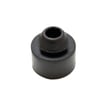
On the CK42-1, vibration and wire routing can also create intermittent electrical problems over time. A small but important item is the grommet, which helps protect wires or tubing where they pass through sheet metal.
| Problem area | What you may notice | Typical fix category |
|---|---|---|
| Airflow/heat transfer | weak cooling, high head pressure | cleaning, airflow correction |
| Electrical start circuit | hums, trips breaker, will not start | capacitor/contactor/wiring diagnosis |
| Refrigerant circuit | poor cooling, icing | leak repair and recharge |
If you are replacing a worn or missing wire pass-through protector, use the model-correct part such as the grommet B1339530.
Why it matters
Catching airflow and electrical issues early helps prevent compressor damage, reduces nuisance breaker trips, and keeps your Goodman system running efficiently during peak cooling season.
For model-specific wiring diagrams, component locations, and service notes, use the owner's manual.
Last updated: February 2026
What is the most expensive part to replace on an AC unit?
On most central AC and heat pump outdoor units (including the Goodman CK42-1), the compressor is typically the most expensive single part to replace because it is the sealed, high-labor component that pumps refrigerant through the system. The condenser coil and major control components can also be high-cost repairs. See the owner's manual for model-specific service and electrical details.
Most expensive AC parts (typical cost drivers)
These are the parts that most often drive the highest total repair bill (part plus labor):
- Compressor: highest part cost and usually requires refrigerant recovery, brazing, evacuation, and recharge
- Condenser coil (outdoor coil): expensive part; replacement often involves refrigerant work
- Evaporator coil (indoor coil): can be similarly expensive depending on system match and access
- Control board or defrost board (heat pump): can be costly and sometimes model-specific
- Fan motor (condenser fan): usually less than a compressor, but can add up with diagnostics and labor
Quick comparison: what usually makes it “expensive”
| Part | Why it costs more | Common symptom |
|---|---|---|
| Compressor | Sealed system labor plus refrigerant handling | Hums, trips breaker, no cooling/heating |
| Condenser coil | Large component plus sealed system labor | Poor cooling, high head pressure, leaks |
| Control board | Model-specific electronics and diagnostics | Random shutdowns, no start, error behavior |
| Fan motor | Moderate part cost plus service call | Outdoor fan not spinning, overheating |
How to tell if you are facing a compressor-level repair
We use these checks to separate a compressor issue from simpler problems (capacitor, contactor, wiring):
- Outdoor unit has power but compressor will not start (or starts then stops)
- Breaker trips when the compressor tries to run
- Compressor is extremely hot and the unit short-cycles
- Measured amp draw is abnormal compared to the nameplate rating
- Visual signs of burned terminals or damaged wiring at the compressor connections
For safe electrical testing steps, use how to use a multimeter to test electrical parts video.
Why it matters
The compressor is the “heart” of the outdoor unit; when it fails, the repair often includes the most labor-intensive steps (sealed-system work). That is why compressor replacement is commonly the top-cost repair compared with items like capacitors, contactors, or a grommet such as the grommet B1339530.
Last updated: February 2026
What's the average lifespan of a Goodman AC?
A Goodman air conditioner like model CK42-1 typically lasts 10 to 15 years. With consistent maintenance (clean coils, correct airflow, and proper electrical protection), it’s common to reach the high end of that range and avoid early compressor or fan-motor failures.
Typical lifespan ranges (what to expect)
Most central AC and heat pump outdoor units fall into these practical ranges:
| Condition | Typical lifespan | What usually shortens life |
|---|---|---|
| Minimal maintenance | 8 to 12 years | Dirty coils, low airflow, electrical stress |
| Normal maintenance | 10 to 15 years | Wear on capacitor, contactor, fan motor |
| Excellent maintenance | 15 to 20 years | Mostly age-related refrigerant and compressor wear |
Maintenance that most improves lifespan
These actions protect the compressor, condenser fan, and electrical controls:
- Replace or clean the indoor air filter on schedule to keep airflow correct.
- Keep the outdoor condenser coil clean and the cabinet free of leaves and lint.
- Maintain at least 18 to 24 inches of clearance around the outdoor unit.
- Confirm the condenser fan runs smoothly; unusual noise often signals bearing wear.
- Tighten and inspect electrical connections during seasonal service.
- Use a surge protector or proper disconnect protection to reduce electrical damage.
Signs your CK42-1 is nearing end-of-life
A single symptom does not always mean replacement, but patterns matter:
- Rising electric bills with no change in thermostat settings
- Longer run times and weaker cooling on hot days
- Frequent hard starts, buzzing, or repeated breaker trips
- Oil staining or recurring refrigerant leaks
- Repeated repairs to major components (compressor, coil, fan motor)
Why it matters
Lifespan is mostly about protecting the compressor and keeping heat transfer efficient. When coils are dirty or airflow is restricted, pressures rise, run time increases, and major components wear out faster.
For model-specific maintenance intervals and safety steps, follow the owner's manual.
Last updated: February 2026