 Installation guide
 Owner’s manual
 Error Codes


Is the Bosch E18 error related to water supply?
Yes. On a Bosch SHE3AR56UC dishwasher, the E18 error is a water supply and fill issue (low water level), meaning the dishwasher is not getting enough water during the fill portion of the cycle. Use the checks below and confirm the exact steps in the owner's manual.
What to check first (most common causes)
- Make sure the water supply valve under the sink is fully open.
- Check the inlet supply hose for kinks, crushing, or sharp bends.
- Verify the hot water to the sink runs normally (weak house water pressure can trigger low-fill symptoms).
- Clean the small inlet screen/filter where the supply line connects (sediment can restrict flow).
- Power reset: turn the dishwasher off, wait 1 minute, then restart a cycle.
Parts that commonly relate to low-fill symptoms
If the supply line and inlet screen are clear but E18 returns, a fill component can be sticking or restricted.
| Symptom you notice | Likely area to inspect | Example part for this model |
|---|---|---|
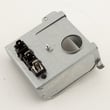
| No water enters at all | Fill valve not opening, wiring, control | Dishwasher water inlet valve 00622058 |
| Fills slowly, then errors | Restricted inlet screen, weak supply, valve issue | Dishwasher water inlet valve 00622058 |
| Fills but washes poorly | Low fill level, sensing issue | Dishwasher turbidity sensor 00611323 |
Why it matters
A true low-water-level condition can cause poor cleaning, unusual pump noise (running with too little water), and repeated cycle interruptions. Fixing the water supply restriction early also helps prevent strain on the circulation system.
Helpful DIY reference
For related fault patterns and what they mean, use our Bosch dishwasher error codes guide.
Last updated: February 2026
Is it worth getting an 18 inch dishwasher?
Yes, an 18-inch dishwasher is worth it when you need real dishwashing performance but do not have space for a standard 24-inch unit. For a compact kitchen, apartment, or small household, a Bosch dishwasher like model SHE3AR56UC can be a strong fit, with the main tradeoff being fewer place settings and tighter loading.
When an 18-inch dishwasher makes the most sense
- Your cabinet opening is sized for an 18-inch built-in dishwasher
- You run smaller loads more often (1 to 3 people)
- You want a built-in look but need to save floor and cabinet space
- You are replacing an older compact dishwasher and want better efficiency
- You rarely wash oversized pots, sheet pans, or large platters
What you give up vs a 24-inch dishwasher
Capacity and loading flexibility are the biggest differences. Cleaning results can still be excellent if you load correctly and keep filters and spray paths clear.
| Feature | 18-inch dishwasher | 24-inch dishwasher |
|---|---|---|
| Typical capacity | Smaller (fewer place settings) | Larger (more place settings) |
| Best for | Small households, tight kitchens | Families, heavy daily dish volume |
| Loading large items | More challenging | Easier |
| Space required | Less | More |
What to check before you decide
Use these checks to avoid fit and performance surprises:
- Cutout and depth: Confirm the cabinet opening width, height, and depth.
- Plumbing and electrical: Verify water supply, drain routing, and power match your setup.
- Cycle time expectations: Many modern dishwashers run longer cycles to improve efficiency.
- Noise level: Compact units can still be quiet, but compare specs if noise matters.
For model-specific installation clearances and hookup requirements, follow the installation guide.
Why it matters
If your kitchen only supports an 18-inch opening, choosing a compact dishwasher is often the difference between having a dishwasher that fits correctly and one that cannot be installed safely or level. A correct fit also helps prevent leaks, door alignment issues, and poor draining.
Last updated: February 2026
Which brand of dishwasher has the least problems?
Bosch is consistently one of the dishwasher brands with the fewest reported problems, and it is a strong reliability pick if you want quiet operation and solid wash performance. For your Bosch dishwasher model SHE3AR56UC, we recommend using the care, loading, and cycle guidance in the owner's manual to help prevent the most common service issues.
What “least problems” usually means
Reliability is typically driven by a few repeatable factors: how well the unit drains, fills, heats, and how often door and rack hardware needs service.
Common low-problem traits to look for:
- Strong filtration and consistent wash circulation
- Reliable draining (pump and hose design, check valve performance)
- Good door sealing and latch alignment
- Simple, consistent control operation
- Easy-to-maintain racks and rollers
Brand reliability: practical comparison
These are general, real-world patterns we see across dishwashers (not a guarantee for every model).
| Brand | Typical strengths | Common service themes |
|---|---|---|
| Bosch | Quiet, efficient, strong cleaning | Drain/fill issues from clogs, occasional sensor or latch problems |
| Miele | Long service life, premium build | Higher part cost, fewer DIY-friendly repairs |
| KitchenAid | Strong wash power, good racks | Pump and wash system wear over time |
| Whirlpool/Maytag | Value, widely serviceable | Door/latch, pump, and dispenser wear on some models |
| LG | Feature-rich, good cleaning | Electronics and drainage sensitivity on some installs |
How to reduce problems on your Bosch SHE3AR56UC
A reliable brand still needs the right setup and maintenance.
- Clean the filter area regularly and remove debris that can restrict water flow
- Use the correct detergent amount; too much can cause residue and poor rinsing
- Run hot water at the sink before starting to improve wash temperature
- Avoid blocking spray arms with tall items or overcrowded racks
- If you see standing water, check for a kinked drain hose and sink/disposer clogs
Why it matters
Most “dishwasher problems” are caused by installation and maintenance issues (drain routing, water supply, loading, and filtration), not just the brand name. Following the installation guide and the how to clean and maintain your dishwasher steps helps prevent repeat failures like not draining, not cleaning, and leaking.
Last updated: February 2026
What's the most common problem with a Bosch dishwasher?
The most common Bosch dishwasher complaint we see on models like the Bosch SHE3AR56UC is a drain-related issue: water left in the bottom from a clogged filter area, restricted drain hose, or a weak drain pump. Leaks at the door seal are another frequent problem.
Most common symptoms and what they usually mean
- Standing water after the cycle: filter area clogged, drain hose restriction, check valve sticking, or drain pump problem
- Bad odors: food debris trapped in the filter/sump area or standing water from slow draining
- Leaks at the front corners: door seal not sealing, door not closing fully, or tub not level
- Won’t start or stops mid-cycle: door not latching, control not sensing a closed door
- Poor cleaning: spray arms blocked, overloading, or heavy soil not being filtered out
For model-specific operating and care steps, use the owner's manual.
Quick checks we recommend first (before replacing parts)
- Cancel and drain the cycle, then check for water left in the sump.
- Remove and clean the filter area (food, labels, glass fragments).
- Inspect the drain hose routing for kinks and confirm it has a proper high loop.
- Verify the door closes firmly and the tub is level (a tilted tub can encourage leaks).
- Run a hot wash cycle after cleaning to confirm the issue is resolved.
Parts that commonly fix the “most common” problems
| Problem you notice | Common fix | Part that may be involved |
|---|---|---|
| Not draining | Clear restriction, verify hose routing | Dishwasher drain hose 00668108 |
| Not draining (pump hums or is weak) | Replace drain pump | Dishwasher drain pump 00611332 |
| Water backing up after draining | Replace sticking check valve | Dishwasher check valve 00611320 |
| Leaking at the door | Replace worn door seal | Dishwasher door seal 00645141 |
Why it matters
Drain problems can lead to odors, poor cleaning, and repeated cycle interruptions. Leak issues can damage surrounding cabinets and flooring, so it is best to address them as soon as you see water at the front of the unit.
For fault codes that point you to a specific system (drain, fill, heat), use Bosch dishwasher error codes.
Last updated: February 2026





