Owner’s manual
 Error Codes


What is the average lifespan of a Kenmore Elite refrigerator?
Most Kenmore Elite refrigerators average 10 to 15 years of service life with normal household use. For the Kenmore Elite side-by-side refrigerator model 10657713703, regular maintenance (airflow, door sealing, and water system care) is what most often determines whether it lands closer to 10 years or closer to 15.
What affects lifespan the most
- Condenser coil cleanliness: dirty coils make the compressor run hotter and longer.
- Door gasket condition: air leaks cause longer run times and frost issues.
- Air circulation: blocked vents reduce cooling performance (the manual calls out ensuring proper air circulation).
- Defrost system health: a weak heater or thermostat can lead to ice buildup and warm temps.
- Water and ice system upkeep: timely filter changes help protect the dispenser and ice maker.
Typical lifespan by major system
| System | Typical lifespan impact | What you may notice first |
|---|---|---|
| Sealed refrigeration system (compressor, evaporator, condenser) | Biggest driver of end-of-life decisions | Warm refrigerator, long run times, clicking, poor cooling |
| Defrost system | Medium | Frost on freezer back wall, fan noise changes, warming |
| Ice maker and dispenser | Medium | No ice, small cubes, dispenser not dispensing |
| Door sealing and hinges | Medium | Moisture, frost, doors not closing smoothly |
Maintenance that helps you reach the high end (15 years)
- Vacuum dust from the condenser area regularly (often every 6 to 12 months).
- Keep food packages from blocking interior vents so air can circulate.
- Clean and inspect door gaskets; replace if torn, warped, or not sealing.
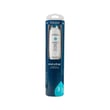
- Replace the water filter on schedule; for this model’s base grille filter, a common replacement is the genuine Kenmore refrigerator water filter EDR3RXD1.
- Follow the water system setup and flushing steps in the 10657713703 owner's manual after filter changes or water line work.
Why it matters
A side-by-side refrigerator can keep running for years with minor part replacements, but poor airflow, weak door sealing, and neglected cleaning can shorten compressor life and increase energy use long before the refrigerator fully fails.
Last updated: January 2026
What year did the Kenmore Elite come out?
Kenmore Elite is a premium Kenmore product line that began in the late 1990s; your specific Kenmore Elite side-by-side refrigerator model 10657713703 was manufactured in a particular year based on its serial number, not the Elite name itself. For the exact build date, use the serial number decoding steps in the 10657713703 owner's manual.
How to find the manufacture year for model 10657713703
We use the refrigerator’s serial number (not the model number) to determine the build week and year.
- Look for the model and serial tag inside the fresh food compartment (often on a side wall or ceiling area).
- If you do not see it inside, check the cabinet frame near the door hinge area.
- Write down the full serial number exactly as shown.
- Use the serial number format guidance in the manual to decode the date.
- If the tag is damaged or missing, a technician can often identify the production range using the unit’s component IDs.
Quick timeline: “Kenmore Elite” vs your refrigerator’s age
The Elite name tells you the product tier; the serial number tells you the actual year it was built.
| What you are trying to date | What to use | What it tells you |
|---|---|---|
| Kenmore Elite product line | Brand history | When the Elite line was introduced |
| Model 10657713703 | Model number | The design family and configuration |
| Your exact refrigerator | Serial number | The specific manufacture week and year |
Why it matters
Knowing the manufacture year helps us match the correct replacement parts and revisions for your refrigerator, especially for items that change over time such as the ice maker, control board, and water filtration components.
If you are also trying to match the correct water filter for this refrigerator, the base grille filter used on many Kenmore Elite side-by-side models is commonly referenced as part #9030 in the manual; the matching replacement on this model’s parts list is the genuine Kenmore refrigerator water filter EDR3RXD1.
Last updated: January 2026
How many cubic feet is my Kenmore Elite refrigerator?
For Kenmore Elite refrigerator model 10657713703, the exact cubic-foot capacity is listed on the model’s rating label and in the specifications section of the 10657713703 owner's manual. Use those specs to match the correct storage capacity for your kitchen layout and food needs.
How to find the capacity on the refrigerator
Look for the model and serial tag (rating label) and then match the capacity to the specs.
- Check the inside wall of the fresh food compartment (often near the top or side wall)
- Check the inside wall of the freezer compartment
- Check behind the base grille area (on some side-by-side designs)
- Write down the full model number 10657713703 and the serial number
- Compare the listed “total capacity” to the manual specifications
What “cubic feet” means (and what it includes)
Cubic feet is the total interior volume of the refrigerator and freezer compartments combined. It is not the same as usable shelf space because bins, shelves, the ice maker, and air ducts reduce usable room.
| Capacity term | What it usually refers to | Why it can look different |
|---|---|---|
| Total capacity | Refrigerator + freezer volume | Includes areas you cannot fully pack |
| Refrigerator capacity | Fresh food section only | Shelves and ducts reduce usable space |
| Freezer capacity | Freezer section only | Ice maker and bins reduce usable space |
Quick checks if you are comparing to another refrigerator
When you are shopping or comparing specs, these details help you match “like for like.”
- Standard-depth vs. counter-depth changes usable space and exterior size
- In-door ice and water typically reduces door bin space
- A clogged water filter can reduce dispenser flow but does not change capacity; replace the genuine Kenmore refrigerator water filter EDR3RXD1 on schedule
Why it matters
Knowing the correct cubic-foot capacity helps you compare refrigerators accurately, plan shelf and bin organization, and avoid buying accessories (like bins and filters) that do not match your exact Kenmore Elite configuration.
Last updated: January 2026
What are the common problems with Kenmore Elite refrigerators?
Common problems on the Kenmore Elite side-by-side refrigerator model 10657713703 include weak or warm cooling, frost buildup or moisture issues, and ice or water dispenser troubles. Many fixes start with basic airflow, cleaning, and checking the defrost and fan systems; our 10657713703 owner's manual covers normal operation and troubleshooting.
Most common symptoms and what they usually point to
- Not cooling well: dirty condenser coils, restricted airflow, evaporator fan issue, or sealed-system trouble
- Frost or ice buildup (freezer back wall, vents): defrost heater, defrost thermostat, or door seal problems
- Water leaking (inside or under unit): clogged defrost drain, loose water line, or filter housing issues
- No ice or slow ice production: water supply problem, clogged filter, ice maker fault, or freezer too warm
- Noisy operation: normal operating sounds, fan blade rubbing ice, or compressor start components
Quick checks we recommend before replacing parts
- Confirm airflow: do not block vents; allow space for air circulation.
- Clean condenser coils: dust buildup commonly causes warm temps and long run times.
- Check door sealing: look for gaps, torn gasket, or doors not closing fully.
- Verify freezer temperature: ice makers typically need the freezer cold enough to cycle consistently.
- Inspect for frost patterns: heavy frost often signals a defrost system issue.
Parts that commonly solve these problems (when symptoms match)
| Symptom | Common suspect part | Example for this model |
|---|---|---|
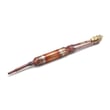
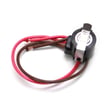
| Frost buildup, warm freezer | Defrost heater or defrost thermostat | Refrigerator defrost heater WP2323198, refrigerator bi-metal thermostat WPW10225581 |
| Warm temps, poor circulation | Evaporator fan motor or fan blade | Refrigerator evaporator fan motor WP2315549, refrigerator evaporator fan blade WP2169142 |
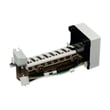
| No ice | Ice maker assembly | Refrigerator ice maker 2198597 |
| Slow water flow | Water filter | Genuine Kenmore refrigerator water filter EDR3RXD1 |
Why it matters
Cooling, defrost, and ice/water systems are connected. A simple airflow restriction or a clogged filter can look like a major failure, while a defrost problem can quietly reduce cooling until food starts warming.
Last updated: January 2026