 Installation guide
 Owner’s manual
 Error Codes



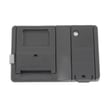
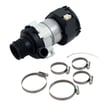

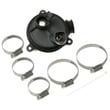

Can a clogged drain cause an FTD error?
Yes. On a GE GDF520PGJ4WW dishwasher, an FTD-style drain fault is commonly triggered when the unit cannot drain fast enough, and a clog in the drain path (air gap, disposer connection, drain hose, or filter area) is a top cause. Use the owner's manual drain checks first.
What to check first (fast, no-parts steps)
- Cancel the cycle; the dishwasher should begin draining.
- Confirm the kitchen sink drains normally (a slow sink often points to a plumbing restriction).
- If you have an air gap, remove the cover and clean out debris.
- If the dishwasher drains into a disposer, run the disposer and confirm the disposer inlet plug was removed.
- Inspect the drain hose for kinks or crushing behind or under the dishwasher.
- Verify the drain setup is correct (high drain loop or air gap as required).
Filter and drain-path cleaning that often clears the error
A clogged filter can restrict water flow and contribute to poor draining. Clean the ultra-fine filter as described in the owner's manual, then run a short cycle and cancel to force a drain.
When a part is likely involved
If the drain path is clear and the dishwasher still will not pump out, the drain pump or a control-related issue becomes more likely.
| Symptom | Most likely cause | What to do next |
|---|---|---|
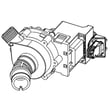
| Hums but little or no draining | Drain pump obstruction or failing pump | Check for blockage; consider replacing drain pump assembly WD19X25187 |
| Drains slowly, occasional standing water | Partial clog, kinked hose, air gap/disposer restriction | Recheck hose routing and air gap/disposer |
| Won’t drain after cancel, no pump sound | Electrical/control issue or pump failure | Check door latch and power; then test/replace pump if needed |
Why it matters
When the dishwasher cannot drain, it may end the cycle early to prevent water from backing up into the tub. Clearing restrictions protects the pump, helps prevent odors, and restores normal cycle completion.
Last updated: February 2026
How can I tell what size my dishwasher is?
For your GE GDF520PGJ4WW dishwasher, you can tell the “size” by measuring the cabinet opening it fits into (width, height, and depth). This model installs in a standard 24-inch-wide opening; the installation guide lists a rough opening of at least 24 inches wide and 24 inches deep, with about 34-1/2 inches height.
How to measure your dishwasher opening (the right way)
Use a tape measure and record all three dimensions:
- Width: measure cabinet-to-cabinet at the front of the opening (most are about 24 inches).
- Height: measure from the finished floor to the underside of the countertop (often about 34-1/2 inches).
- Depth: measure from the back wall to the front edge of the cabinet opening (at least 24 inches for this model’s rough opening).
- Check for obstructions: note any pipes, wiring, or an air gap that reduces usable depth.
- Confirm level and square: the opening should not twist the tub or door when the unit is installed.
For the model-specific rough opening requirements and installation clearances, use the installation guide.
What “dishwasher size” usually means
Dishwasher “size” can refer to different things. Here is a quick guide:
| What you are sizing | What to measure | Typical target for this model type |
|---|---|---|
| Cabinet opening | Width, height, depth of the cutout | 24 in W, about 34-1/2 in H, 24 in D |
| Dishwasher exterior | Actual unit dimensions | Slightly smaller than the opening |
| Drain setup | Hose length and drain height | Up to 12 ft run; max 72 in drain height |
Why it matters
Correct measurements prevent fit problems and performance issues. A dishwasher that is not square and level can cause the door to rub, leak, or latch poorly, and pinched utility lines can restrict water flow.
Last updated: February 2026
What dishwasher to stay away from?
If you’re shopping for a dishwasher, we recommend staying away from any model with a consistent pattern of the same failures in owner reviews (leaks, won’t drain, won’t start, poor drying), especially when the repair involves high-cost parts like the control board or pump. For your GE GDF520PGJ4WW, the best “avoid” strategy is to screen for those repeat issues before you buy.
What to look for (red flags that matter)
- Frequent reports of leaking at the door or tub seal area
- “Won’t start” complaints tied to the door latch or user interface
- Chronic “not draining” issues (often hose, drain pump, or installation related)
- Poor cleaning tied to weak spray action (spray arms, circulation pump, diverter)
- Poor drying complaints that point to heater or control problems
Quick pre-buy checklist (works for any brand)
Use this checklist to decide what to avoid when comparing dishwashers in the same price tier:
| What you see in reviews | What it usually means | What to do |
|---|---|---|
| Many leak complaints | Seal, hose routing, or install issues | Avoid that model line unless the issue is clearly resolved in later revisions |
| “Stops mid-cycle” or dead panel | UI or control board failures | Avoid if it’s a common theme; those repairs are typically expensive |
| “Dishes still dirty” | Spray arm, diverter, circulation weakness, loading | Avoid if it persists across many owners, not just a few |
| “Always wet inside” | Heater performance, cycle selection, rinse aid use | Avoid if owners report no improvement after normal adjustments |
Why it matters
A dishwasher can look great on paper, but repeated failure patterns are what drive real ownership cost. Repairs involving electronics (control board, user interface) or major water-moving parts (circulation pump, diverter, drain pump) typically cost more than wear items.
If you already own the GE GDF520PGJ4WW
When people say they want to “stay away” from a dishwasher, they’re usually reacting to symptoms you can often troubleshoot and repair. These parts are commonly involved on this model:
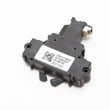
- Door won’t latch or unit won’t start: GE dishwasher door latch lock WD21X10490
- Not cleaning well: dishwasher spray arm, lower WD22X33499, dishwasher circulation pump WD26X23258
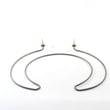
- Not drying: dishwasher heating element WD05X30818
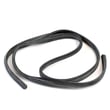
- Not draining: drain pump assembly WD19X25187, dishwasher drain hose WD24X10062
For model-specific operating and safety guidance (detergent type, loading, hot surfaces, electrical requirements), use the owner's manual.
Last updated: February 2026





