Installation guide
 Owner’s manual


What is the most common problem with Whirlpool washers?
On Whirlpool washers like model 1CWTW4845EW0, the most common day-to-day complaint is a no-start condition that looks like “the washer has power, but it will not begin a cycle.” In many cases, the cause is something simple such as the lid not fully closed or the lid lock not engaging as expected (the washer will not start or fill with the lid open). See the owner's manual for the exact lid lock behavior and start/stop steps for this model.
Quick checks before replacing parts
- Confirm the lid is fully closed; the washer will not start or fill with the lid open.
- If the Lid Locked light is flashing, close the lid and press START/STOP once to resume.
- If you paused the cycle, wait for the basket to stop completely; the lid can stay locked for several minutes on heavy loads.
- Reduce oversudsing; too much detergent can interfere with draining/spinning and make the washer seem “stuck.”
- Rebalance the load; uneven loads can cause pauses and vibration-related interruptions.
When it is likely a lid lock issue
If the washer consistently will not start, stops right as it should begin spinning, or the lid lock indicator acts erratically, the lid lock system is a common suspect.
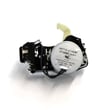
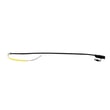
Related part to check for this model: Lar, 120v pi W11307244
| Symptom | What it often points to | What to do next |
|---|---|---|
| Won’t start with lid closed | Lid not sensed as closed/locked | Reclose lid, try START/STOP, then inspect lid lock/strike alignment |
| Lid stays locked after pause | Basket still spinning or heavy load | Wait for full stop; reduce load size |
| Stops during spin, off-balance | Load distribution or leveling | Level washer, load items evenly, use Bulky Items for oversized loads |
Why it matters
A “won’t start” complaint is often a safety interlock or user-condition issue (lid lock, pause state, oversudsing, or off-balance). Fixing the root cause prevents repeat interruptions and helps protect the drive system and gear case from stress.
Last updated: February 2026
How to tell if a Whirlpool drain pump is bad?
On your Whirlpool washer model 1CWTW4845EW0, a bad drain pump usually shows up as the washer not draining within about 10 minutes, leaving clothes wet, or making abnormal pump noises (beyond the normal hum and occasional gurgle during Drain & Spin). Use the troubleshooting steps in the owner's manual to confirm the symptom before replacing parts.
Quick signs the drain pump is failing
- Washer will not drain or spin; the load stays wet.
- Spin light remains on because the washer could not pump out water in time.
- You hear grinding, rattling, or loud buzzing from the pump area (not the normal steady hum).
- Draining is very slow, especially after washing small items.
- You find coins, pins, or other pocket items that may have entered the drain system.
What to check first (often not a bad pump)
Many “bad pump” symptoms are caused by a restriction or installation issue.
- Check for clogs: small items can get caught in the pump or between the basket and tub and slow draining.
- Check the drain hose setup: the hose should not be shoved too far into the standpipe (about 4.5 inches max); the end of the hose should not be higher than about 48 inches.
- Reduce suds: too much detergent can create suds that slow or stop draining.
- Rebalance the load: tightly packed or unbalanced loads can prevent proper spinning and leave clothes wet.
Normal vs. problem noises
| Sound during draining | What it usually means | Action |
|---|---|---|
| Steady humming with periodic gurgling | Normal pump operation | No repair needed |
| Loud grinding/rattling | Debris in pump or failing pump | Inspect for blockage; replace if damaged |
| No pump sound and no draining | Power/control issue or failed pump | Check power, lid closed, then diagnose pump circuit |
When replacement is likely
Replace the pump when the drain path is clear, the hose is installed correctly, detergent use is correct, and the washer still cannot drain reliably.
For this model, the drain pump is commonly replaced as the water pump; you can match the correct replacement by using the parts list for model 1CWTW4845EW0 and selecting the water pump WPW10465543.
Why it matters
A washer that cannot drain will leave clothes soaked, can stop mid-cycle, and can strain the drive system during spin attempts. Fixing a clog or replacing a failing pump restores normal Drain & Spin performance.
Last updated: February 2026
Is 4.8 cubic feet a large capacity washer?
Yes. A 4.8 cu. ft. washer is considered large capacity (large capacity typically starts around 4.5 cu. ft.), so it can handle bulky items like comforters and larger loads with fewer cycles. For the exact rated capacity and load guidance for Whirlpool model 1CWTW4845EW0, use the owner's manual.
What “large capacity” means in practical terms
Large-capacity washers are designed to wash more items at once while still allowing clothes to move freely for proper cleaning.
- Large capacity is generally 4.5 cu. ft. and up
- Better for bulky loads (blankets, towels, jeans)
- Helps reduce number of loads per week
- Still avoid tight packing, which can reduce cleaning performance
How much can a 4.8 cu. ft. washer hold?
Load size depends on fabric type and how absorbent items are, but these are realistic examples for a 4.8 cu. ft. top-load washer:
| Load type | Typical examples | What to watch for |
|---|---|---|
| Towels | Several bath towels plus hand towels | Don’t compress; leave space at the top |
| Bedding | Queen sheets, light blanket | Balance the load to reduce vibration |
| Mixed everyday | Shirts, underwear, light pants | Sort by fabric weight for best results |
Why it matters
Choosing the right capacity helps prevent overloading, improves wash action, and can reduce wear on drive components over time (belt, pulley, gear case, and suspension).
Tips to get the best results with large loads
We recommend these habits for Whirlpool top-load washers like the 1CWTW4845EW0:
- Select the correct load size setting so the washer adds the right amount of water
- Load items loosely; items need to move freely
- Mix large and small items to help balance the basket
- If the washer shakes, pause and redistribute the load
- Use the warmest water safe for the fabric, following care labels
Last updated: February 2026
What is the most expensive part to replace on a washing machine?
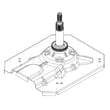
On most washing machines, the most expensive repair is usually the wash tub and bearing system (often sold as a tub assembly) or the transmission/gearcase. For your Whirlpool washer model 1CWTW4845EW0, the gear case assembly is typically one of the highest-cost replaceable components.
Most expensive washer parts (typical)
These repairs cost the most because they involve major mechanical assemblies and significant labor time.
- Gearcase/transmission: drives agitation and spin
- Outer tub and bearing system: supports the spin basket and seals water
- Drive motor: powers the wash system
- Control board (main electronic control): manages cycles and motor operation
- Spin basket (in some cases): if damaged or out-of-round
What’s most expensive on model 1CWTW4845EW0 (common high-cost items)
Based on the parts available for this model, these are commonly among the pricier replacements:
| Part (example) | What it affects | When it’s suspected |
|---|---|---|
| Gear case assembly W11454741 | Agitate/spin drive system | Grinding noise, no spin, oil leak, weak agitation |
| Outer tub W10371566 | Water containment and support | Leaks, severe bearing noise, tub damage |
| Washer drive motor WPW10677715 | Power to drive system | Hums, won’t start, intermittent spin/agitate |
Before replacing an expensive part
We recommend ruling out simpler, lower-cost causes first because many “major” symptoms come from smaller failures.
- Confirm the washer is level and stable (off-balance can mimic drive problems)
- Check for lid lock issues that prevent spin
- Look for drain problems that stop the cycle before high-speed spin
- Listen for belt/pulley noises (often cheaper than a gearcase)
- Review operating and troubleshooting guidance in the owner's manual
Why it matters
High-cost parts like a gearcase or tub assembly can approach the value of the washer. A quick diagnosis helps you avoid replacing a major assembly when the real issue is a lid lock, drain restriction, or drive pulley problem.
Last updated: February 2026