

Will my dryer work without the moisture sensor?
Yes, your Kirkland SEDS800MQ0 dryer will still run without the moisture sensor, but Auto/Sensor Dry cycles will end too soon because the dryer cannot “feel” wet laundry. Timed Dry typically still works normally.
What changes when the moisture sensor is missing
On most dryers, the moisture sensor is a pair of metal strips that detect moisture by sensing conductivity from damp clothes.
- Auto/Sensor cycles may shut off early and leave clothes damp
- Drying results become inconsistent from load to load
- Timed Dry becomes the most reliable option until the sensor is restored
- No heat or motor damage is typically caused by the sensor being missing
Quick workaround: use Timed Dry
If you need to keep using the dryer right away:
- Select Timed Dry instead of Auto/Sensor Dry
- Start with 40 to 60 minutes for a medium mixed load
- Use Medium heat for most fabrics; use Low for delicates
- Check clothes near the end and add time in 10 to 15 minute increments
When to repair it (and what else to check)
If the dryer is stopping early, also check airflow because poor venting can cause long dry times and confusing cycle behavior.
| Symptom | Most likely cause | Best next step |
|---|---|---|
| Auto cycle stops early, clothes damp | Missing/failed moisture sensor | Use Timed Dry; restore sensor circuit |
| Clothes take too long to dry | Restricted venting or lint buildup | Clean lint screen, vent, and exterior hood |
| No heat at all | Heating circuit issue | Troubleshoot heater and safety thermostats |
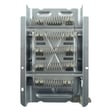
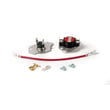
For heating-related symptoms on this model, common service parts include the dryer element 279838 and the dryer thermal cut-off fuse kit 279816.
Why it matters
Auto/Sensor Dry is designed to prevent overdrying and save energy. Without the moisture sensor feedback, the dryer cannot accurately judge dryness, so you lose the main benefit of automatic cycles.
Last updated: February 2026
How do I know if my dryer thermistor is bad?
If your Kirkland dryer model SEDS800MQ0 overheats, shuts off mid-cycle, or dries inconsistently, the temperature-sensing circuit is likely not reading correctly. A failing thermistor (or a related safety device) commonly shows up as erratic heat, long dry times, or repeated thermal shutdowns.
Common signs the thermistor (or temperature sensing circuit) is failing
- Dryer gets too hot; clothes feel unusually hot at end of cycle
- Dryer cycles heat oddly (heat comes and goes too quickly, or not at all)
- Long dry times even with a clean lint screen and normal loads
- Dryer stops before the cycle ends and may restart after cooling
- Burning smell or scorching on fabrics (stop using the dryer until checked)
Quick checks we recommend before replacing parts
- Unplug the dryer and let it cool completely.
- Clean the lint screen and check airflow; restricted venting can mimic a “bad thermistor” symptom.
- Run a timed dry cycle and note whether heat is steady or if the dryer repeatedly overheats and shuts down.
- If you have a multimeter, check the thermistor and related thermostats for out-of-range readings (compare to the tech sheet if available on the unit).
Parts that commonly get replaced when heat is abnormal
On SEDS800MQ0, overheating or no-heat complaints are often tied to the heating circuit and safety cutoffs. These parts are commonly involved:
| Symptom | Most common related parts | What it affects |
|---|---|---|
| Overheats, then shuts off | Dryer thermal cut-off fuse kit 279816 | Safety shutdown when temps get too high |
| Overheats or heat cycles incorrectly | Dryer high-limit thermostat WP3977767 | Limits maximum heater temperature |
| No heat or weak heat | Dryer element 279838 | Produces heat in electric dryers |
Why it matters
A dryer that overheats is not just hard on clothes; it can repeatedly trip safety devices and lead to more failures in the heating circuit. Restoring proper temperature control helps drying performance, protects fabrics, and reduces strain on components.
Last updated: February 2026
Is it worth fixing a dryer drum?
Yes, it’s worth fixing a dryer drum on your Kirkland SEDS800MQ0 when the dryer is otherwise in good shape and the problem is limited to normal wear items (belt, rollers, glides, idler). If the drum itself is cracked or badly damaged, replacement usually makes sense only when the rest of the dryer is in excellent condition.
Quick way to decide (cost vs. condition)
Use these practical checkpoints before you invest time and parts:
- Age of the dryer: dryers typically last 10 to 13 years.
- Repair scope: a squeal, thump, or no-tumble issue is often a belt or support problem, not the drum.
- Parts cost: if you’re replacing multiple wear parts, a kit can be the best value.
- Rust, sharp edges, or cracks in the drum: these usually point to a bigger repair.
- Repeated overheating or burning smell: fix airflow and safety parts first.
Common “drum problems” that are usually worth fixing
Many drum complaints are caused by parts around the drum that are designed to wear out.
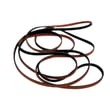
- Drum not turning: check the dryer drum belt 341241
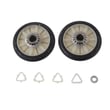
- Thumping or rumbling: inspect drum supports and consider the dryer repair kit 4392065
- Squealing: worn support points often come with a kit-style rebuild
- Poor drying plus odd noises: check airflow and the blower wheel
Helpful comparison
| Symptom | Most likely cause | Typical fix |
|---|---|---|
| Drum won’t turn, motor runs | Broken/slipping belt | Replace belt |
| Loud thump each rotation | Flat-spotted support components | Rebuild support parts |
| Squeal/metal-on-metal sound | Worn bearing/support surfaces | Rebuild support parts |
| Burning smell, shuts off | Overheating from vent restriction | Clean vent; replace safety parts if needed |
Why it matters
A damaged drum can snag clothing and create sharp edges; worn drum support parts can strain the motor and shorten the life of the dryer. Fixing the correct wear items restores smooth tumbling and normal drying performance.
If you’re deciding whether to repair or replace
A repair is the better choice when:
- The cabinet and controls are in good condition
- The dryer heats and runs normally aside from the drum issue
- The fix is limited to wear parts (belt, supports, pulley)
Replacement is the better choice when:
- The drum is cracked, heavily rusted through, or repeatedly damaging clothes
- Multiple major systems are failing (motor, heat system, timer)
For maintenance that helps prevent drum wear and overheating, use how to clean and maintain your clothes dryer.
Last updated: February 2026
How do I know if my dryer thermostat is bad?
If your Kirkland SEDS800MQ0 dryer overheats, shuts off early, or won’t heat consistently, a thermostat can be the cause. We confirm it by checking airflow first, then testing the thermostat for proper continuity and temperature switching; failed tests point to a bad thermostat.
Common signs a dryer thermostat is failing
- Dryer runs but clothes stay damp (heat cycles off too soon)
- Dryer gets too hot or smells hot (overheating)
- Dryer shuts off mid-cycle (especially on high heat)
- Heat is inconsistent from load to load
- Blown thermal cut-off or repeated no-heat events after resets
Quick checks before you test parts (most important)
Poor airflow can mimic a bad thermostat and can also cause overheating.
- Clean the lint screen completely (including any film from dryer sheets)
- Check the vent hose for kinks, crushing, or long runs
- Make sure the outside vent hood opens freely
- Run a timed dry cycle with the vent disconnected briefly (if drying improves, the venting is restricted)
For airflow and drying-time symptoms, we use the steps in dryer takes a long time to dry.
How we test a dryer thermostat (basic method)
Safety first: unplug the dryer before accessing internal parts.
- Access the thermostat (commonly on the blower housing or heater housing).
- Label and remove wires.
- Use a multimeter:
- Room temperature: many thermostats show continuity (closed) on the main contacts.
- Heated test (controlled): the contacts should open and close as temperature changes.
What the meter results usually mean
| Test result | What it points to | What to do next |
|---|---|---|
| No continuity at room temp (when it should be closed) | Thermostat stuck open | Replace the thermostat (and recheck airflow) |
| Continuity never opens when heated | Thermostat stuck closed (overheating risk) | Replace thermostat; inspect venting and heater area |
| Thermostat tests OK but dryer still won’t heat | Heat circuit issue elsewhere | Check heater, thermal cut-off, wiring, timer |
Related parts that often fail with thermostat or airflow problems
If your dryer has no heat or overheats, these model-matched parts are common fixes:
Why it matters
A thermostat that sticks closed can overheat the dryer and trip safety fuses; a thermostat that sticks open can cause long dry times and no-heat complaints. Fixing airflow first prevents repeat failures.
Last updated: February 2026
What is the most expensive part to replace on a dryer?
On the Kirkland SEDS800MQ0 dryer, the most expensive repair is usually a major drive or control component, most often the dryer motor or timer/control parts. Heating repairs can also add up, especially when the heater circuit has multiple failed safety parts.
Most expensive parts (and why)
These parts cost more because they are core to operation and typically take longer to access and install:
- Drive motor: high part cost and more disassembly to reach it
- Timer/control: higher part cost; misdiagnosis is common if symptoms are intermittent
- Heating system parts: the heater itself plus thermostats and fuses can stack up
- Cabinet and large panels: expensive due to size and shipping, usually replaced only after damage
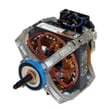
For this model, examples of higher-cost parts on our parts list include the dryer motor 279827 and the dryer timer WP3979618.
Quick cost comparison (parts only)
Actual totals vary by symptom and labor time, but this shows why some repairs feel “expensive.”
| Repair area | Example part for SEDS800MQ0 | Why it gets pricey |
|---|---|---|
| Drive system | Motor | Labor-intensive access; critical component |
| Controls | Timer | Higher part cost; troubleshooting time |
| Heat | Heating element | Often replaced with related safety parts |
| Structure | Cabinet/panels | Large, costly components |
When a “heat” repair becomes the expensive one
If the dryer runs but will not heat, the total can climb when multiple heater-circuit parts fail together. Common combinations include:
- Heating element plus a blown thermal cut-off
- High-limit thermostat plus thermal cut-off
- Burned heater wiring that needs a repair kit
On SEDS800MQ0, parts that commonly show up in these repairs include the dryer element 279838, dryer thermal cut-off fuse kit 279816, and dryer high-limit thermostat WP3977767.
Why it matters
Knowing the typical high-dollar parts helps you decide where to focus diagnosis first. For example, a no-start issue often points toward the motor or door switch, while a long-dry or no-heat issue often points toward airflow restrictions and the heater safety circuit.
For airflow-related problems that can mimic “expensive part failure,” we recommend our guide: dryer takes a long time to dry.
Last updated: February 2026