Owner’s manual
 Error Codes



What is the advantage of a bottom mount fridge?
A bottom-mount refrigerator like the GE PFE28KSKFSS keeps fresh food at a more comfortable, eye-level height while the freezer stays below. That layout reduces bending for everyday items and makes it easier to see and organize the refrigerator compartment.
Key advantages you will notice day to day
- Fresh food shelves sit higher, so you reach less for drinks, produce, and leftovers.
- Better visibility of refrigerated items, which helps reduce forgotten food.
- Freezer drawer storage is easy to access in “pull-out” style on many bottom-freezer designs.
- Wide refrigerator section supports larger items and trays more naturally than many top-freezer layouts.
- Common features on this style include adjustable bins, spillproof shelves, and temperature-controlled drawers (varies by model).
Bottom-mount vs. top-freezer: quick comparison
| Feature | Bottom-mount refrigerator | Top-freezer refrigerator |
|---|---|---|
| Most-used section height | Refrigerator at eye level | Refrigerator lower |
| Bending for daily items | Less | More |
| Freezer access | Pull-out drawer style | Swing door, shelves |
| Organization style | Wide fridge shelves, drawers | Often narrower fridge area |
Why it matters
Most households open the refrigerator section far more often than the freezer. With a bottom-mount design, we get the convenience where it counts most: faster access to fresh food, easier inventory checks, and less strain during routine cooking.
Tips to get the most from a bottom-mount layout
- Set refrigerator and freezer temps to the recommended ranges (typically 37°F fridge, 0°F freezer).
- Keep airflow paths clear; do not pack items tightly against vents.
- Use drawers and bins for zones (produce, deli, dairy) to reduce temperature swings.
- If you have door alarms or door sealing issues, address them quickly to prevent warm-ups.
For model-specific features and compartment details, use the PFE28KSKFSS owner’s manual.
Last updated: February 2026
Which is better top mount or bottom mount freezer?
For most households, a bottom-mount freezer like the GE PFE28KSKFSS is better because fresh food is at eye level and easier to access every day. A top-mount freezer is often the better pick if you want the simplest layout and typically lower purchase cost.
Quick comparison
| Feature | Top-mount freezer | Bottom-mount freezer (like PFE28KSKFSS) |
|---|---|---|
| Everyday fridge access | Good | Best (fresh food is higher) |
| Freezer access | Best (freezer is higher) | Good (drawer style, but you bend more) |
| Organization | Simple shelves | Often more flexible drawers and bins |
| Typical energy use | Often slightly lower | Often slightly higher (varies by model) |
| Price | Often lower | Often higher |
How to choose for your kitchen
- Choose bottom-mount if you use the refrigerator section far more than the freezer.
- Choose top-mount if you want a straightforward design and usually the lowest cost.
- If you have back or knee issues, bottom-mount reduces bending for fresh food but increases bending for frozen food.
- If you store bulky frozen items (pizza boxes, big bags), compare freezer drawer space and basket layout.
- If you want features like advanced lighting, door storage, and specialty drawers, bottom-mount models commonly include more of them.
Why it matters
Your choice affects daily ergonomics, food organization, and long-term operating cost. Most people open the refrigerator section many times per day, so putting fresh food at a comfortable height is the main advantage of a bottom-mount design.
Model-specific notes for GE PFE28KSKFSS
This model is a GE bottom-freezer design; the manual highlights features commonly found on this platform such as interior LED lighting, spillproof shelving, and water filtration. For the exact feature set and how your controls and storage are configured, use the PFE28KSKFSS owner’s manual.
Last updated: February 2026
How to remove bottom grille on GE refrigerator?
On the GE PFE28KSKFSS bottom-mount refrigerator, the bottom grille (base grille/toe grille) typically comes off by releasing its retaining clips or removing a few screws, then pulling the grille straight out from the bottom front of the cabinet. Use the steps in the PFE28KSKFSS owner's manual as your model-specific reference.
Quick steps to remove the bottom grille
- Unplug the refrigerator or switch off power at the breaker (safer when working near wiring).
- Pull the refrigerator straight out a few inches if you need more hand room (avoid dragging it sideways).
- Look along the top edge and corners of the grille for screws; remove them with a Phillips screwdriver if present.
- If there are no screws, grip the grille at both ends and pull straight outward to pop it off the clips.
- Tilt the grille slightly and lift it away from the cabinet.
- Set the grille aside where it will not get stepped on or warped.
Reinstalling the grille
In most cases, reinstalling is the reverse: align the tabs/clips, push the grille straight in until it seats, then reinstall any screws.
| What you see | What it usually means | What to do |
|---|---|---|
| 2 to 4 screws along the grille edge | Screw-mounted base grille | Remove screws, then pull grille forward |
| No screws, grille feels “snapped in” | Clip-mounted base grille | Pull straight out at both ends to release clips |
| Grille won’t budge | Clips are tight or grille is catching | Pull evenly, check for hidden screws, avoid twisting |
Why it matters
We remove the bottom grille to access the condenser area for cleaning, to check for water leaks/puddles, or to improve airflow. Better airflow helps the compressor and condenser fan cool efficiently.
Related DIY help
- If you are working near the doors and alarms while servicing the front area, use how to reset the door alarm on a GE refrigerator.
Last updated: February 2026
What is the most common problem with GE profile refrigerators?
The most common issues we see on GE Profile refrigerators like model PFE28KSKFSS are ice maker and water dispenser problems (slow or no ice, weak water flow) and temperature or cooling complaints, often tied to airflow, defrost performance, or electronic sensing/control.
Most common symptoms customers report
- Ice maker not making ice or making small/hollow cubes
- Water dispenser flow is slow or stops
- Fresh food section too warm while freezer seems OK
- Frost buildup on the back wall or in the freezer
- Door alarm beeping even when doors look closed
Quick checks that solve many “common problems”
Start with these basics before replacing parts:
- Confirm door closure: check for food packages blocking the door and inspect the gasket for gaps.
- Reset the door alarm if it is sounding unexpectedly: follow how to reset the door alarm on a GE refrigerator.
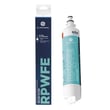
- Check the water filter: a restricted filter is a top cause of weak dispenser flow and poor ice production; use the filter type listed in your PFE28KSKFSS owner's manual.
- Verify temperatures: set the refrigerator to about 37°F and freezer to about 0°F, then allow 24 hours to stabilize.
- Listen for the evaporator fan: if airflow is weak or noisy, cooling performance drops quickly.
What the “most common problem” usually points to
Many GE Profile complaints trace back to one of these areas:
| Problem area | What you notice | What to check first |
|---|---|---|
| Water filtration / supply | Slow water, slow ice | Filter condition, household water pressure, kinked line |
| Airflow (evaporator fan, vents) | Warm fridge, uneven temps | Blocked vents, fan noise, heavy frost |
| Defrost system | Frost buildup, warming over time | Frost pattern, door sealing, defrost cycle symptoms |
| Controls/sensors | Temps swing, odd behavior | Error codes, sensor connections, power reset |
Why it matters
Ice and cooling problems can look “random,” but they usually come from restricted water flow, poor airflow, or a defrost issue. Fixing the root cause protects food temperatures and prevents repeat ice maker failures.
Last updated: February 2026