Installation guide
 Owner’s manual
 Error Codes


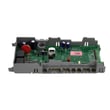
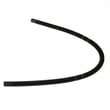
How to fix rubber seal on KitchenAid dishwasher?
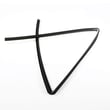
On the KitchenAid KUDS03FTSS0 dishwasher, fixing the rubber seal usually means reseating or replacing the door seal so it sits fully in the channel with no twists or gaps. Press it in evenly by hand, then keep the door closed for several hours so the seal “sets” in place.
Before you start (quick safety and prep)
- Turn off power at the breaker; do not work around live wiring.
- Let the unit cool; avoid contact with hot components after a cycle.
- Open the door and inspect the seal for tears, flattening, or hard spots.
- Clean the channel and mating surface with warm water and mild soap; dry completely.
- Remove any sharp items from the racks that could nick the seal (a common cause of repeat leaks).
How to reseat the door seal (most common fix)
- Start at the top center of the tub opening.
- Align the seal’s “barb” or rib with the channel.
- Use your fingers to press the seal into the channel a few inches at a time, working evenly down both sides.
- Confirm the seal is fully seated; it should be flush and consistent with no bulges.
- Close and latch the door; keep it closed for several hours (overnight is ideal).
What “good” looks like
| Check | What you want to see | What it means if not |
|---|---|---|
| Seal depth | Evenly seated all the way around | A section is popped out or twisted |
| Corners | Smooth, not stretched | Corner leak risk |
| Door close | Firm, consistent resistance | Seal misaligned or door issue |
If it still leaks after reseating
- Inspect the seal for splits or permanent flattening; replace if damaged.
- Check door alignment and hinge tension; a sagging door can prevent sealing.
- Look for debris on the tub lip (food, detergent buildup) that breaks the seal.
- If water appears at the bottom edge only, confirm the door is fully latching.
Parts that may be involved
If the seal is torn or deformed, replacement is the lasting fix. For model-correct guidance and diagrams, use the KUDS03FTSS0 owner’s manual. If you’re replacing the actual door seal, match the part by model to avoid fit issues.
Related help
- For leak troubleshooting steps beyond the seal, use dishwasher leaks video.
Why it matters
A properly seated door seal prevents leaks that can damage flooring and cabinets, and it also helps the dishwasher maintain wash pressure for better cleaning and drying.
Last updated: February 2026
What is the most common problem with a KitchenAid dishwasher?
For the KitchenAid KUDS03FTSS0 dishwasher, the most common problems we see are not cleaning well (often from clogged spray arms or filters) and not draining (often from a blocked drain path). Leaks from worn seals and occasional control or heating issues are also common as the unit ages; see the KUDS03FTSS0 owner's manual for model-specific troubleshooting steps.
Most common symptoms and what they usually point to
- Dirty dishes or grit left behind: clogged spray arm holes, restricted filter area, overloading, low water temperature
- Standing water in the tub: kinked/blocked drain hose, clogged drain pump, disposer knockout not removed (new installs)
- Leaks at the door: worn door seal, debris on the sealing surface, door not closing squarely
- No heat or poor drying: heater circuit issue, rinse aid missing, heat option not selected
- Dead or erratic controls: blown thermal fuse, control board problem, wiring connection issue
Quick checks you can do first (no parts swapping)
- Cancel/drain the cycle and listen for the drain motor running.
- Inspect the sink drain/disposer connection and the high loop/air gap (if used).
- Remove and rinse the spray arms; clear any blocked jets.
- Clean the tub and run a maintenance cycle (vinegar method is described in the manual).
- Confirm the door closes firmly and the gasket area is clean.
Common fixes and the parts that match the symptom
| Symptom | Most likely area | Model-matched part to consider |
|---|---|---|
| Won’t drain / water left in bottom | Drain path or pump | Dishwasher drain pump WPW10348269 |
| Not filling or fills slowly | Water supply/valve | Dishwasher water inlet valve WPW10158389 |
| No power or shuts off | Thermal protection | Fuse W10258275 |
| Poor drying / no heat | Heating circuit | Heater element WPW10082892 |
Why it matters
Cleaning and draining problems usually start as simple restrictions (food soil, grease, a kinked hose). Fixing those early helps prevent pump strain, odors, and repeat cycle failures.
Helpful model-specific references
- Use the troubleshooting section in the KUDS03FTSS0 owner's manual for symptom-based checks.
- If you’re seeing flashing lights or error patterns, use KitchenAid microclean he dishwasher error codes to narrow the failure.
Last updated: February 2026
What's the average lifespan of a KitchenAid dishwasher?
Most KitchenAid dishwashers last 10 to 14 years with normal household use. For your KitchenAid KUDS03FTSS0, consistent cleaning, correct detergent use, and fixing small problems early (draining, heating, or control issues) are the biggest factors in reaching that range.
What affects lifespan the most
- Water quality: hard water speeds up mineral buildup on the heater and inside the wash system
- Maintenance habits: cleaning the tub, spray arms, and filters reduces strain on the pump motor
- Loading and detergent: overloading and excess detergent can cause poor washing and residue
- Heat and drying performance: weak heating can leave moisture that contributes to odors and buildup
- Small leaks or slow drains: even minor issues can shorten component life if ignored
Quick maintenance checklist (high impact)
Use these steps to help your KUDS03FTSS0 run longer and more consistently:
- Clean the interior and run a cleaning cycle periodically (per the KUDS03FTSS0 owner’s manual)
- Keep spray arm holes clear so water pressure stays strong
- Use rinse aid if you see spotting or poor drying
- Check the door seal area for debris and wipe it clean
- Address slow draining quickly (kinks, clogs, or a weak pump)
Common “wear” parts vs. “big” repairs
| Symptom | Often maintenance-related | More likely a part repair |
|---|---|---|
| Not draining | Air gap or hose restriction | Drain pump issue (see dishwasher drain pump WPW10348269) |
| Not drying well | Rinse aid, loading, cycle choice | Heater or control problem |
| Won’t start or stops mid-cycle | Door not fully latched, power reset | Fuse or electronic control issue |
Why it matters
A dishwasher that is draining well, heating properly, and staying clean puts less load on the wash motor, electronic controls, and seals. That reduces overheating, leaks, and repeat cycle stress, which are common reasons dishwashers fail before the 10-year mark.
Last updated: February 2026