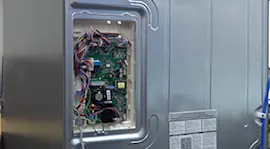
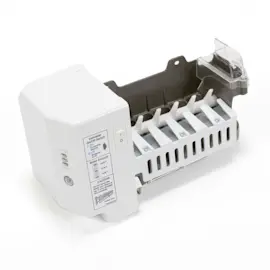
Installation guide
 Error Codes



What is the life expectancy of a GE washing machine?
Most GE washers, including the GE WJRR4170G0WW, typically last 10 to 14 years with normal household use and basic maintenance. Consistent overloading, poor leveling, and skipped cleaning shorten lifespan; correct installation and routine care help the washer reach its full service life.
- Load size and balance: frequent overloading strains the drive system and suspension.
- Leveling and vibration control: an unlevel washer vibrates harder during spin, wearing parts faster.
- Water quality and temperature: very hot water and hard water can accelerate wear on seals and hoses.
- Drain setup: improper standpipe height can contribute to siphoning or draining issues.
- Electrical supply: using extension cords or improper grounding can cause intermittent operation and component stress.
Your installation setup matters because vibration and poor hookups can shorten the life of bearings, seals, and suspension.
| Item | Recommended range (from install requirements) | Why it matters |
|---|---|---|
| Water pressure | 10 to 150 psi | Low pressure affects fill; high pressure stresses valves and hoses |
| Hot water temp at washer | 120°F to 150°F | Helps cleaning without excessive heat stress |
| Drain/standpipe height | Not less than 30 inches; not more than 8 feet | Helps prevent drain problems and siphoning |
For the exact placement, leveling, and clearance guidance for WJRR4170G0WW, follow the installation guide.
- Keep loads below the top of the tub and distribute items evenly.
- Level the washer and re-check if it starts walking or banging.
- Run periodic cleaning cycles and wipe the lid area dry to reduce odor and residue.
- Inspect fill hoses for bulges or cracking and replace as needed.
- Address leaks quickly; a worn seal can lead to bearing damage.
A washer that is level, properly drained, and operated with balanced loads puts less stress on high-wear components like the tub bearing, tub seal, and suspension. That directly improves reliability and reduces the chance of major repairs.
Last updated: January 2026
What is the most common problem with GE washers?
The most common GE washer problem is a no-spin or weak-spin condition, often tied to a safety interlock or drive system issue. On the GE WJRR4170G0WW, we start by checking lid-related safety switching, out-of-balance conditions, and drain setup using the installation guide.
- Washer fills but will not spin
- Washer agitates but will not spin out water
- Washer drains slowly or leaves clothes wet
- Loud banging or heavy vibration during spin
- Lid must be pressed or held to run
- Lid safety switching: If the washer thinks the lid is open, it may not spin.
- Drain installation: A standpipe that is too low can cause siphoning and poor draining; the drain discharge height must not be less than 30 inches.
- Flooring and leveling: The washer must sit on firm flooring to reduce vibration during spin.
- Shipping hardware: If the washer was recently moved or installed, confirm the shipping bar was removed.
If basic checks do not resolve it, these model-specific parts are common suspects:
| Symptom | Common cause | Example part for WJRR4170G0WW |
|---|---|---|
| Won’t spin with lid closed | Lid switch not actuating | Washer lid switch assembly WH12X10334 |
| Excessive vibration, banging | Suspension wear or imbalance | Washer suspension rod and spring assembly WH16X10057 |
| Grinding noise, poor spin | Bearing or hub wear | Tub bearing WH2X1198 |
A washer that cannot reach full spin speed leaves clothes wet and can trigger repeated rebalancing attempts. Correct drain height, solid flooring, and a working lid switch help the washer complete the spin cycle reliably.
If your washer displays a fault code or unusual light pattern, use GE top load washer error codes to match the code to the most likely cause.
Last updated: January 2026
How do I find the model number on my WJRR4170G0WW?
Your GE washer’s model number is printed on the appliance’s identification label; on top-load washers like the WJRR4170G0WW, it’s typically found under the lid opening or on the back of the cabinet. Use that exact model number to match diagrams and parts.
Check these common label locations first:
- Under the lid, around the tub opening (often on the rim or underside of the lid)
- On the back panel of the washer cabinet
- Along the rear edge of the top panel
- Inside the lid area near the hinge
- On the side of the cabinet near the top
The label usually includes several identifiers. Here is what to use for parts lookup.
| Label item | What it means | What to use on parts pages |
|---|---|---|
| Model | Identifies the exact washer version | Use the full model (example: WJRR4170G0WW) |
| Serial | Production identifier | Not required for most parts |
| Electrical ratings | Voltage/amps info | Not used for parts matching |
Using the full model number matters because small revisions can change the lid switch, suspension, or drive components.
- Copy the model number exactly, including all letters and numbers
- Take a clear photo of the label before it wears or fades
- If the label is hard to read, clean it gently with a damp cloth and mild soap
- Match parts by model first, then confirm using the diagram callouts
GE washer parts are model-specific; entering WJRR4170G0WW ensures the correct fit for items like the washer lid switch assembly WH12X10334 and other components tied to your washer’s configuration. For installation and setup references, use the installation guide.
Last updated: March 2026