
How do I know what model my garage door opener is?
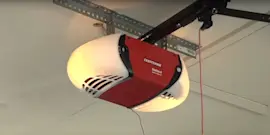
To identify the model for your Craftsman garage door opener, look for the model/serial label on the powerhead (the motor unit mounted to the ceiling). On many units, it’s under the light lens/cover or behind the front cover; once you find it, match that number when searching parts for model 139663800.
Where to look on the opener (most common spots)
- One-light powerhead: under the light cover/lens
- Two-light powerhead: under the light cover on the side opposite the controls/antenna
- Jackshaft (wall-mounted) operator: under the front cover
- Near the learn button area: sometimes on the back or side panel near wiring terminals
- On the opener chassis: a sticker on the metal housing, not on the rail
What the label usually includes
| Label item | What it’s used for | Example of what you’ll see |
|---|---|---|
| Model number | Finding the correct parts list | 139663800 (or similar format) |
| Serial number | Identifying production run | A longer number/letter string |
| Electrical rating | Verifying power requirements | 120V, Hz, amps |
Tips to avoid mix-ups
- Write down the full model number exactly as printed (include all digits).
- If the label is worn, take a clear photo with the garage light on.
- Do not use the remote model number; it often differs from the opener.
- If you have multiple doors, confirm which opener matches which door.
Why it matters
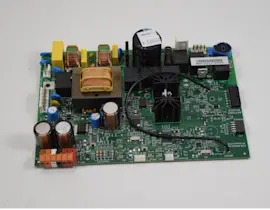
Craftsman garage door opener parts (like the logic board, safety sensors, wall control, and drive gear kit) are model-specific. Using the exact model number helps ensure the replacement part fits and the opener programs correctly.
For troubleshooting that can help confirm you’re working with the right Craftsman system, use our Craftsman error codes reference.
Last updated: February 2026
How to find a compatible garage door opener?
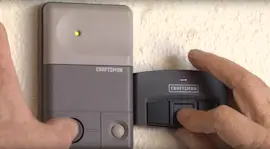
To find a compatible garage door opener (or compatible remote/smart control) for your Craftsman model 139663800, we match the opener’s radio system and control type first, then confirm the programming method (learn button vs. DIP switches). The fastest path is identifying the opener’s learn button style and any diagnostic light behavior.
What to check on the opener head (motor unit)
- Model number label: confirm it reads 139663800.
- Programming method:
- Learn button (most newer openers)
- DIP switches (common on older units)
- Learn button color (if present): this often indicates the radio family and what remotes/keypads will pair.
- Safety sensors: openers with photo eyes are typically newer systems and use different controls than very old units.
- Diagnostic flashes: some Craftsman units signal issues or pairing problems with light blink patterns.
Compatibility quick guide
Use this as a practical way to narrow choices before you buy anything.
| What you find | What it usually means | What to do next |
|---|---|---|
| DIP switches on remote/opener | Older fixed-code system | Match a remote/keypad that supports DIP switch coding (same switch count and frequency family) |
| Learn button on opener | Rolling-code style system | Choose a remote/keypad designed for that learn-button family; then program to the opener |
| Opener lights blink and door will not close | Sensor or travel/force issue (not a remote issue) | Fix the underlying fault first; then re-test remote pairing |
If you are shopping for a replacement opener (not just a remote)
Compatibility is mostly about the door size/weight and drive type, not the brand name.
- Match the drive you want (chain, belt, screw) to noise and maintenance preferences.
- Choose a motor rating appropriate for the door (most residential doors use a standard-duty opener; heavy wood or oversized doors need more).
- Confirm the opener supports photo-eye safety sensors and has a working wall control circuit.
Why it matters
If the radio system (learn-button family or DIP switch type) does not match, the remote or keypad will not program, even if it “looks right.” If the opener is faulting (sensor alignment, force setting, travel limits), it can also appear “incompatible” when it is really a safety shutdown.
Helpful troubleshooting resource
If you see blinking lights or error behavior while trying to pair controls, use our Craftsman error codes reference to interpret the pattern and correct the underlying issue.
Last updated: February 2026
Where can I buy Craftsman garage door opener parts?
You can buy replacement parts for your Craftsman garage door opener model 139663800 through our parts listings and diagrams, then order the parts you need from Sears PartsDirect. This is the most reliable way to match the correct components to your exact opener.
How we recommend finding the right part
Because garage door openers often have multiple versions and compatible sub-assemblies (logic board, travel module, safety sensors, rail/drive parts), we recommend using the model-based lookup first.
- Search by model number 139663800 to pull the correct parts breakdown
- Use the exploded-view diagrams to confirm where the part installs
- Match the part description to your symptom (no power, won’t close, reverses, remote won’t work)
- Compare any numbers printed on the old part (when accessible) to avoid ordering the wrong revision
- Order all related wear items together when it makes sense (for example, gear kit components)
Common parts people replace on Craftsman openers
These are the most frequently purchased categories for Craftsman garage door openers like model 139663800:
| Symptom | Common part category to check | What it affects |
|---|---|---|
| Door won’t close, lights blink | Safety sensor system | Obstruction detection and alignment |
| Motor runs, door doesn’t move | Drive gear/worm gear | Transfers motor power to the drive |
| Remote or keypad inconsistent | Remote control system / receiver | Signal and programming |
| Wall button issues | Wall control / wiring | Command input to the opener |
If you’re not sure what failed
Use troubleshooting and code guidance to narrow the part before ordering:
- Check for blinking light patterns on the opener head
- Confirm the safety sensors are aligned and the lenses are clean
- Test the wall control vs. remote to isolate control vs. drive issues
- Disengage the trolley and verify the door moves smoothly by hand (a binding door can mimic opener failure)
For Craftsman-specific diagnostics, use Craftsman error codes.
Why it matters
Ordering by the exact model number 139663800 helps prevent mismatched electronics and drive components, reduces returns, and gets your garage door opener back to safe, reliable operation faster.
Last updated: February 2026
How to find out garage door opener type?
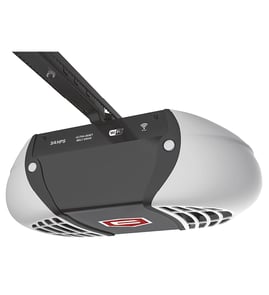
To find your garage door opener type for Craftsman model 139663800, identify the drive system (chain, belt, or screw) and the control style (smart wall control vs. basic push button). This tells you what parts, remotes, and troubleshooting steps match your opener.
Quick ways to identify the opener type
- Look at the rail above the door:
- Chain drive: metal chain like a bicycle chain
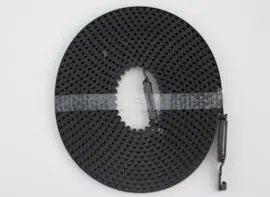
- Belt drive: rubber or reinforced belt (quieter than chain)
- Screw drive: long threaded steel rod running down the rail
- Check the motor housing label (on the ceiling unit): brand, model, and sometimes drive type
- Find the Learn/Program button under the light cover or near the antenna wire; its location helps confirm the control board style
- Look at the wall control:
- Multi-function wall console (often includes lock/light features)
- Basic single-button control
- Watch the opener run: chain drives usually sound more metallic; belt drives are smoother and quieter
What “type” affects (and what it doesn’t)
| What you’re identifying | Why it matters | Examples |
|---|---|---|
| Drive type (chain/belt/screw) | Determines rail parts and internal drive components | sprocket, belt, chain, worm gear kit |
| Control/receiver type | Determines remote compatibility and programming steps | Learn button, wall control style |
| Door type (sectional vs. one-piece) | Affects travel and force setup | travel limits, force adjustment |
If you’re identifying the type because it won’t work
Start with the most common “looks like a type issue” symptoms:
- Remote won’t program or won’t operate the door
- Lights blink in a repeating pattern
- Door reverses or won’t close (often sensor related)
- Wall control works but remotes do not
Use our Craftsman error codes to match blinking-light patterns and narrow the failure to sensors, travel module, logic board, or motor circuit.
Why it matters
Garage door openers can look similar across years, but the drive system and receiver/control style determine which repair steps and replacement parts fit correctly and operate safely.
Last updated: February 2026
Is it cheaper to repair or replace a garage door opener?
Repair is usually cheaper when your Craftsman garage door opener model 139663800 has a simple, isolated problem (remote issues, sensor alignment, minor gear wear). Replacement is typically the better value when the opener is 10+ years old, has repeated failures, or needs multiple major parts at once.
Quick cost and decision guide
In most homes, the tipping point is the scope of the failure, not just the age.
- Repair makes sense when the door is balanced and the opener only needs a small fix (safety sensor alignment, wall control wiring, force setting adjustment).
- Replace makes sense when the motor struggles, the unit is noisy with slipping drive components, or you have intermittent operation that keeps returning.
- Safety first: if the door reverses unpredictably or will not stop when obstructed, address that immediately before continued use.
| Situation | Usually cheaper | Why |
|---|---|---|
| Door will not close and lights blink (sensor issue) | Repair | Often cleaning, aligning, or shielding sensors solves it |
| Remote or wall control problems | Repair | Common troubleshooting and programming fixes |
| Stripped drive gear or worn internal gears | Repair (if otherwise solid) | Parts and labor can be reasonable if it is a single failure |
| Multiple symptoms (noise, stalling, inconsistent travel) | Replace | Stacked repairs add up quickly |
| Opener is 10+ years old with recurring issues | Replace | Better long-term value and reliability |
What to check before you decide
These checks help you avoid paying for an opener repair when the real issue is the door itself.
- Door balance: disconnect the opener and lift the door by hand; it should move smoothly and stay near mid-travel.
- Safety sensors: confirm both sensor LEDs are on and lenses are clean.
- Travel and force settings: incorrect settings can mimic a failing motor.
- Power and controls: verify outlet power, wall control wiring, and remote programming.
- Drive system: listen for grinding or clicking that points to gear wear.
Why it matters
A garage door opener can look “bad” when the garage door hardware (springs, rollers, tracks) is binding or out of balance. Fixing the underlying door issue first prevents repeat opener failures and improves safety.
Helpful troubleshooting resources
- Use our Craftsman error codes reference to interpret blinking lights and diagnostic patterns.
- If the door needs to be moved right away, follow how to open a garage door with an opener manually.
Last updated: February 2026