


Can a clogged drain cause an FTD error?
Yes. On the GE GHDA960K03WW dishwasher, an FTD (fail to drain) error commonly happens when water cannot leave the tub fast enough, and a clogged drain path is one of the most frequent reasons (filter area, drain hose, or the sink connection).
What to check first (fast, no-parts steps)
- Cancel the cycle and let the drain pump run; listen for a steady pump sound.
- Remove standing water (if needed) and clear debris from the sump area.
- Check the sink drain or garbage disposal inlet where the dishwasher drain hose connects.
- Look for a kinked, crushed, or sagging drain hose that can trap water.
- Make sure the drain hose has a proper high loop under the counter to reduce backflow.
Parts that commonly cause an FTD condition
If the drain path is clear but the dishwasher still will not drain, these model-matched parts are common suspects:
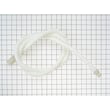
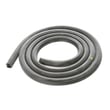
- Dishwasher drain hose WD24X10014 (internal blockage, soft collapse, or kink)
- Dishwasher drain pump WD26X10016 (weak motor, jammed impeller)
- Dishwasher filter WD12X10109 (restricted flow from heavy soil buildup)
Quick symptom guide
| What you notice | Most likely cause | What to do |
|---|---|---|
| Humming but little or no water movement | Pump impeller jam or restricted outlet | Clear debris; inspect pump area |
| Drains slowly, then errors | Partial clog in hose or filter path | Clean filter area; check hose routing |
| Water returns after draining | No high loop or sink/disposal blockage | Correct hose routing; clear sink connection |
Why it matters
A restricted drain can leave dirty water in the tub, trigger repeated FTD errors, and strain the drain pump. Clearing the drain path early often prevents a pump replacement and improves cleaning results.
For code-specific troubleshooting steps, use GE electronic dishwasher error codes.
Last updated: January 2026
Are all dishwashers 600mm wide?
No. Many full-size built-in dishwashers are about 600 mm (24 inches) wide, but not all dishwashers are. Compact, slimline, and portable models are commonly narrower (around 450 mm or 18 inches) or built in different form factors, so you should size to your cabinet opening, not a single “standard.”
Common dishwasher width categories
Most dishwashers fall into a few standard width groups:
- Full-size built-in: about 600 mm (24 inches) wide
- Slimline built-in: about 450 mm (18 inches) wide
- Compact countertop/compact built-in: often 18 inches wide (varies by design)
- Portable dishwashers: commonly 24 inches wide, but depth/height can vary
What to measure before you buy
For a GE dishwasher like GHDA960K03WW, the safest approach is to measure your space and compare to the dishwasher’s listed dimensions.
- Cabinet opening width (side-to-side)
- Opening height (floor to underside of countertop)
- Opening depth (front to back)
- Door clearance and adjacent cabinet/handle clearance
- Utility locations (water line, drain, electrical)
Quick sizing reference
| Dishwasher type | Typical width | Typical cabinet opening |
|---|---|---|
| Full-size built-in | 24 in (600 mm) | 24 in opening |
| Slimline built-in | 18 in (450 mm) | 18 in opening |
| Compact | ~18 in | Varies |
Why it matters
If the dishwasher is even slightly wider than the opening, it will not slide in correctly and can pinch the water line or drain hose. If it is too narrow, you can end up with gaps, vibration, and mounting issues.
If you are troubleshooting fitment after an install, also check that the drain routing and connections are not forcing the unit out of square; a kinked hose can cause problems. A replacement like the dishwasher drain hose WD24X10014 can help when the original hose is damaged or too stiff to route correctly.
Last updated: January 2026
Do GE dishwashers use hot water or heat their own?
GE dishwasher model GHDA960K03WW is designed to use your home’s hot water supply, and it also heats water internally as needed during the cycle to improve cleaning and drying. For best results, start with hot water at the sink so the dishwasher fills with properly heated water.
How water heating works in a dishwasher
Most GE dishwashers fill from the hot water line, then use an internal heater to maintain or boost temperature during wash and final rinse.
- The dishwasher fills with hot water from your home’s plumbing
- The internal heater raises or holds water temperature for better soil removal
- Heated water helps detergent dissolve and activate properly
- Higher final-rinse temperatures support better drying performance
What to check if water is not getting hot enough
If dishes come out greasy, cloudy, or wet, focus on incoming hot water and the dishwasher’s ability to heat and circulate it.
| Symptom | Common cause | What to do first |
|---|---|---|
| Poor cleaning | Water not hot enough at fill | Run hot water at sink 30 to 60 seconds before starting |
| Detergent not dissolving | Low wash temp or weak spray | Clean the filter and confirm spray arm spins freely |
| Standing water or slow drain | Drain restriction | Inspect drain hose routing and sink/disposer connection |
| Not filling well | Fill problem | Check household shutoff valve and inlet screen |
Helpful parts for these issues on GHDA960K03WW include the dishwasher water inlet valve WD15X10003, dishwasher filter WD12X10109, and dishwasher drain hose WD24X10014.
Why it matters
Dishwashers clean best when wash water is hot enough to break down grease and activate detergent. Starting with hot water and keeping filters and spray paths clear helps your GE dishwasher reach and maintain effective wash temperatures.
Last updated: January 2026
What is the most common problem with GE dishwashers?
On the GE GHDA960K03WW dishwasher, the most common service issues are drainage problems (water left in the tub), followed by “won’t start” complaints and poor cleaning. In most homes, these trace back to a clogged filter or drain path, a door-latch/power issue, or restricted spray circulation.
Most common symptoms and what usually causes them
- Not draining: clogged filter area, kinked/blocked drain hose, or a failing drain pump
- Won’t start: door not fully latched, control lock or cycle selection issue, or power supply problem
- Not cleaning well: clogged filter, blocked spray arm holes, or low water fill
- Leaks: worn tub gasket, loose hose connections, or over-sudsing from wrong detergent
- Bad odor: food debris buildup in the filter and sump area
Quick checks we recommend first (no parts required)
- Cancel the cycle and see if the unit attempts to drain.
- Check the sink drain or garbage disposal connection for a plug or knockout still in place.
- Inspect the drain hose routing for kinks and make sure it has a high loop.
- Clean the filter area and remove any labels, glass, or food debris.
- Confirm the door closes firmly and the dishwasher has power at the outlet or junction box.
Parts that commonly fix these problems on GHDA960K03WW
| Problem | Common fix | Example part for this model |
|---|---|---|
| Water won’t drain | Replace a weak/failed drain pump | Dishwasher drain pump WD26X10016 |
| Slow fill or no fill | Replace a sticking inlet valve | Dishwasher water inlet valve WD15X10003 |
| Leaking at the door/tub | Replace the tub gasket | Dishwasher tub gasket WD08X10018 |
Why it matters
Drain and circulation issues can cause standing water, odors, and poor wash results. Catching a clog early also helps prevent pump strain and repeat failures.
For electronic fault displays or beeping patterns, use our GE dishwasher error codes guide to match the code to the most likely cause.
Last updated: January 2026





