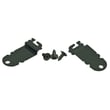
Installation guide
 Owner’s manual
 Error Codes


What's the average lifespan of a KitchenAid dishwasher?
A KitchenAid dishwasher typically lasts 10 to 14 years. For your KitchenAid KDTE104EWH3, lifespan depends most on water quality, how often you run 2 to 3 hour cycles, and routine care like cleaning and using rinse aid as outlined in the KDTE104EWH3 user guide.
What affects lifespan the most
- Hard water and mineral buildup; rinse aid helps reduce deposits and improves drying
- Maintenance habits (cleaning, clearing debris, fixing small leaks early)
- Load and cycle choices; longer, energy-efficient cycles are normal on newer designs
- Drain and fill health; slow filling or poor draining strains pumps and valves
- Door wear; repeated slamming or a door that will not latch can shorten component life
Quick care checklist (high impact, low effort)
- Use rinse aid consistently to improve drying and reduce hard-water spotting.
- Clean the dishwasher interior and filters regularly (follow the schedule in the manual).
- Keep spray arms clear of labels, seeds, and broken glass.
- Run hot water at the sink before starting a cycle for better wash performance.
- Fix leaks promptly; a worn lower door seal can let water escape and damage nearby parts.
Common wear items vs. “long-life” components
| Item type | What you may notice | Typical action |
|---|---|---|
| Wear items (rollers, seals, hoses) | Rack wobble, drips, poor draining | Inspect and replace as needed |
| Functional components (valves, pumps, heater) | Not filling, not draining, not drying | Diagnose symptoms, then replace the failed part |
| Structural components (tub, inner door liner) | Corrosion or structural leaks | Service evaluation recommended |
Why it matters
A dishwasher can run for years past the average when water flow, draining, and drying stay efficient. Small issues like poor draining or a minor door leak often lead to bigger failures if they are ignored.
Last updated: February 2026
Can I replace dishwasher parts myself?
Yes, for KitchenAid KDTE104EWH3 you can replace many dishwasher parts yourself if you can safely shut off power and water and follow the step-by-step procedures in the KDTE104EWH3 installation guide. Simple mechanical repairs (racks, latches, hoses) are usually the best DIY starting point.
Good DIY repairs vs. better left to a pro
Usually DIY-friendly
- Rack hardware and wheels (for example, dishwasher dishrack roller assembly, lower WPW10195417)
- Door latch and strike alignment (for example, dishwasher door latch WPW10653840)
- Drain hose replacement (routing and high-loop setup)
- Door balance and tension adjustments
- Access panel removal and reinstallation
Often better for experienced DIYers or a technician
- Electrical diagnosis (control, wiring, motor circuits)
- Leak diagnosis inside the sump and pump area
- Water fill problems involving valve testing and wiring checks
Safety and prep checklist (do these every time)
- Turn off the breaker to the dishwasher (do not rely on the door switch).
- Shut off the water supply valve.
- Protect the pump area when working with the door open so screws cannot fall into the sump.
- Avoid kinking or pinching the water line, drain hose, and power cord when sliding the unit.
- Plug into a grounded 3-prong outlet; do not use an adapter or extension cord.
Common model-specific DIY adjustments from the install guide
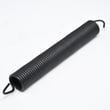
The KDTE104EWH3 installation instructions include a door tension check: if the door closes or falls open under its own weight, adjust the spring tensioner by moving the screw to a different numbered hole. Keep both sides set to the same hole.
| Symptom | What to check first | Typical DIY action |
|---|---|---|
| Door drops open or slams shut | Door spring tension | Move tensioner to a different hole on both sides |
| Door won’t latch | Latch alignment, obstruction | Inspect/replace latch, verify door closes square |
| Unit shifts when opening door | Mounting brackets | Re-secure using the correct attachment method |
Why it matters
DIY repairs save time and money, but dishwashers combine water, electricity, and sharp metal edges. Following the documented steps helps prevent leaks, electrical shock hazards, and repeat failures.
Last updated: February 2026
What are the commonly replaced parts in a dishwasher?
On the KitchenAid KDTE104EWH3 dishwasher, the most commonly replaced parts are the wash and drain components (pumps, hoses, inlet valve), door hardware (latch, seals, hinges), and rack hardware (rollers and adjusters). These parts wear from heat, detergent, hard-water buildup, and normal loading stress.
Common parts that fail or wear out
- Water inlet valve (dishwasher won’t fill, fills slowly)
- Drain pump and drain hose (dishwasher won’t drain)
- Heating element (poor drying, water not heating)
- Door latch and door seals (won’t start, leaks)
- Rack rollers and rack adjusters (rack won’t slide, rack falls off track)
Model-relevant examples for KDTE104EWH3
These are examples of frequently replaced items that match this model’s parts list:
| Symptom | Likely part type | Example part for this model |
|---|---|---|
| Lower rack sticks, wobbles, or derails | Rack roller/wheel | Dishwasher dishrack roller assembly, lower WPW10195417 |
| Won’t fill or fills very slowly | Water inlet valve | Dishwasher water inlet valve (listed for this model) |
| Not draining at end of cycle | Drain pump or drain hose | Dishwasher drain pump or dishwasher drain hose (listed for this model) |
| Poor drying | Heating element | Element assembly (listed for this model) |
| Door won’t latch or cycle won’t start | Door latch | Dishwasher door latch (listed for this model) |
Quick checks that prevent repeat failures
- Clean and reinstall filters correctly; the upper and lower filters must be locked in place (a loose filter can cause poor cleaning and pump strain).
- Keep spray paths clear; avoid blocking the detergent dispenser with large items.
- Use the correct detergent amount for your water hardness to reduce residue.
- Confirm the drain hose routing is correct; the installation guide calls for a high loop under the counter or an air gap, and notes a maximum drain hose length of 12 ft.
- If the door drops or won’t stay open, adjust door spring tension evenly on both sides (the installation guide describes moving the tensioner screw between numbered holes).
Why it matters
Replacing the right part first saves time and prevents secondary damage. For example, a restricted drain hose can overwork the drain pump, and a misrouted drain line can cause slow draining and odors.
For part identification, diagrams, and maintenance steps specific to KDTE104EWH3, use the KDTE104EWH3 owner’s manual and the KDTE104EWH3 installation guide.
Last updated: February 2026
What is the most common problem with KitchenAid dishwashers?
For the KitchenAid KDTE104EWH3 dishwasher, the most common issues we see are poor cleaning, not draining, leaks, and drying complaints. These usually trace back to normal-use items like filters and spray paths, or to service parts such as the drain system, water fill system, or door sealing.
Most common symptoms and what they usually mean
- Dishes still dirty: spray arms or filter area restricted; loading blocks spray.
- Standing water in the tub: drain path restricted, drain pump issue, or drain hose routing problem.
- Water on the floor: door seal wear, lower door area leaks, or oversudsing.
- Won’t start or stops mid-cycle: door not latching fully, control sensing a fault, or a protection condition.
- Poor drying: rinse aid use, cycle selection, and plastic items drying behavior.
Quick checks we recommend first (no parts required)
- Cancel/drain the cycle and listen for the drain sound.
- Check the tub bottom for debris that can block water flow.
- Confirm the water supply is on; this matters especially after installation.
- Press the overfill protection float down to be sure it moves freely.
- Reduce suds: use only dishwasher detergent and avoid overfilling.
Parts that commonly solve these problems on KDTE104EWH3
If the quick checks point to a component failure, these model-matched parts are common fixes:
| Symptom | Common part to check/replace | What it does |
|---|---|---|
| Not draining | Dishwasher drain pump W10876537 | Pumps water out through the drain hose |
| Not filling | Dishwasher water inlet valve W11175771 | Opens to let water into the dishwasher |
| Door won’t latch / won’t run | Dishwasher door latch WPW10653840 | Confirms the door is closed so the cycle can run |
| Leaking at the bottom of door | Dishwasher door seal, lower W10909089 | Seals the lower edge of the door opening |
Error codes and “Clean” light flashing
If you have a flashing Clean light or stored fault codes, use the model’s troubleshooting steps in the KDTE104EWH3 owner’s manual. For code lookups and what they mean, we also use the KitchenAid he dishwasher error codes reference to match symptoms to likely causes.
Why it matters
Cleaning, draining, and sealing problems can look like “the dishwasher is failing,” but they are often caused by a single restriction (debris, suds) or one service part (drain pump, inlet valve, latch, or lower door seal). Targeting the symptom first prevents repeat issues.
Last updated: February 2026