Installation guide
 Owner’s manual



What is the most common problem with a Maytag washer?
For a Maytag MHW5500FC0 washer, the most common service issues are “won’t drain” and “won’t spin,” because a drain restriction, a failing drain pump, or a door lock problem can stop the cycle and leave water in the tub.
Most common symptoms and what they usually point to
- Washer won’t drain: clogged pump filter, blocked drain hose, or a failing drain pump
- Washer won’t spin: load imbalance, door not locking, or a drain problem preventing high-speed spin
- Door won’t lock or unlock: failed door lock, wiring issue, or control not seeing a safe condition
- Excessive vibration or banging: washer not level, weak shocks, or overloaded drum
- Slow fill or no fill: restricted inlet screens, low water pressure, or a failing inlet valve
Quick checks we recommend before replacing parts
- Confirm the washer is level and all feet are firmly on the floor (leveling problems commonly cause vibration and spin complaints). Use the leveling steps in the MHW5500FC0 installation guide.
- Check for drain restrictions: verify the drain hose is not kinked and the standpipe or sink drain is not backing up.
- Run a Drain/Spin cycle with the tub empty to see if it drains strongly and ramps up to spin.
- Listen during drain: a loud hum with little or no water movement often points to a blocked or failing pump.
- If the door won’t lock or the cycle stops early, inspect the latch area for detergent buildup and confirm the door closes squarely.
Common parts involved (when symptoms match)
| Symptom | Likely area | Example part for MHW5500FC0 |
|---|---|---|
| Won’t drain, water left in tub | Drain system | Washer drain pump WPW10605427 |
| Door won’t lock, won’t start or won’t spin | Door lock system | Washer door lock WPW10443885 |
| Shaking, walking, loud banging in spin | Suspension and leveling | Washer shock absorber W11415987 |
| Slow fill or no fill | Water inlet | Washer water inlet valve WPW10435242 |
Why it matters
On front-load Maytag washers like the MHW5500FC0, the control typically will not allow a full-speed spin unless the door is locked and the washer can drain correctly. Fixing the drain or door-lock issue first often resolves “won’t spin” complaints without extra parts.
Last updated: January 2026
What's the average lifespan of a Maytag washer?
Maytag washers typically last 10 to 13 years with normal household use. For your Maytag MHW5500FC0 front-load washer, consistent maintenance and quick fixes for issues like draining, vibration, or door locking are what most often push lifespan toward the high end; see the MHW5500FC0 owner's manual for care routines.
Typical lifespan and what affects it
Most washer life is driven by load size, detergent use, installation, and how quickly small problems are corrected.
- Average range: 10 to 13 years
- Heavy use (large family, daily loads): closer to 8 to 10 years
- Light to moderate use with good care: 13 years or longer
Maintenance that adds years (especially for front-loaders)
- Run a monthly cleaning cycle (or hot cycle) to reduce residue and odor
- Use HE detergent and avoid over-dosing (extra suds strain the drain system)
- Leave the door ajar between loads so the boot can dry
- Check pockets to prevent coins and debris from damaging the drain pump
- Keep the washer level to reduce wear on suspension and bearings
Quick “fix now” symptoms (common life-shorteners)
If you address these early, you prevent secondary damage to the tub, motor, and controls.
| Symptom | Most common cause | What to check first |
|---|---|---|
| Won’t drain or drains slowly | Clog or failing pump | Clean pump area; inspect washer drain pump WPW10605427 |
| Excessive shaking/banging | Suspension wear or unlevel install | Leveling legs, floor slope, inspect washer shock absorber W11415987 |
| Door won’t lock or won’t start | Lock mechanism issue | Latch alignment; inspect washer door lock WPW10443885 |
Why it matters
A washer that is installed correctly and maintained consistently runs with less vibration, better draining, and fewer moisture issues. That reduces stress on high-cost assemblies (tub/drum, motor drive, and electronic controls) and extends the usable life of the MHW5500FC0.
Last updated: January 2026
How to reset F5 code on Maytag washer?
On the Maytag MHW5500FC0 washer, an F5 code is typically tied to a door lock or door switch problem; resetting only clears the code temporarily unless the underlying issue is fixed. Start by power-cycling the washer, then check the door latch area and wiring, and run a test cycle per the MHW5500FC0 user manual.
Quick reset steps (safe first)
- Press Power/Cancel to stop the cycle.
- Unplug the washer (or switch off the breaker) for 1 minute.
- Plug back in and try a Rinse/Spin or Drain/Spin cycle.
- If the door will not lock or unlock normally, do not force it; inspect the latch area for obstructions.
What usually causes an F5 code on this model
Most F5-related faults on front-load Maytag washers come down to the door not locking correctly or the control not sensing the lock.
Common causes:
- Door not fully closed (laundry caught between boot and glass)
- Loose door strike or misaligned hinge
- Failed door lock assembly
- Wiring connection issue between the lock and control
- Moisture or detergent residue interfering with the latch
Parts that commonly fix F5 symptoms
If the washer repeatedly shows F5 and the door lock action is inconsistent (no click, won’t lock, or unlocks mid-cycle), the door lock is a primary suspect.
| Symptom | Most likely check | Common replacement |
|---|---|---|
| Door won’t lock at start | Latch alignment, lock mechanism | Washer door lock WPW10443885 |
| Door locks then stops mid-cycle | Lock wiring, lock switch feedback | Washer door lock WPW10443885 |
| Won’t drain and errors appear after stopping | Drain path and pump operation | Washer drain pump WPW10605427 |
Why it matters
The washer uses the door lock signal as a safety interlock; if the control cannot confirm a locked door, it will stop tumbling and spinning to prevent leaks and injury. Fixing the lock or its connections prevents repeat shutdowns and incomplete cycles.
Helpful checks before replacing parts
- Open the door and wipe the latch and strike; remove any detergent buildup.
- Inspect the door boot for items trapped near the latch area.
- Verify the washer is level; excessive vibration can aggravate lock faults (leveling guidance is in the MHW5500FC0 installation guide).
- If the washer also struggles to drain, check the pump filter and drain path; a drain issue can interrupt cycles and create confusing symptoms.
Last updated: January 2026
Is it worth repairing a Maytag Neptune washer?
It’s worth repairing a Maytag Neptune washer when the fix is straightforward (drain, fill, door lock, or vibration issues) and the washer is otherwise in good condition; for major mechanical failures, replacement usually makes more financial sense. For your Maytag MHW5500FC0, we use the same cost-versus-condition approach and confirm model-specific procedures in the MHW5500FC0 installation guide.
Quick way we decide: repair vs replace
- Repair when the estimate is under 50% of the cost of a comparable new washer.
- Replace when the repair involves major teardown (tub, bearings, basket, or multiple failures).
- Repair when the washer has been reliable and the issue is isolated (one part, one symptom).
- Replace when you see repeated leaks, repeated error codes, or multiple worn suspension parts.
- Repair when you can DIY safely and the part is readily available.
Common repairs that are usually “worth it”
These are typical front-load washer repairs that often restore normal operation without a full rebuild:
- Not draining or stopping mid-cycle: check the washer drain pump WPW10605427 and drain path
- Not filling or filling slowly: inspect screens and consider the washer water inlet valve WPW10435242
- Door won’t lock or cycle won’t start: the washer door lock WPW10443885 is a common fix
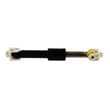
- Excessive shaking or banging: worn suspension such as the washer shock absorber W11415987
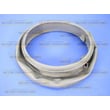
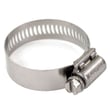
- Minor leaks at the door opening: boot and clamp issues (for example, the washer door boot spring clamp W11218344)
Repairs that usually push you toward replacement
These failures tend to be expensive in parts and labor, and they can lead to follow-on problems:
- Tub bearing or rear tub failures
- Inner basket or tub damage
- Multiple electronic issues (control board plus user interface)
- Severe corrosion, repeated flooding, or chronic odor/mold damage
Cost and effort comparison
| Repair type | Typical effort | Typical outcome |
|---|---|---|
| Drain, fill, door lock | Low to medium | High success, good value |
| Suspension/vibration | Medium | Good value if only one system is worn |
| Tub, bearings, basket | High | Often not cost-effective |
Why it matters
A front-load washer can look “mostly fine” but still be near the point where one major repair triggers another. Using a simple threshold (repair cost vs replacement cost) helps you avoid sinking money into a washer that is likely to need additional parts soon.
Last updated: January 2026