

Is it worth repairing a Kenmore washing machine?
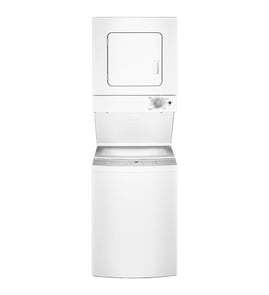
For a Kenmore stacked laundry center like model 41799370130, repairing the washer is worth it when the fix restores reliable washing and costs less than replacing the entire unit. Most “worth it” repairs are common wear items (belt, timer, hoses) rather than major tub or bearing failures.
Use this checklist to make a clear call before buying parts.
- Repair it if the washer still fills, drains, and spins but has a specific failure (no agitation, slipping, won’t advance cycles).
- Repair it if the issue is a known wear part such as a drive belt or timer.
- Repair it if the cabinet and tub are solid (no heavy rust, no recurring leaks).
- Replace it if the washer has repeated major failures (multiple breakdowns in a year).
- Replace it if the repair involves major teardown and high-cost core components (tub, transmission, main bearings).
These are typical, high-success repairs on laundry centers and usually restore normal operation.
| Symptom | Likely repair category | Typical effort |
|---|---|---|
| Won’t advance or stops mid-cycle | Timer or control issue | Medium |
| Spins weakly or slips under load | Belt or drive system | Medium |
| Won’t drain or drains slowly | Pump or drain path restriction | Medium |
| Leaks during fill or drain | Hose, clamp, or seal | Low to medium |
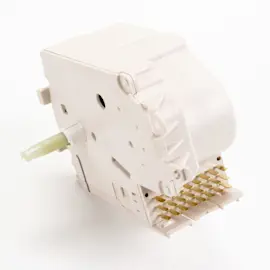
If your washer is not advancing through cycles, a timer replacement is a common fix; our guide how to replace a laundry center washer timer walks through the process.
A practical rule: if the repair is under about 50% of the cost of a comparable new unit and the rest of the laundry center is in good shape, repairing is the better value. Also factor in delivery, installation, and disposal costs for replacement.
Laundry centers are space-saving and expensive to replace as a set. A targeted repair often extends the life of the washer side for years, especially when the problem is a single wear component.
Last updated: February 2026
Where to find the model number on a Kenmore laundry center?
On Kenmore stacked laundry center model 41799370130, the model number is printed on a rating label attached to the washer section. We most often see it on the frame under the washer lid, on the washer cabinet near the bottom, or around the washer door opening on front-load styles.
- Under the washer lid on the top frame or rim
- On the side of the washer cabinet near the bottom edge
- Inside the washer door opening (door jamb) on front-load washer versions
- Behind the lower access panel area (if your unit has one)
- On the back panel of the laundry center cabinet
- Wipe the label with a damp cloth; detergent residue can hide the numbers.
- Use a flashlight and look for a silver or white sticker with a barcode.
- Write down the full model number exactly as shown (all digits).
- Take a photo of the label; it helps when ordering parts.
| What you see on the sticker | What it means | Why you need it |
|---|---|---|
| Model number | Identifies the exact laundry center design | Ensures diagrams and parts match |
| Serial number | Production code for your specific unit | Helps confirm manufacturing series |
| Electrical ratings | Voltage and amperage info | Useful for safe troubleshooting |
Kenmore laundry centers can look similar across multiple series, but parts like a dryer timer, lint screen, or drum components can vary by model. Using the exact model number helps us match the correct replacement part the first time.
If you are ordering a common dryer wear item, the lint trap 5304516871 is one example where confirming the model number prevents fit issues.
Last updated: February 2026
How much does it cost to replace a heating element in a Kenmore dryer?
For a Kenmore stacked laundry center like model 41799370130, replacing a dryer heating element typically costs $20 to $120 for the part and $150 to $350 total when you include professional labor. If you do the repair yourself, your cost is usually the part plus basic tools.
- Heating element part: $20 to $120 (most common replacements land in the mid-range)
- Service call and labor: $100 to $250 (varies by region and access in a stacked unit)
- Total installed cost: $150 to $350
- DIY total: usually $20 to $120
- Extra parts sometimes needed: thermal limiter, high-limit thermostat, or wiring repair
| Scenario | What you pay for | Typical total |
|---|---|---|
| DIY replacement | Part only | $20 to $120 |
| Pro replacement | Part + labor | $150 to $350 |
| Pro with extra heat-safety parts | Part + labor + thermostat/limiter | $200 to $450 |
- Element style: bare element vs. element in a housing/assembly
- Why it failed: restricted venting can overheat and damage heat components
- Stacked access: laundry centers can take longer to disassemble than a standalone dryer
- Related heat-safety parts: a failed limiter or thermostat can stop heat even with a good element
- Who installs it: independent tech vs. larger service company pricing
Even though the heating element itself is not listed in the parts shown for this model page, these heat-related parts are commonly tested and replaced when a dryer will not heat:
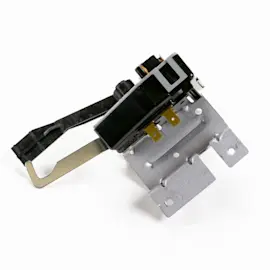
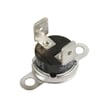
- Thermostat 134120900 (thermal limiter)
- Kelvinator dryer high-limit thermostat 3204267
- Lint screen and airflow path (cleaning and inspection)
If the real cause is poor airflow (clogged lint screen, crushed vent, blocked duct), a new heating element can fail again quickly. Fixing venting and confirming thermostats and limiters are good helps the repair last.
For step-by-step troubleshooting before buying parts, use laundry center dryer won't heat.
Last updated: February 2026
How can you tell the age of a Kenmore dryer?
To tell the age of a Kenmore dryer (including the dryer section of Kenmore stacked laundry center model 41799370130), we use the serial number, not the model number. The serial tag typically includes a date code that indicates when the unit was manufactured.
On most Kenmore laundry centers, the serial/model tag is usually in one of these spots:
- Inside the dryer door opening on the front panel
- On the door frame area near the lint screen housing
- Behind the lower access panel (if your unit has one)
- On the back panel of the cabinet
If the label is worn or missing, the model number (41799370130) still helps us identify compatible parts, but the serial number is what pins down the build date.
Kenmore laundry centers are commonly built by a major manufacturer (often Frigidaire/Electrolux for many 417-prefix models), and the serial format varies by manufacturer. In practice, decoding usually follows this workflow:
- Write down the full serial number exactly as shown
- Note any letters at the beginning; they often identify the factory or maker
- Look for a week and year code (common on many appliance serial tags)
- Compare the code to the manufacturer’s serial-date chart
| Identifier | What it tells us | Best use |
|---|---|---|
| Model number (41799370130) | Product family and configuration | Finding diagrams and correct replacement parts |
| Serial number | Manufacturing date code | Determining the unit’s age |
Knowing the manufacturing date helps us match the right revision of parts (timers, thermostats, belts, and door hardware) and set realistic expectations for wear items like drum bearings and drive components.
If you are troubleshooting noise, poor tumbling, or door issues on this model, these parts are often involved:
- Shaft drum 5303281153 (drum bearing kit components)
- Bearing 131825900 (drum bearing)
- Belt 134511600 (drive belt)
- Lint trap 5304516871 (lint screen)
- Catch 131658800 (dryer door catch)
Last updated: February 2026
Is Kenmore Elite high end?
Yes. Kenmore Elite is Kenmore’s higher-end line; it typically adds upgraded finishes, larger capacity options, quieter operation, and more cycle or feature choices than standard Kenmore models. For your Kenmore stacked laundry center model 41799370130, “Elite” status depends on the exact series and feature set.
Kenmore Elite models are positioned above baseline Kenmore units in features and styling. Common upgrades include:
- More wash and dry cycle selections (including specialty cycles)
- Better moisture sensing and temperature control for drying
- Quieter operation (improved insulation, smoother drum support)
- Higher-end controls and display layouts
- More robust component designs in high-wear areas (belt drive, drum support)
We recommend comparing your laundry center’s real-world features and repair parts to typical Elite expectations.
| What to check | Standard Kenmore | Kenmore Elite (typical) |
|---|---|---|
| Controls | Basic knobs, fewer options | More cycles, more settings, sometimes digital |
| Drying performance | Timed dry heavy reliance | Stronger sensing, better temp management |
| Noise/vibration | More noticeable | Reduced noise, smoother drum support |
| Service parts cost | Lower | Often higher |
If your dryer is noisy or you are evaluating build quality, the drum support parts are a good indicator. For example, worn drum support components can increase squealing or rumbling and make any unit feel “lower end” until repaired.
- Consider inspecting the shaft drum 5303281153 if you hear squealing, scraping, or thumping from the dryer drum.
“High end” is most noticeable in day-to-day results: consistent drying, fewer wrinkles, less noise, and better control over fabric care. Even a premium laundry center can feel average if airflow is restricted (lint buildup) or if wear parts like a belt or drum bearing are failing.
Last updated: February 2026
What is the capacity of the Kenmore 400 Series washer?
For Kenmore stacked laundry center model 41799370130, the washer capacity depends on the exact tub and basket design used in this model; Kenmore “400 Series” is a retail series name, not a single capacity. Most Kenmore laundry center washers of this style are in the 2.5 to 3.5 cu. ft. range.
Use these practical checks to confirm the correct spec for your specific unit.
- Check the model and serial tag (usually on the washer door opening or inside the dryer door area) and match it to the correct spec listing for 41799370130.
- Compare your washer tub size to typical laundry center tubs (they are usually smaller than full-size standalone front-loaders).
- If you are shopping for parts, match by model first; capacity does not change which belt, timer, or bearing your unit uses.
- If loads seem unusually small, confirm the washer is filling, agitating, and spinning normally.
A mid-size laundry center washer is built for everyday loads, not oversized bulky items.
- Mixed load of shirts, underwear, and socks
- Several pairs of jeans (load loosely)
- Bath towels (avoid packing the drum)
- Sheets and light bedding (comforters often exceed practical capacity)
| Washer capacity | Typical use | Notes |
|---|---|---|
| 2.5 to 2.9 cu. ft. | Small to medium loads | Common in compact laundry centers |
| 3.0 to 3.4 cu. ft. | Medium loads | Most typical “everyday” capacity |
| 3.5 cu. ft. and up | Larger loads | Less common in stacked centers |
Capacity affects cleaning and spin results. Overloading reduces agitation and rinsing, and it leaves clothes wetter, which increases dryer run time and heat stress on components like the electrolux washer drive belt 134511600.
For cycle-advance or performance issues that can make the washer seem “low capacity,” use our how to replace a laundry center washer timer guide as a repair reference.
Last updated: February 2026