Error Codes


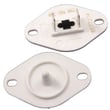
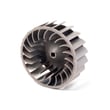
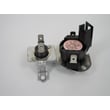
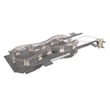
Where is my dryer part number?
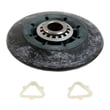
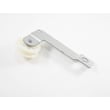
Your Whirlpool WED81HEDW1 dryer does not have one single “dryer part number.” Each replacement part has its own part number, and the best way to get the right one is to first find your dryer’s model number on the ID tag, then match the exact part in the parts list (for example, a dryer drum support roller WPW10314173).
Where to find the model/ID tag on a Whirlpool dryer
On most Whirlpool electric dryers like WED81HEDW1, the model and serial tag is typically located in one of these spots:
- On the door opening (door jamb) when you open the dryer door
- On the inside face of the door
- On the cabinet frame just inside the front panel opening
- Occasionally on the back panel of the dryer
How to use the model number to get the correct part number
Once you have WED81HEDW1, we use it to narrow parts down to the exact fit for your dryer. Then you select the specific part you need (belt system, heat system, drum support, airflow, etc.).
- Identify the symptom (no heat, noisy, won’t start, long dry times)
- Find the matching part category (heating, drum, motor, blower, sensors)
- Match the part by name and location on the diagram
- Confirm the part number shown for that exact item
- Replace related wear items together when it makes sense (rollers, idler, belt)
Common “part number” mix-ups (and what to check)
| What you have | What it means | What to do |
|---|---|---|
| Model number (WED81HEDW1) | Identifies the dryer | Use it to look up diagrams and parts |
| Part number (example: W10314171) | Manufacturer number for a specific part | Match it to the failed component |
| Part ID (example: WPW10314173) | Catalog identifier used to order | Use it to order the exact part |
Why it matters
Dryer parts often look similar across Whirlpool models, but small differences in mounting, wiring, and temperature ratings can cause poor performance or repeat failures. Using WED81HEDW1 first helps ensure the replacement part fits and works correctly.
Last updated: February 2026
How do you know if a thermal fuse is blown on a Whirlpool dryer?
On the Whirlpool WED81HEDW1 electric dryer, a blown thermal fuse commonly shows up as a dryer that will not start, or a dryer that runs with no heat. The sure way to know is a continuity test with a multimeter; a good fuse reads closed (near 0 ohms), and a blown fuse reads open.
Quick symptoms to look for
- Dryer will not start (most common)
- Motor hums briefly but drum never turns
- Dryer runs but does not heat (on some designs)
- Cycle ends early because the dryer overheats and trips safety devices
- You recently had poor airflow (long dry times, very hot cabinet, burning smell)
How to test the thermal fuse (safe, accurate method)
- Unplug the dryer (or switch off the breaker).
- Access the fuse location (typically on the blower housing or exhaust duct area).
- Remove at least one wire from the fuse terminal.
- Set your multimeter to continuity or lowest ohms.
- Test across the fuse terminals.
What the meter reading means
| Meter result | What it means | What to do next |
|---|---|---|
| Beep or ~0 to 1 ohm | Fuse is good (closed) | Keep troubleshooting heat/airflow |
| No beep or OL/infinite | Fuse is blown (open) | Replace the fuse |
Parts that commonly relate to this problem
If your fuse tests open, we replace it and correct the airflow issue that caused it.
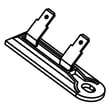
- Thermal fuse W10909685 (one-time safety device; replace if open)
- Dryer lint duct WPW10211896 (a crushed or lint-packed duct can overheat the dryer)
- Dryer thermistor WP8577274 (can contribute to temperature control problems)
Why it matters
The thermal fuse is a one-time safety cutoff. If we replace it without fixing restricted venting, the new fuse can blow again and the dryer can keep running too hot, which also increases dry time and energy use.
Last updated: February 2026
What are the common problems with Whirlpool dryers?
Common Whirlpool electric dryer problems (including model WED81HEDW1) are no-start, no-heat, not tumbling, loud squealing or thumping, long dry times, and error codes. Most issues trace to power supply, airflow restrictions, or wear parts like the idler pulley, drum rollers, and thermal fuse.
Most common symptoms and what usually causes them
- Dryer will not start: tripped breaker, door switch issue, failed thermal fuse, control problem
- Dryer runs but does not heat: missing 240V supply, failed heating element, blown thermal fuse, thermostat issue
- Drum will not spin: broken belt, seized drum rollers, failed motor, stuck blower wheel
- Loud noise (squeal, rumble, thump): worn drum rollers, worn idler pulley, damaged drum support parts
- Takes too long to dry: clogged lint screen or duct, crushed vent hose, blocked outlet grille, weak airflow
- Stops early or dries unevenly: dirty moisture sensor bars, sensor wiring issue, airflow problems
Quick checks we recommend first (fast, high-impact)
- Confirm power: Electric dryers need two hot legs (240V); a dryer can run on 120V but not heat if one breaker leg is tripped.
- Check airflow: Clean the lint screen; inspect the vent run for kinks, lint buildup, or a blocked exterior hood.
- Listen and observe: Squealing points to the idler or rollers; grinding can point to rollers or a blower wheel.
- Look for overheating signs: If the dryer shuts off or won’t restart until cool, address venting before replacing parts.
Common parts tied to these problems (WED81HEDW1)
| Symptom | Likely wear part | What it affects |
|---|---|---|
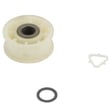
| Squealing or belt slip | Dryer idler pulley W10837240 | Belt tension and smooth drum rotation |
| Thumping/rumbling | Dryer drum support roller WPW10314173 | Drum support and noise control |
| No heat or no start after overheating | Thermal fuse W10909685 | Safety cutoff for overheating |
| Poor airflow noise or no airflow | Dryer blower wheel WP697772 | Moves air through the drum and vent |
Error codes and control-related issues
If the display shows an error, use our Whirlpool electronic control model dryer error codes to match the code to a likely failure (wiring, sensor, control, or heating circuit).
Why it matters
Dryer problems often start as airflow or wear-part issues; fixing them early helps prevent repeat thermal fuse failures, protects the heating circuit, and restores normal dry times.
Last updated: February 2026