Owner’s manual
 Error Codes



What are the disadvantages of a bottom freezer?
Bottom-freezer refrigerators like the GE GFE26GSKBSS keep fresh food at eye level, but the tradeoff is that frozen items sit lower and are usually stored in deep drawers. That can mean more bending, more digging for items, and less convenient access to bulky frozen foods; see the GFE26GSKBSS owner’s manual for your drawer and basket layout.
Common downsides you may notice
- You often need to bend or squat to reach frozen foods in the lower drawer.
- Items can get buried in stacked baskets, so it takes longer to find what you need.
- Large or heavy frozen items (roasts, bulk bags) can be awkward to lift out of a deep drawer.
- Freezer drawers can feel heavier when fully loaded, especially for kids or anyone with limited mobility.
- If the freezer door or drawer is slightly out of level, it may not close as smoothly (the manual includes door leveling guidance).
Bottom freezer vs. top freezer: quick comparison
| Feature | Bottom freezer | Top freezer |
|---|---|---|
| Fresh food access | Easier (at eye level) | Requires more bending |
| Frozen food access | More bending, drawer digging | Easier reach, more visible |
| Organization | Deep baskets, can hide items | Shelves, items more visible |
| Handling heavy items | Harder to lift up/out | Easier to lift from shelf height |
Tips to reduce the inconvenience
- Use bins or labeled freezer bags to prevent “buried” food.
- Keep heavy items in the upper basket area when possible.
- Don’t overfill; a packed drawer is harder to open and search.
- If the freezer drawer feels misaligned or rubs, follow the leveling and door adjustment steps in the manual.
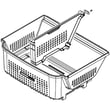
- For ice storage issues (overflowing, clumping), check the fit and condition of the refrigerator ice container assembly WR30X10174.
Why it matters
Most “bottom freezer complaints” are really access and organization issues. Setting up the baskets and keeping the drawer aligned helps the freezer close properly, reduces frustration, and protects door seals and rails from extra strain.
Last updated: February 2026
What is the average lifespan of a GE refrigerator?
Most GE refrigerators average about 10 to 15 years of service life. For a GE bottom-mount refrigerator like GFE26GSKBSS, lifespan depends heavily on maintenance (airflow, clean condenser area, good door sealing) and how hard the sealed system and ice maker have to work; see the GFE26GSKBSS owner's manual for care and operating guidance.
Typical lifespan ranges (what we see most often)
- 10 to 15 years is the common range for modern full-size refrigerators.
- Units that are kept clean, level, and well-ventilated often reach the upper end of that range.
- Heavy ice maker and dispenser use, warm room temperatures, and clogged condenser areas tend to shorten lifespan.
| Refrigerator situation | What it usually means for lifespan |
|---|---|
| Clean condenser area, doors seal tightly | Longer life, fewer cooling run-hours |
| Warm garage or tight cabinet enclosure | Shorter life due to higher compressor workload |
| Frequent door openings, full ice production | More wear on fans, valves, and ice maker |
Maintenance that extends life
- Keep airflow clear around the cabinet and vents; avoid blocking interior air returns.
- Clean dust and pet hair from the condenser area on a regular schedule.
- Keep door gaskets clean so the doors seal without gaps.
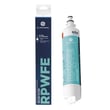
- Replace the water filter on schedule to reduce restriction in the water system (use the correct filter such as GE refrigerator water filter RPWFE).
- Fix small issues early (warm temps, frost buildup, noisy fan) before they strain the compressor.
Why it matters
A refrigerator lasts longer when it can hold temperature without running constantly. Simple upkeep reduces run time and prevents secondary failures in components like the evaporator fan motor, defrost system, and water inlet valve.
Last updated: February 2026
What is the most common problem with a GE refrigerator?
The most common issue we see with GE refrigerators like model GFE26GSKBSS is poor cooling (fresh food too warm, freezer not holding temperature). In many cases, the fix starts with airflow basics: clean condenser coils, confirm fans are running, and make sure vents are not blocked; then move to parts testing if needed.
Quick checks that fix many cooling complaints
- Set temperatures to typical targets: 37°F fresh food and 0°F freezer.
- Clean the condenser area (dust buildup reduces heat removal and cooling performance).
- Make sure food packages are not blocking interior air vents.
- Listen for the evaporator fan; a failed fan often causes warm temps and uneven cooling.
- Check door gaskets for gaps, tears, or a door that does not close squarely.
- If the compressor clicks but does not run, suspect a start device issue.
Common causes and the parts that often solve them
| Symptom | Most likely area | Example part for GFE26GSKBSS |
|---|---|---|
| Fridge warm, freezer OK | Airflow or sensor issue | Refrigerator temperature sensor WR55X10025 |
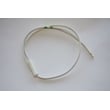
| Frost buildup, warm temps | Defrost system problem | Refrigerator defrost bi-metal thermostat WR50X10108 or refrigerator defrost heater WR51X10131 |
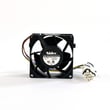
| Noisy, warm, weak airflow | Evaporator fan not running | Refrigerator evaporator fan motor and blade WR60X10352 |
| Random temp swings, dead display, intermittent cooling | Control/electronics | Refrigerator electronic control board WR55X44126 or refrigerator main board assembly WR55X46805 |
Why it matters
Cooling problems usually get worse over time. A simple airflow issue (dirty coils, blocked vents, leaky door seal) can mimic a major failure, so we start with the easy checks first. If those do not restore normal temperatures, the next step is testing the defrost system, fans, sensors, and control boards.
Model-specific tips from the manual
- Use the GFE26GSKBSS owner’s manual to confirm recommended temperature settings, airflow locations, and diagnostic guidance for your exact configuration.
- If your unit uses the RPWFE filter, follow the manual’s filter guidance and replacement intervals; a restricted filter can reduce dispenser flow (separate from cooling performance).
Last updated: February 2026