Owner’s manual
 Error Codes



How do I tell what model Kenmore fridge I have?
Your Kenmore refrigerator’s model number is printed on the identification label inside the fresh food (refrigerator) compartment; on Kenmore model 79578309805, the label is located on the right-hand side of the refrigerator compartment. Use that exact model number when ordering parts or checking features in the owner's manual.
Where to look for the model number label
Check these common label locations first (use a flashlight and look along the cabinet walls, not on removable shelves):
- Right-hand side wall inside the refrigerator compartment (common on this Kenmore bottom-mount)
- Side wall near the crisper drawers
- Ceiling area inside the fresh food compartment
- Side wall inside the freezer compartment (less common)
- Behind the toe grille or kick plate (on some refrigerators)
What to write down (and why)
Record both the model and serial number exactly as shown on the label.
| Item | Example | Why it matters |
|---|---|---|
| Model number | 79578309805 | Ensures the correct Kenmore parts list and diagrams |
| Serial number | (varies) | Helps match production changes and compatible parts |
| Purchase date | (your date) | Useful for maintenance history and documentation |
Tips to avoid ordering the wrong part
Small differences in digits can point to a different refrigerator design, even within the Kenmore 795 series.
- Match every digit in the model number (no missing or swapped numbers)
- Use the model number when selecting parts like a door switch, gasket, or control board
- If the label is worn, take a clear photo and zoom in to confirm characters
- Use the manual to confirm feature layout (shelves, ice maker, door bins) before buying parts
Why it matters
The model number ties your refrigerator to the correct parts diagrams, wiring, and troubleshooting steps. That is especially important for bottom-mount refrigerators where door, drawer, and defrost components can vary by revision.
Last updated: February 2026
How many cubic feet is my Kenmore refrigerator by model number?
For Kenmore model 79578309805, the most reliable way to get the exact cubic-foot capacity is to look up the specifications in the Owner's manual for your refrigerator series, then match the capacity to your exact model and color code.
Fast ways to find the capacity for model 79578309805
- Check the specs section in the Owner's manual for the 795.7830_ / 795.7831_ series.
- Look at the identification label inside the fresh food compartment; it is typically on the right-hand side of the refrigerator compartment (this label always lists your model and serial number, and it often lists key specs).
- Use the series format shown in the manual (795.7830_ and 795.7831_) to confirm you are reading the correct spec table for your exact unit.
- If you are measuring capacity yourself, measure the usable interior (not the outside cabinet) and convert volume to cubic feet.
DIY measurement method (when you need a quick estimate)
If you cannot access the spec table quickly, you can estimate capacity by measuring the interior and converting to cubic feet.
| What to measure | How to measure | Notes |
|---|---|---|
| Fresh food compartment | Width × depth × height (inches) | Subtract obvious unusable space (ducts, large housings) |
| Freezer compartment | Width × depth × height (inches) | Measure drawer cavity, not the door bin area |
| Convert to cubic feet | (Total cubic inches) ÷ 1728 | 1728 in³ = 1 ft³ |
Why it matters
Knowing cubic feet helps us choose correctly sized replacement items and accessories (bins, shelves, and air-flow related parts), and it also helps when comparing performance expectations for a bottom-mount refrigerator.
Last updated: February 2026
Why is the bottom of my Kenmore refrigerator leaking water?
Water at the bottom of your Kenmore 79578309805 bottom-mount refrigerator is usually caused by defrost water missing the drain path (clogged/iced drain) or a water-supply leak from the icemaker/dispenser line or valve. We recommend checking the drain area first, then the water line connection steps in the owner's manual.
Most common causes (and what to check)
- Clogged or frozen defrost drain: Water backs up and can spill into the fresh-food section or down to the floor.
- Drain tube issue: A loose, blocked, or damaged drain tube can let defrost water escape before it reaches the pan.
- Water line or inlet valve leak: Small drips at the rear connection or valve can run forward and look like a “bottom leak.”
- Door not sealing well: Excess moisture can increase frost and defrost water, making drain problems show up more often.
Quick troubleshooting steps
- Unplug the refrigerator and protect the floor with towels.
- Look for ice or debris in the drain trough area (inside, near the back wall). Melt ice with warm water (not boiling).
- Flush the drain with warm water using a turkey baster to confirm it flows freely.
- Inspect the rear water supply connection and tubing for slow drips.
- Check door closing: Make sure bins/shelves are not holding the door open and the gasket is clean.
Parts that commonly solve bottom leaks
| Symptom you see | Likely area | Part to consider for 79578309805 |
|---|---|---|
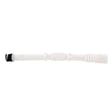
| Water pooling after defrost cycles | Drain path | Refrigerator drain tube 5251JA3003D |
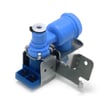
| Drips at back near water line/valve | Water supply | Refrigerator water valve AJU55759303 |
| Water/ice buildup from warm air leaks | Door sealing | Refrigerator door gasket ADX73410702 |
Why it matters
A recurring leak can lead to ice buildup, odors, and floor damage. Fixing the drain flow or stopping a slow water-line drip also helps your refrigerator maintain stable temperatures and reduces extra frost.
Last updated: February 2026
What are the common problems with Kenmore Elite refrigerators?
Common Kenmore Elite refrigerator problems include warm temperatures from airflow or defrost issues, doors that do not seal or close fully, ice maker and water dispenser troubles, and control or compressor-related failures. For your Kenmore 79578309805, our owner's manual troubleshooting guide is the fastest way to match symptoms to checks.
Most common symptoms we see (and what usually causes them)
- Not cooling or weak cooling: dirty condenser coils, blocked vents, evaporator frost buildup, or a failing compressor
- Frost buildup or ice crystals: door not closing properly, frequent door openings, gasket sealing problems
- Water leaks or puddles: clogged/iced drain path or drain tube, excess humidity causing more defrost water
- Ice tastes bad or smells: old ice, unwrapped food odors, dirty ice bin, mineral-heavy water
- Lights not working or door alarm issues: door switch not closing consistently
Quick checks before replacing parts
- Confirm doors close and seal: push doors firmly shut; make sure bins and shelves are fully seated.
- Level the refrigerator: an unlevel cabinet can keep doors from closing completely.
- Clean condenser coils: dirty coils reduce heat transfer and make the compressor work harder.
- Check for gasket sticking: clean the gasket and the surface it touches; a thin coat of paraffin wax can help.
- If you have water under the unit: inspect the drain path and consider replacing the refrigerator drain tube 5251JA3003D if it is cracked or restricted.
Parts that commonly fix these problems on model 79578309805
| Symptom | Common part to check | What it affects |
|---|---|---|
| Interior light stays off or acts intermittent | Lg refrigerator door switch 6600JB1010A | Light and door-closed sensing |
| Water leaking inside or under refrigerator | Refrigerator drain tube 5251JA3003D | Defrost water routing |
| No water to dispenser or ice maker | Refrigerator water valve AJU55759303 | Water supply into refrigerator |
| Frost buildup, poor cooling after a few days | Refrigerator defrost heater 5300JB1100J or refrigerator defrost sensor assembly 6615JB2005C | Defrost system operation |
| Clicking, no start, or intermittent cooling | Refrigerator compressor start relay (match by part number) | Compressor starting circuit |
Why it matters
Most “not cooling” complaints start with airflow, door sealing, or dirty condenser coils. Fixing those basics first prevents unnecessary control board or compressor replacements and helps food stay safely cold.
Last updated: February 2026
How to tell if a Kenmore refrigerator compressor is bad?
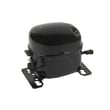
If your Kenmore 79578309805 bottom-mount refrigerator runs but won’t cool, and you hear repeated clicking or the compressor overheats, the compressor system is failing or the start device is not letting it start. Use the 79578309805 owner’s manual troubleshooting checks first.
Signs that point to a compressor or start problem
Look for a pattern of symptoms, not just one:
- Fresh food and freezer sections stay warm while the unit “runs”
- Repeated click, hum, then click again from the compressor area
- Compressor is very hot and shuts off, then tries again
- Breaker trips when the compressor attempts to start
- Runs almost constantly and still cannot pull temperatures down
Rule out normal long run time (common false alarms)
The manual notes that high-efficiency compressors can run longer, and many sounds are normal (clicking during cycling, gurgling refrigerant flow, sizzling during defrost).
Check these basics first:
- Allow up to 24 hours after first plug-in or a power interruption
- Make sure doors fully close and seals are not leaking
- Clean condenser coils so heat can dissipate
- Reduce frequent door openings and avoid overloading with warm food
Compressor vs. start relay: what the symptoms mean
| What you observe | Most likely issue | Typical next step |
|---|---|---|
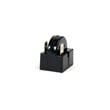
| Clicks repeatedly, won’t stay running | Start relay/start device | Test/replace start device; see refrigerator compressor start relay 6748C-0004D |
| Runs steadily but no cooling | Compressor or sealed system | Professional sealed-system diagnosis |
| Runs long but eventually cools | Airflow, coils, door leak | Clean coils, improve door seal, verify settings |
Why it matters
A compressor repair is a major job; ruling out airflow and start-device problems first prevents unnecessary sealed-system work and often restores normal cooling faster.
Last updated: February 2026