Owner’s manual
 View engine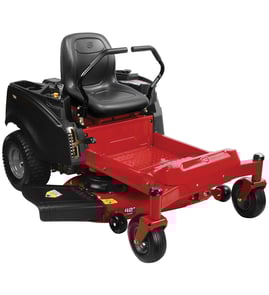



Are all Craftsman mower blades the same?
No. Craftsman mower blades are not all the same; the correct blade depends on your exact mower model (including deck size) and the blade mounting pattern. For Craftsman model 247204191, match the replacement blade by the OEM part number and the blade’s dimensions so it fits the spindle correctly and cuts safely.
A “Craftsman blade” can look similar but still be wrong for your deck. Check these items before ordering:
- Model number: 247204191 (best starting point)
- Deck size: blades are sized to the cutting deck
- Center hole / mounting pattern: star, round, bow-tie, etc.
- Blade length and width: must match the original blade
- Blade orientation: right-hand vs left-hand (on multi-blade decks)
- Lift style: standard, high-lift, mulching (affects cut and bagging)
Use this table to confirm you are comparing the right details:
| Spec to compare | Where to find it | Why it matters |
|---|---|---|
| OEM blade part number | Stamped on the blade or listed in the 247204191 owner’s manual | Ensures correct fit and intended performance |
| Length (tip to tip) | Measure the old blade | Wrong length can hit the deck or leave uncut strips |
| Center hole pattern | Look at the blade center | Prevents slipping, vibration, and spindle damage |
| Lift / blade type | Blade shape and packaging | Changes airflow, cut quality, and bagging |
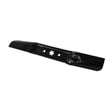
One blade listed for this model page is a 2-in-1 style deck blade. Use it only if it matches your deck configuration and the original blade specs:
Using the wrong mower blade can cause poor cutting, excessive vibration, damaged spindles/mandrels, and unsafe operation. Matching by model number and blade mounting pattern keeps your Craftsman deck running smoothly and helps protect the mandrel and belt drive system.
Last updated: February 2026
Do I want high lift or mulching blades?
For your Craftsman 247204191 rear-engine riding mower, choose high-lift blades when you want the cleanest bagging or strongest side discharge; choose mulching blades when you want to finely chop clippings and return them to the lawn. Your best pick depends on grass height, moisture, and whether you bag.
- Pick high-lift if you bag often, mow taller grass, or want a cleaner discharge path.
- Pick mulching if you want to feed the lawn with clippings and usually mow dry grass more frequently.
- If you switch between bagging and mulching, a 2-in-1 or 3-in-1 style blade setup is typically the most flexible (with the correct mulch plug/baffle installed).
- Create stronger airflow (vacuum) to stand grass up
- Move clippings efficiently into a bagger or out the chute
- Tend to leave fewer clumps in heavier growth
- Usually louder and can pull more dust in dry conditions
- Have extra cutting surfaces to recut clippings
- Keep clippings circulating under the deck longer
- Work best when you mow often and avoid overgrown, wet grass
- Can bog down more easily in very tall or damp grass
| Your priority | Best choice | Why |
|---|---|---|
| Bagging leaves and clippings | High-lift | Strong airflow fills the bag more consistently |
| Clean side discharge | High-lift | Throws clippings farther and reduces chute buildup |
| Healthier lawn with less cleanup | Mulching | Returns fine clippings as nutrients |
| Overgrown or wet grass | High-lift | Moves material out faster, less recutting |
Blade style changes deck airflow. Airflow affects cut quality, clumping, and how hard the engine works. Matching the blade to your mowing routine helps you get a cleaner cut and reduces belt strain and vibration.
- Confirm the correct blade style and deck setup (mulch plug, baffles, discharge) in the 247204191 owner's manual.
- If your mower uses a 54-in deck configuration, a common option is a 2-in-1 blade such as the mtd lawn tractor 2-in-1 blade, 54-in deck 942-05056A (verify fit by model before ordering).
Last updated: February 2026
How to find Craftsman mower parts?
To find the right parts for your Craftsman model 247204191, match the model number from the product label to the parts diagrams and parts list, then confirm the part description and hardware size before ordering. The fastest path is using the exploded views in the 247204191 owner's manual.
- Locate the model/serial label on the mower; it’s commonly on the rear frame between the rear wheels.
- Write the model number exactly as shown: 247204191.
- Use the parts diagrams to identify the assembly (deck, drive, steering, electrical).
- Match the part by name and size (belt width/length, blade deck size, fastener diameter).
- Compare your old part to the diagram and description before ordering.
- Replace worn hardware when needed (nuts, bolts, cotter pins) to prevent repeat failures.
These are frequent wear items for rear-engine riding mowers and are available for model 247204191:
| What you’re fixing | What to look up | Example part from this model |
|---|---|---|
| Mower won’t move or slips | Ground drive belt size | Ground drive belt 954-04317A |
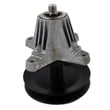
| Blades won’t spin or cut is uneven | Blade drive belt, mandrel, blade condition | Blade drive belt (954-04329A), mandrel and pulley assembly (918-06978) |
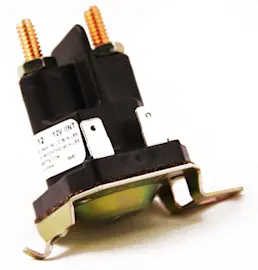
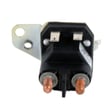
| No crank or intermittent starting | Solenoid, interlock switch, wiring | Starter solenoid (725-06153), interlock switch (725-04363) |
Using the exact model number and diagram callouts prevents ordering a look-alike part that does not fit (especially belts, blades, and electrical parts). It also helps you choose the correct deck and drive components for your specific Craftsman configuration.
Last updated: February 2026
How to find riding lawn mower model number?
On a Craftsman riding mower like model 247204191, the model number is printed on a product ID label or stamped tag on the mower frame or deck area. Check common label spots first, then confirm the exact characters against the 247204191 owner's manual.
Look for a white or silver sticker, or a stamped metal tag. Typical locations include:
- Rear of the frame cover, between the rear wheels
- Rear of the frame (near the hitch area)
- Underside of the seat pan (lift the seat)
- Right or left side of the mower frame rail
- Near the cutting deck, especially the rear-left area of the deck shell
- Near the engine starter housing or recoil starter area (if equipped)
Model labels often include multiple identifiers. Record them exactly as shown.
- Model number (example: 247204191)
- Serial number
- Date code (if listed)
- Engine model and type (helpful for engine parts)
| Item | Why it matters | Example format |
|---|---|---|
| Model number | Matches the correct parts diagrams | 247204191 |
| Serial number | Helps confirm production run | Letters and numbers |
| Engine model | Needed for engine-specific parts | Varies by engine brand |
Using the exact model number prevents ordering the wrong belts, blades, or electrical parts. For example, the correct ground drive belt length and deck blade style can vary by production version, even within the same Craftsman mower family.
While you are under the seat and around the frame, also look for loose wiring at safety switches and battery cables. A common no-crank cause is a failed interlock switch or solenoid.
- Inspect the seat switch wiring and connector
- Check battery terminals for corrosion and tightness
- Verify the brake pedal is fully depressed
- Confirm the PTO/blade switch is in the OFF position
- If it clicks but will not crank, test the lawn tractor starter solenoid 725-06153
Last updated: February 2026
How to identify a lawn mower engine?
To identify the engine on your Craftsman model 247204191, locate the engine’s ID tag or stamped numbers on the engine shroud or block, then record the model, type/spec, and code/serial so you can match the correct parts and service information in the 247204191 owner's manual.
Check these common locations first (clean the area so the numbers are readable):
- Above the muffler on the sheet metal shroud (often stamped into the metal)
- Front of the engine near the air cleaner housing
- Valve cover area or the engine block casting near the starter
- Under the seat or rear cover area if the label faces inward on a rear-engine rider
- On a stickered ID plate riveted to the blower housing
Engine identification usually includes multiple fields. Copy them exactly, including dashes.
| What you’ll see | What it means | Why we need it |
|---|---|---|
| Model | Engine family identifier | Matches the correct parts list |
| Type/Spec | Build configuration | Ensures the right carburetor, ignition, and gaskets |
| Code/Serial | Production date/sequence | Helps confirm revisions and superseded parts |
- Use a flashlight and take a photo, then zoom in.
- If the stamp is faint, wipe with degreaser and a rag; avoid sanding.
- Write letters and numbers exactly (for example, 0 vs O, 1 vs I).
- If the mower will not crank, check battery connections first; a no-crank symptom can look like an “engine problem.”
The mower model 247204191 identifies the tractor, but the engine model identifies the powerplant. Many Craftsman riders used multiple engine variants across production runs, and the engine ID is what keeps you from ordering the wrong ignition, fuel, or starting parts.
Last updated: February 2026
Is it better to sharpen a lawn mower blade or just buy a new one?
For a Craftsman 247204191 rear-engine riding mower, sharpening is the better choice when the blade is only dull and still straight; it restores cut quality at low cost. Buy a new blade when you see cracks, bends, deep nicks, or a thin worn edge because damage can cause vibration and poor cutting.
- Sharpen when the edge is dull, the blade is straight, and damage is minor.
- Replace when the blade is structurally compromised or won’t balance after sharpening.
- Grass tips look ragged or torn after mowing
- The mower leaves uneven strips even with the deck set correctly
- The blade edge is dull but not chipped deeply
- The blade can be sharpened and still balance properly
- You want to extend blade life between replacements
- Any crack (replace immediately)
- Blade is bent or has a visible twist
- Large chunks missing or deep gouges near the cutting edge
- The blade has been sharpened so much that the cutting edge is getting thin
- Persistent vibration even after cleaning the deck and checking blade balance
| Check | Sharpen | Replace |
|---|---|---|
| Minor dullness | Yes | No |
| Small nicks | Yes | Sometimes |
| Bent blade | No | Yes |
| Cracks | No | Yes |
| Won’t balance | No | Yes |
A sharp, balanced blade cuts cleanly so your lawn recovers faster and your mower’s mandrel, spindle bearings, and belt drive see less vibration and stress.
- Remove the key and disconnect the spark plug wire before working near the deck.
- Clean built-up grass from the blade and deck; buildup can mimic a “dull blade” cut.
- After sharpening, always check balance; an unbalanced blade can damage rotating components.
- Use the correct blade style and length listed in the 247204191 owner’s manual.
Last updated: February 2026
What are the common problems with Craftsman lawn mowers?
On the Craftsman riding mower model 247204191, the most common problems are no-start conditions, rough running, poor cutting, and drive issues. These usually trace back to fuel quality, ignition and safety interlocks, belt wear, or deck spindle (mandrel) problems; our 247204191 owner's manual walks through the correct checks and adjustments.
- Won’t crank or clicks once: weak battery, corroded terminals, bad starter solenoid, or an open safety switch circuit
- Cranks but won’t start: stale fuel, clogged carburetor jets, dirty air filter, fouled spark plug
- Starts then dies or surges: fuel restriction, water in fuel, partially clogged carburetor, choke linkage issues
- Blades won’t engage or cut is uneven: worn deck belt, damaged idler/pulley, loose blade hardware, worn mandrel bearings
- Won’t move or slips under load: worn ground drive belt, misrouted belt, transaxle linkage issues
- Use fresh gasoline and confirm the fuel shutoff (if equipped) is open.
- Inspect battery connections for tightness and corrosion.
- Verify safety interlocks: seat switch, brake/parking brake switch, and PTO/blade switch position.
- Check belts for glazing, cracking, or slack.
- Look under the deck for packed grass and blade damage.
These are common wear or failure items that often solve the symptoms above:
| Symptom | Part to inspect/replace | Example from this model’s parts |
|---|---|---|
| No crank, intermittent crank | Starter solenoid | Starter solenoid 725-06153 |
| Blades won’t stay engaged, poor cut | Blade drive belt | Blade drive belt 954-04329A |
| Mower won’t move or slips | Ground drive belt | Ground drive belt 954-04317A |
| Vibration, uneven cut, noisy deck | Mandrel/spindle assembly | Mandrel and pulley assembly 918-06978 |
Catching a weak electrical connection, failing belt, or noisy mandrel early prevents bigger failures like burned PTO components, damaged pulleys, and premature transaxle wear. It also improves cut quality and reduces vibration.
Last updated: February 2026
What brand engine does Craftsman use?
Craftsman riding mowers can use engines from several manufacturers, but Briggs & Stratton is the most common across many Craftsman mower lines. For your Craftsman model 247204191, the exact engine brand and spec details are listed on the engine identification label and in the 247204191 owner's manual.
Depending on the mower series and year, Craftsman has commonly been equipped with engines from:
- Briggs & Stratton
- Kohler
- Kawasaki
- MTD-branded engines (on some MTD-built units)
- Other OEM suppliers used in limited runs
Use the mower and engine labels to match the correct parts and service information.
- Look for the engine shroud label (often on top or side of the engine)
- Record the engine model, type, and code (or spec number)
- Check the mower model tag to confirm you are working on 247204191
- Compare what you find to the engine section in the 247204191 owner's manual
| What you need | Where to look | Why it matters |
|---|---|---|
| Engine model/spec | Engine shroud or valve cover area | Ensures correct tune-up and internal engine parts |
| Mower model number | Frame under seat or rear fender area | Ensures correct belts, blades, and chassis parts |
Engine brand and spec determine the correct maintenance parts (spark plug, air filter, fuel filter) and the right repair procedures. Even within the same Craftsman mower family, engine suppliers and specifications can vary by production run.
Last updated: February 2026
What size blades for a 54 inch deck?
For Craftsman riding mower model 247204191, a 54-inch deck uses 54-inch deck blades; the model-matched replacement blade we list is the Mtd lawn tractor 2-in-1 blade, 54-in deck. Use the exact blade part callout and quantity shown in the 247204191 owner's manual before ordering.
For a 54-inch deck on model 247204191, match the blade by deck size and the blade’s mounting pattern (center hole) and lift style.
- Use a blade labeled for a 54-in deck
- Match the center mounting pattern to your existing blade/spindle
- Replace blades as a set so cut height and balance stay even
- Torque the blade fasteners to the spec in the manual
- Inspect the deck for damage before installing new blades
| Deck size | Part | Part number | Blade type |
|---|---|---|---|
| 54-in | Mtd lawn tractor 2-in-1 blade 942-05056A | 942-05056A | 2-in-1 (multi-purpose) |
- Measure your old blade tip-to-tip and compare to the replacement listing
- Confirm the center hole shape (for example, star vs round)
- Verify your deck uses multiple blades (common on 54-inch decks) and replace all of them
- Check the spindle area for wobble; a worn mandrel can make new blades vibrate
A 54-inch deck can use different blade mounting patterns and blade styles across brands and deck builds. Matching the correct 54-inch deck blade for model 247204191 prevents vibration, poor cut quality, and premature spindle wear.
Last updated: February 2026
What year is Craftsman Model 247204191?
Craftsman model 247204191 is a model number, not a date code, so it does not directly tell the year of manufacture. To identify the year, we use the mower’s product identification label (often called the model/serial tag) and match the serial number format shown in the 247204191 owner's manual.
On most Craftsman rear-engine riding mowers, the build date is tied to the serial number on the ID label, not the model number.
Check these common label locations:
- Under the seat pan or on the seat frame area
- On the rear fender or frame near the transaxle
- On the mower’s chassis rail near the engine
- Near the footrest area on the frame
Many Craftsman and MTD-built units use a serial number that includes a date segment. The exact pattern varies by production run, so we recommend matching your serial number to the format shown in the manual.
Typical serial number date patterns you may see:
| What you see in the serial number | What it usually represents | Example outcome |
|---|---|---|
| A 6-digit date block | Month, day, year | 072811 = July 28, 2011 |
| A longer serial with a date embedded | Date is part of a longer string | Find the date block, then decode |
Knowing the correct year helps us match the right parts and diagrams for your exact production run, especially for wear items like belts, blades, and electrical components.
If you are troubleshooting a no-crank or intermittent start while you are checking the ID label, also inspect the wiring and safety switches; the lawn tractor interlock switch 725-04363 is a common starting circuit component on this model family.
Last updated: February 2026
Where can I get Craftsman replacement parts?
For your Craftsman model 247204191, you can get replacement parts from Sears PartsDirect, the Craftsman brand store, and major retailers that carry Craftsman and MTD-compatible components. The key is matching the exact model number and confirming the part type (mower deck, drive, or electrical) before you buy.
- Sears PartsDirect (model-specific diagrams and part lookups)
- Craftsman authorized retailers (online and in-store)
- Large home improvement retailers that stock Craftsman items
- Outdoor power equipment dealers (helpful for fit checks and cross-references)
- Reputable online parts sellers (verify model and part numbers carefully)
Use the model number 247204191 and confirm the part’s description and measurements against the parts diagram in the 247204191 owner's manual. For common wear items, also compare belt width and length, blade deck size, and mounting style.
| What you’re fixing | Typical part type | Example from this model’s parts list |
|---|---|---|
| Mower won’t move or slips | Ground drive belt | Ground drive belt 954-04317A |
| Blades won’t spin or cut is uneven | Blade drive belt, blade, mandrel | Blade drive belt, blade, mandrel and pulley assembly |
| No crank or intermittent start | Solenoid, interlock switch | Starter solenoid, interlock switch |
Craftsman riding mowers often share components with MTD-built platforms, so the same style of belt, blade, or switch can look similar across models but still differ in length, mounting, or connector style. Matching by model 247204191 prevents returns and protects the mower deck and drive system.
Last updated: February 2026