Error Codes


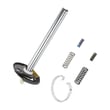
How to tell if a washer impeller is bad?
On the Whirlpool LSR7133KQ1 washer, an “impeller” problem usually shows up as poor wash action (clothes not moving) or poor draining. If the part spins freely by hand with little resistance, wobbles, or makes grinding noises, the impeller or the component driving it is typically worn.
What “impeller” means on this model
This Whirlpool LSR7133KQ1 is a traditional top-load design that normally uses an agitator and a drain pump (not the low-profile wash-plate impeller found on many newer HE top-loaders). Customers often say “impeller” when they mean one of these:
- Drain pump impeller (inside the pump) that moves water out
- Agitator/drive system that moves clothes during wash
- Motor-to-transmission coupling that transfers power
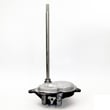
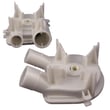
A common drain-related suspect is the washer drain pump WP3363394.
Quick checks you can do (no special tools)
- Unplug the washer before touching internal parts.
- If the washer won’t drain or drains slowly: listen for the pump running during drain; a loud hum with little water flow often points to a jammed or damaged pump impeller.
- If the washer won’t agitate or spin: watch the tub during the cycle; if the motor runs but the basket does not move, the drive system is likely slipping.
- Check for wobble or scraping sounds when turning the basket/agitator by hand (with the washer off).
- Look for leaks at the pump area; a cracked pump housing often accompanies impeller damage.
Symptoms and the most likely part to inspect
| Symptom | Most likely area | Common related part on LSR7133KQ1 |
|---|---|---|
| Hums during drain, little/no water out | Pump impeller jammed/broken | Washer drain pump |
| Drains but won’t agitate/spin | Drive not transferring power | Motor coupling, clutch |
| Spins weakly, burning/rubber smell | Clutch slipping | Clutch |
| Loud grinding in spin | Drive block worn | Drive block |
Why it matters
A damaged impeller (or the drive part you are calling an impeller) forces the motor to work harder, increases cycle time, and can lead to repeated no-drain/no-spin failures. Catching it early helps prevent secondary damage to the motor, clutch, or gear case.
Last updated: January 2026
What is the most common problem with whirlpool washers?
The most common Whirlpool washer problem is a no-drain or no-spin condition, often caused by a worn drive system or a restricted/failed drain pump. On the Whirlpool LSR7133KQ1 (direct-drive top load), we most often see issues tied to the coupling, clutch, or pump.
Most common symptoms customers report
- Washer won’t drain (water left in tub)
- Washer won’t spin or spins weakly
- Loud grinding/rattling during spin
- Burning rubber smell or intermittent agitation
- Water leaking near the pump area
What to check first (fast, practical steps)
- Confirm the lid is closing and latching properly; many top-load washers will not spin if the lid switch circuit is not made.
- Check the drain hose for kinks, clogs, or a standpipe that is backing up.
- Listen during drain: if you hear a hum but no water movement, the pump may be jammed or failing.
- Look for coupling failure signs: motor runs but tub does not agitate or spin, sometimes with a rattling sound.
- Check for clutch/drive wear: tub may start spinning slowly, then stop, or struggle with heavier loads.
Common parts that fix “won’t drain” or “won’t spin” on LSR7133KQ1
| Symptom | Most likely area | Example part for this model |
|---|---|---|
| Won’t drain, pump noisy or leaking | Drain system | Washer drain pump WP3363394 |
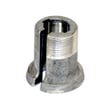
| Motor runs, no agitate/spin | Drive coupling | Washer motor coupling 285753A |
| Spins weak, slips under load | Clutch/drive | Clutch 285785 |
Why it matters
A washer that won’t drain or spin usually leaves clothes soaking wet and can strain the drive motor over time. Catching a failing pump, coupling, or clutch early helps prevent secondary damage to the gear case and drive components.
Helpful DIY guidance
If your main symptom is no drain or no spin, follow a step-by-step diagnostic flow like troubleshooting a top load washer that wont drain or spin video to narrow it down before ordering parts.
Last updated: January 2026
How do I fix a low flow error on my washing machine?
A low flow (LF/LO FL) error on your Whirlpool LSR7133KQ1 washer means the washer is not filling fast enough. We fix this by restoring water supply to the inlet valve: confirm both faucets are fully open, straighten hoses, and clear hose screen clogs at the valve.
Quick checks that solve most low flow problems
- Turn both hot and cold wall valves fully on (even for cold washes, many washers still monitor both supplies).
- Make sure inlet hoses are not kinked, crushed, or pushed tight against the wall.
- Verify strong water pressure at the laundry faucet (a weak stream points to a home plumbing issue).
- Confirm the hose washers are seated and the hose connections are snug (air leaks can reduce fill performance).
- If you recently moved the washer, re-check hose routing and that the hoses are not twisted.
Clean the inlet hose screens (most common fix)
Sediment and mineral buildup often clog the small screens where the hoses connect to the washer.
- Unplug the washer.
- Turn off both water valves.
- Remove the hot and cold hoses from the washer.
- Inspect and gently clean the inlet screens at the washer connections.
- Run water through each hose into a bucket or sink to flush debris.
- Reconnect hoses, turn water back on, and check for leaks.
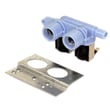
If the washer still fills slowly after cleaning screens and confirming good supply, the inlet valve can be sticking or restricted internally; replacing the washer inlet valve 285805 restores normal fill in many cases.
What to check based on symptoms
| What you notice | Most likely cause | What we do next |
|---|---|---|
| Slow fill on both hot and cold | Clogged screens or low house pressure | Clean screens; verify pressure |
| Slow fill on hot only (or cold only) | One clogged screen or one bad valve solenoid | Clean that side; consider valve replacement |
| Fills normally, then stops and errors | Intermittent valve, pressure switch hose issue | Re-check screens; inspect air dome hose routing |
Why it matters
Low flow can cause long cycle times, poor rinsing, and repeated error stops. Fixing the water supply path protects the inlet valve and helps the washer reach the correct water level consistently.
Last updated: January 2026
How do I reset the sensor on a whirlpool washer?
On the Whirlpool LSR7133KQ1 washer, a “sensor reset” is typically done by clearing the control and running a recalibration or diagnostic sequence so the washer relearns fill and spin behavior. Start with a power reset, then use the cycle knob sequence to enter diagnostics and complete calibration.
Quick reset steps (most effective order)
- Unplug the washer (or switch off the breaker) for 1 minute.
- Restore power and wait 30 seconds.
- Set the timer/cycle knob to a normal cycle (do not start yet).
- Turn the cycle knob in a steady pattern to enter diagnostics (common method is rotating the knob clockwise in steps until the console indicators respond).
- Run the calibration or automatic test, then let it finish without interrupting.
What to check if the “reset” does not stick
If the washer still overfills, underfills, stops mid-cycle, or acts like it cannot “sense” water level, we focus on the parts that actually do the sensing and switching.
- Make sure both hot and cold supply valves are fully open.
- Confirm inlet screens are not clogged at the hose connections.
- Check the pressure hose for kinks, pinholes, or a loose fit (air leaks prevent correct water-level sensing).
- If filling is erratic, the inlet valve can stick or flow unevenly; consider the washer inlet valve 285805.
- If the washer will not advance or behaves inconsistently, a failing timer can mimic a sensor issue; consider the washer timer WP3948323.
Symptoms and the most likely direction
| Symptom | Most common cause | What we do next |
|---|---|---|
| Won’t fill or fills very slowly | Supply issue or inlet valve problem | Check screens, then test/replace inlet valve |
| Overfills or won’t stop filling | Pressure hose/air leak or level switch system issue | Inspect hose routing and connections |
| Won’t drain or won’t spin after “reset” | Drain or drive system issue | Check pump, lid switch, coupling/clutch |
Why it matters
A proper reset and recalibration helps the LSR7133KQ1 control logic make correct decisions about fill, agitation, and spin. If a water-level sensing path (pressure hose, valve flow, timer logic) is faulty, the washer will keep acting “confused” even after a reset.
Last updated: January 2026