Installation guide
 Owner’s manual
 Error Codes



What does F3 mean on a GE oven?
On a GE JT5000SF3SS electric wall oven, an F3 error typically points to an oven temperature sensing problem, most often a failed or out-of-range temperature sensor (RTD). Replacing the sensor and checking its wiring usually resolves the code; confirm the exact steps in the JT5000SF3SS owner’s manual.
- Press Clear/Off to stop the alarm, then let the oven cool completely.
- Turn power off at the breaker for 1 minute, then restore power (a simple reset).
- If F3 returns quickly, avoid using self-clean until the issue is corrected.
- Check that the oven door closes fully and the gasket is seated (heat leaks can worsen overheating symptoms).
- If you are comfortable with basic testing, inspect the sensor connector and harness for loose pins or heat damage.
The temperature sensor tells the control board the oven temperature. If it reads incorrectly, the control can trigger F3.
- Recommended replacement part for this model: wall oven temperature sensor WB21X10165
- Also inspect the sensor wiring back to the control for pinched, burned, or broken conductors.
- Oven heats too hot or not hot enough
- Temperature swings are larger than normal
- Error appears during preheat or shortly after starting Bake/Broil
| What you observe | What it usually indicates | What we recommend |
|---|---|---|
| F3 appears immediately after power-up | Sensor circuit open/short, connector issue | Check plug connections; replace sensor if needed |
| F3 appears after heating for a while | Sensor drifting out of range, heat-related wiring issue | Replace sensor; inspect harness routing |
| Oven overheats and fan runs a lot | Temperature feedback problem or cooling issue | Replace sensor; verify cooling airflow |
An accurate temperature sensor protects baking performance and helps prevent overheating that can stress the control, wiring, and safety devices. Fixing the F3 code restores normal temperature regulation and more consistent cooking results.
Last updated: January 2026
What's the best electric wall oven?
For most homes, the “best” electric wall oven is the one that fits your cabinet cutout, electrical supply (hard-wired), and cooking needs (single vs. double, convection, self-clean). If you own a GE JT5000SF3SS, the best choice is a direct replacement GE wall oven that matches your existing installation and wiring requirements in the JT5000SF3SS installation guide.
We focus on fit, features, and long-term serviceability.
- Fit first: confirm 27-inch vs. 30-inch class and cabinet cutout requirements
- Power and wiring: wall ovens are typically direct-wired to a junction box (no plug)
- Configuration: single vs. double oven based on capacity and cooking volume
- Cooking performance: convection vs. standard bake, broil performance, preheat speed
- Cleaning: self-clean vs. steam clean options and how often you will use them
- Parts support: availability of common service parts like sensors, fans, and door seals
| If you care most about... | Prioritize these features | Typical tradeoff |
|---|---|---|
| Even baking | Convection fan system, accurate temperature control | Higher cost, more components |
| Fast weeknight cooking | Strong broil, quick preheat, simple controls | Fewer premium modes |
| Low maintenance | Easy-clean surfaces, reliable door seal | May give up advanced features |
| Long-term repairability | Common parts availability (sensor, fan, gasket) | Not always the newest design |
A wall oven is a built-in appliance; the “best” model is the one that installs safely in your cabinet, matches your electrical system, and holds temperature accurately. For temperature accuracy issues in many electric ovens, the oven sensor is a common starting point; on this model, that is the wall oven temperature sensor WB21X10165.
- Measure the cabinet cutout and door swing clearance
- Confirm your home wiring supports the required voltage and a dedicated circuit
- Decide whether you need a double oven or a single oven with convection
- Check cleaning mode preferences (self-clean vs. lighter-duty options)
- Consider parts you may replace over time (sensor, door seal, cooling fan)
Last updated: January 2026
How to reset a GE wall oven?
To reset your GE JT5000SF3SS electric wall oven, turn OFF power at the home circuit breaker (or remove the fuse) for at least 30 seconds, then restore power. This power reset clears many control glitches and lets the electronic control restart cleanly.
- Press Cancel/Off to stop any active cooking cycle.
- Turn the oven OFF at the breaker (or remove the fuse).
- Wait 30 to 60 seconds.
- Turn the breaker ON (or reinstall the fuse).
- Reset the clock and reselect your cooking mode.
- If the display is still blank, check for a tripped breaker or blown fuse.
Sometimes the oven is not actually broken; a feature setting can make it look unresponsive.
- Control lock: Press and hold Lock Controls for about 3 seconds to lock or unlock.
- Sabbath mode: If enabled, the oven can behave differently; exit Sabbath mode using the special features procedure.
- Power surge/outage behavior: After an outage, you may need to press Cancel/Off, set the clock, then restart cooking.
For the exact key sequences and special features menu steps on this model, use the JT5000SF3SS owner’s manual.
| What you see | What it usually means | What to do |
|---|---|---|
| Display returns to time of day | Control rebooted normally | Set clock, cook as usual |
| Clock flashes | Power was interrupted | Set clock, restart cooking |
| Fan keeps running after shutoff | Cooling fan is protecting internal parts | Let it run; it can run up to about 1-1/2 hours |
A breaker reset is the fastest way to clear many common electronic control issues (blank display, unresponsive keypad, odd behavior after a surge) without replacing parts. If problems return quickly, we typically move next to wiring checks and temperature sensing.
If the oven heats erratically or shows temperature-related faults after resets, the oven temperature sensor is a common item to test and replace: wall oven temperature sensor WB21X10165.
Last updated: January 2026
How long do GE wall ovens last?
GE electric wall ovens like model JT5000SF3SS typically last 15 years with normal household use. Consistent cleaning, avoiding overheating events, and fixing small issues early (like a weak cooling fan or temperature problems) helps you reach that lifespan.
Most wall ovens reach their full service life when heat is controlled well and airflow stays clear.
- Usage frequency: daily baking shortens life compared to occasional use
- Heat stress: repeated high-temp roasting and self-clean cycles add wear
- Ventilation: blocked vents make electronics run hotter
- Power quality: surges can damage control boards
- Maintenance: keeping the door seal tight and racks clean reduces strain
If you see these symptoms, plan on troubleshooting before a failure becomes permanent.
- Oven temperature swings or food cooking unevenly
- Cooling fan runs excessively long or gets noisy
- Door does not close firmly, heat leaks around the edge
- Control panel becomes unresponsive or locks up
- Longer preheat times than normal
These parts often drive “repair vs. replace” decisions because they affect temperature control and heat management.
| Symptom | Likely system involved | Example part for JT5000SF3SS |
|---|---|---|
| Oven too hot/too cool | Temperature sensing | Wall oven temperature sensor WB21X10165 |
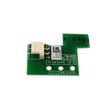
| Fan runs long after cooking | Cooling system control | Wall oven cooling fan sensor board WB27T11463 |
| Heat leaking, poor baking | Door sealing | Wall oven door seal WB35X32825 |
A wall oven’s electronics and wiring live in a high-heat environment. When cooling airflow and temperature sensing stay accurate, the oven cycles correctly and avoids overheating that shortens the life of the control system.
For cleaning routines, control features, and operating tips that reduce wear, follow the maintenance and care sections in the JT5000SF3SS owner’s manual.
Last updated: January 2026