Owner’s manual



What is the average lifespan of a KitchenAid dishwasher?
A KitchenAid dishwasher typically lasts 10 to 14 years. For your KitchenAid KUDI01ILBL6, lifespan depends most on water quality, how often it runs, and routine care like cleaning filters and loading correctly (see the KUDI01ILBL6 owner's manual).
What affects dishwasher lifespan most
- Hard water and scale buildup: shortens heater and pump life.
- Heavy daily use: more wear on the wash motor, drain system, and racks.
- Poor cleaning habits: debris can lead to grinding noises and circulation issues.
- Door sealing and leaks: a worn seal can cause moisture damage over time.
- Correct loading: prevents chipping and reduces strain from items shifting.
Maintenance that helps you reach the high end of the range
We recommend these habits for KitchenAid dishwashers like model KUDI01ILBL6:
- Run a monthly cleaning cycle (dishwasher cleaner or approved method).
- Keep the spray arms clear of labels, seeds, and broken glass.
- Use the right detergent amount for your water hardness.
- Inspect the door seal for tears and flattening.
- Address unusual grinding or buzzing quickly (often caused by a hard object in the wash area).
Common “wear items” vs. long-life components
| Component area | Typical wear timing | What you may notice |
|---|---|---|
| Door sealing | Mid-life | Small leaks, dampness at the bottom of the door |
| Drain and circulation | Mid to late life | Poor cleaning, standing water, louder operation |
| Racks and wheels | Mid-life | Rust spots, rough rolling, rack not tracking straight |
| Stainless tub/inner door | Long-life | Usually lasts the life of the unit when cared for |
Why it matters
Knowing the typical 10 to 14 year lifespan helps you decide whether to invest in repairs (like a heater, pump, or seal) or plan for replacement, especially if performance issues show up repeatedly.
Last updated: January 2026
Is it worth fixing a KitchenAid dishwasher?
Yes, it’s usually worth fixing a KitchenAid dishwasher like model KUDI01ILBL6 when the problem is a common wear item (leak, drain issue, rack or seal problem) and the repair cost stays well below the price of a comparable replacement. For repeated failures or major electrical issues, replacement often makes more sense.
Quick way to decide (cost, age, and what failed)
Use these practical checkpoints before you buy parts or schedule service:
- If the dishwasher is under ~10 years old, repairs are typically a good value.
- If the repair estimate is under ~50% of replacement cost, fixing is usually the better choice.
- If the stainless tub is leaking from rust-through, the manual describes lifetime coverage for the tub/inner door (coverage depends on purchase date and terms). See the KUDI01ILBL6 owner’s manual.
- If the failure is a high-cost assembly (electronic controls, wash motor, drain motor), compare total repair cost to replacement.
- If you’ve had multiple breakdowns in the last 12 to 18 months, replacement is often the more reliable path.
Repairs that are commonly “worth it” on KUDI01ILBL6
These are frequent, straightforward fixes that can restore performance without replacing the dishwasher:
- Drain and leak fixes (hoses, clamps, door seals)
- Heating and drying issues (heater circuit components)
- Poor cleaning from wash system wear (spray arm, chopper area)
- Rack problems (wheels, stops, rack damage)
Example parts that often solve common symptoms
| Symptom | Common part to check | Example part for this model |
|---|---|---|
| Water on floor near door | Door seal/gasket | Gasket W11196317 |
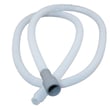
| Not draining or slow drain | Drain hose routing/clogs | Dishwasher drain hose 8269144A |
| Not drying well | Heater circuit | Heater element WPW10082892 |
Why it matters
A targeted repair can extend the life of a KitchenAid dishwasher and avoid the cost and hassle of replacement, but a pattern of major failures (motor plus controls plus leaks) usually signals it’s time to move on.
Last updated: January 2026
What is the most common problem with a KitchenAid dishwasher?
On the KitchenAid KUDI01ILBL6 dishwasher, the most common issues we see are poor cleaning (food left on dishes) and unusual grinding or buzzing noises caused by debris in the wash system. Leaks and drain problems are also frequent, often tied to seals, hoses, or the drain path.
Most common symptoms and what they usually point to
- Dishes come out dirty: clogged spray arm holes, restricted filter area, or a weak wash action
- Grinding, grating, crunching, or buzzing: a hard object in the wash module; if it doesn’t stop after a full cycle, service is typically needed (see KUDI01ILBL6 owner's manual)
- Water on the floor: door seal wear, vent gasket leaks, or a loose drain connection
- Won’t drain: kinked/blocked drain hose, drain path restriction, or pump-related issue
- Won’t start: door not latching, power supply issue, or control-related fault
Quick checks we recommend before replacing parts
- Load correctly so items don’t block spray arms; unstable loads can also cause chipping (guidance is in the KUDI01ILBL6 owner's manual).
- Listen for the noise pattern: if it’s a brief rattle that clears, it’s often a small object; if it continues through the cycle, it’s more serious.
- Inspect the drain path: check for kinks and clogs at the sink/disposer connection.
- Check seals for damage: look for tears, flattening, or gaps along the door.
Parts that commonly relate to these problems (for this model)
| Symptom | Common area | Example part for KUDI01ILBL6 |
|---|---|---|
| Not draining / leaking at drain connection | Drain line | Dishwasher drain hose 8269144A |
| Leaking at door perimeter | Door seal | Gasket W11196317 |
| Not drying / water not heating | Heating circuit | Heater element WPW10082892 |
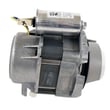
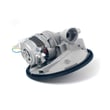
| Loud wash noise / weak wash | Wash motor/pump area | Pump motor W10782773 |
Why it matters
Poor cleaning and persistent grinding noises usually get worse over time. Catching a blocked spray path, a failing seal, or a restricted drain early helps prevent repeat wash cycles, water leaks, and damage to dishes.
Last updated: January 2026