Owner’s manual
 Error Codes


How many cubic feet is a Kenmore Model 110 washer?
For Kenmore washer model 11028803890, the exact tub capacity in cubic feet is not specified in the model’s available documentation, so we can’t confirm a single cu. ft. number for this exact washer. Most Kenmore 110-series top-load washers of this design are commonly in the extra-large capacity range (about 3.2 to 3.5 cu. ft.).
How to estimate capacity for this Kenmore 11028803890
We recommend using these practical checks to narrow it down without guessing:
- Check the model and serial tag for any “capacity” or “CFT” marking (some versions list it).
- Compare your basket size to typical “extra-large capacity” top-load baskets (deeper basket, higher tub ring).
- Use the load examples in the manual; they indicate the washer’s intended load size.
- If you’re shopping parts, match by model number (11028803890) rather than capacity.
For load-size guidance that aligns with this washer’s design, use the 11028803890 owner’s manual.
Why the manual may not list cubic feet
Many Kenmore 110-series washers were sold with a shared “family” manual that covers multiple versions and features. That manual focuses on operation, cycles, and loading guidance rather than publishing a single capacity spec for every variation.
Quick reference: what “capacity” usually means
| Term you may see | What it refers to | Why it matters |
|---|---|---|
| Cubic feet (cu. ft.) | Interior tub volume | Helps compare washer size across models |
| “Extra-large capacity” | Marketing size class | Helps set expectations for load size |
| Water level settings | Fill level control | Impacts cleaning and rinsing more than cu. ft. |
Why it matters
Capacity affects how much you can wash per load, but for day-to-day results, correct loading (not packing clothes around the agitator) and choosing the right water level and cycle usually matter more than the exact cubic feet.
Last updated: January 2026
How to reset Kenmore washer model 110 top loader?
To reset the Kenmore washer model 11028803890 (top-load), unplug the power cord for at least 5 minutes, then plug it back in and restart a cycle. This clears many temporary control or timer glitches on this direct-drive style washer; it does not fix a failed part.
Reset steps for model 11028803890
- Turn the cycle selector (timer) knob to OFF.
- Unplug the washer from the wall outlet.
- Wait 5 minutes (full power-down).
- Plug the washer back in.
- Select a cycle and pull the timer knob out to start.
For normal start/stop operation details, see the 11028803890 owner’s manual.
If the washer still won’t start after a reset
On this model, a “no start” symptom is often caused by a lid safety circuit issue or a timer/start setting issue.
- Confirm the outlet has power (try a lamp or small appliance).
- Make sure the lid is fully closed and the lid strike is engaging.
- Turn the timer knob slightly to the right and pull to start (a misaligned timer can prevent starting).
- Avoid extension cords; plug directly into a grounded outlet.
- If the washer fills but will not agitate or spin, the lid switch can still be the cause.
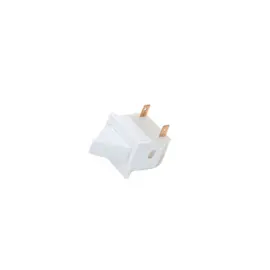
If you suspect the lid safety switch is failing, the compatible replacement for this model is the washer lid switch WP3949238.
Quick guide: reset vs restart
| Action | What you do | What it helps |
|---|---|---|
| Reset (power reset) | Unplug 5 minutes | Clears temporary electrical/control glitches |
| Restart cycle | Push timer knob in, then pull out | Stops and resumes the current cycle |
| Drain/spin out water | Set timer to SPIN, pull to start | Removes water after a pause or soak |
Why it matters
A proper reset is a fast first step because it rules out a simple power interruption or timer glitch before you spend time troubleshooting parts like the lid switch, drive motor, or drain pump.
Last updated: January 2026
What is the average lifespan of a Kenmore washer?
A Kenmore washer typically lasts 10 to 15 years with normal household use and basic maintenance. For the Kenmore 11028803890, keeping it level, avoiding overloads, and following the care steps in the 11028803890 owner's manual helps you reach the upper end of that range.
What affects lifespan most
- Load size and frequency: frequent heavy loads shorten life faster than mixed, moderate loads.
- Installation and leveling: an unlevel washer vibrates, stressing the suspension and drive system.
- Water quality: hard water can accelerate buildup and wear.
- Detergent habits: too much detergent can cause oversudsing and drainage issues.
- Routine cleaning: periodic cleaning reduces odor, residue, and corrosion.
Typical lifespan by washer type
| Washer type | Typical lifespan | Notes |
|---|---|---|
| Traditional top-load with agitator (like many Kenmore 110 models) | 10 to 15 years | Often very repairable; wear parts are common fixes. |
| Front-load washer | 10 to 15 years | Door boot, drain system, and bearings often drive repairs. |
| High-efficiency top-load (impeller) | 10 to 14 years | More electronics and sensing can add complexity. |
Maintenance that helps your 11028803890 last longer
We recommend these habits for this model style:
- Keep the washer level and tighten leveling hardware if it starts to walk.
- Use the correct water level so clothes move freely (overloading increases strain).
- Clean the washer interior periodically (the manual describes a hot cycle cleaning method).
- Inspect inlet hoses for bulges or leaks and replace on a regular schedule.
- Address small symptoms early (new noises, slow drain, intermittent spin) before they become major failures.
Why it matters
A washer that is overloaded or out of level can wear out key components faster, leading to vibration, poor spin, leaks, or no-drain complaints. Simple upkeep often costs far less than major drive or tub repairs.
Last updated: January 2026