Owner’s manual
 Error Codes


What is the capacity of a Kenmore 11029812891 washer?
The Kenmore washer model 11029812891 is typically considered an extra-large capacity, direct-drive top-load washer; most washers in this Kenmore 110 design family are about 3.2 cu. ft. For cycle and load-size guidance specific to your unit, use the 11029812891 owner's manual.
How to estimate capacity if you are comparing washers
Capacity is the usable tub volume for clothing, not the “to the top” fill level. For this style of Kenmore top-load washer, capacity is commonly discussed in cubic feet.
- Around 3.2 cu. ft. is a common published capacity for many Kenmore 110 direct-drive, extra-large capacity models
- The practical load size depends on fabric type (towels vs. delicates) and water level selection
- Bulky items need room to circulate; packing the basket reduces cleaning and rinsing
- If the load floats or the agitator struggles, the load is too large
What in the manual supports “extra-large capacity”
The manual describes agitator designs used in Kenmore “extra-large capacity” washers and how they move clothing through the wash zone. That aligns with the typical 3.2 cu. ft. capacity range for this platform.
Quick reference: capacity terms you may see
| Term | What it usually means | Typical range |
|---|---|---|
| Large capacity | Standard full-size top load | ~2.9 to 3.3 cu. ft. |
| Extra-large capacity | Larger basket and/or higher usable volume | ~3.2 to 3.6 cu. ft. |
| Super capacity | Oversize basket | ~3.8 cu. ft. and up |
Why it matters
Capacity affects how much you can wash per load, how well the agitator can circulate clothes, and how often you may see out-of-balance spinning. Matching load size to capacity helps cleaning performance and reduces wear on drive components.
Last updated: January 2026
How do I force my washer to drain?
On Kenmore washer model 11029812891, the safest way to force a drain is to run a Spin (or Drain/Spin) selection so the drain pump can remove water normally. If it will not drain, correct the drain hose setup and clear common drain restrictions before replacing parts.
Fast ways to get the water out
- Select Spin and start the cycle; this model may drain first, then begin spinning.
- Make sure the lid is fully closed; an open lid can stop draining and spinning.
- Check the drain hose for a kink, pinch, or clog and straighten it.
- Verify the drain hose height: not more than 96 inches above the floor.
- If the washer is stuck continuously draining, make sure the drain hose is not jammed tightly into the standpipe; it needs a looser fit.
Drain hose setup checks (most common cause)
The manual calls out several drain-hose details that directly affect draining and siphoning. Use the 11029812891 owner's manual to confirm your exact installation.
| What to check | What “good” looks like | What it prevents |
|---|---|---|
| Hose routing | No sharp bends; hook rotated to remove kinks | Slow drain, no drain |
| Standpipe/tub fit | Hose not forced tightly into standpipe | Siphoning, cycle stuck |
| Hose height | Less than 96 inches above floor | Weak or no drain |
When it still will not drain
If the hose setup is correct and the tub stays full, a clogged or failed drain pump is a common next step.
- Unplug the washer before inspecting anything underneath.
- Look for small items (coins, socks, lint) restricting the pump or hoses.
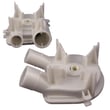
- If the pump is noisy, seized, or leaking, replace the washer drain pump WP3363394.
Why it matters
A correct drain hose installation prevents backflow and siphoning, protects floors from leaks, and helps the washer reach full spin speed so loads come out less wet.
Last updated: January 2026
How to hard reset kenmore washer?
To hard reset your Kenmore washer model 11029812891, unplug the power cord for 2 minutes, then plug it back in. This clears many temporary control and cycle issues; if the washer still will not run correctly, stop the cycle with the timer knob and restart it using the normal start steps in the 11029812891 owner's manual.
Hard reset steps (safe and effective)
- Turn the Cycle selector (timer) knob to Off.
- Unplug the washer from the wall outlet.
- Wait 2 minutes (this lets the control and motor circuit fully discharge).
- Plug the washer back in.
- Select a cycle and pull the timer knob out to start.
If it still will not start or advance
These checks solve the most common “it has power but won’t run” complaints on this style of Kenmore top-load washer.
- Confirm the outlet has power (try a lamp or small appliance).
- Make sure the lid is fully closed; a failed lid switch can prevent agitation and spin.
- Push the timer knob in to stop, then pull it out to restart (a simple timer reset).
- If the washer drains but will not spin or agitate, inspect the drive system.
Common parts related to “won’t run” symptoms
| Symptom | Most likely area | Example part for this model |
|---|---|---|
| No spin or agitate with lid closed | Lid safety circuit | Washer lid switch WP3949238 |
| Hums but won’t drain | Drain system | Washer drain pump WP3363394 |
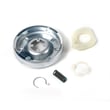
| Agitates weakly or slips | Drive coupling | Coupling 285753A |
Why it matters
A hard reset is a fast first step because it can clear a stuck cycle or temporary electrical state without disassembly. If the problem returns immediately, the issue is usually a lid switch, drain pump, coupling, or timer related problem rather than a one-time glitch.
Last updated: January 2026
What is a suds saver?
A suds saver is a feature used on some older washers that lets you save the soapy wash water (the “suds”) and reuse it for another load. On Kenmore washer model 11029812891, you will not use a suds saver for normal operation; follow the cycle, water level, and temperature guidance in the 11029812891 owner's manual.
How a suds saver worked
A suds saver setup typically used a separate laundry tub next to the washer:
- The washer drained the wash water into the tub instead of sending it to the household drain
- You reused that saved wash water for the next load
- Loads were often washed in order (lightest to dirtiest) to get the most use from the suds
- A valve or hose routing controlled whether water went to the tub or to the drain
What to do instead on model 11029812891
This Kenmore top-load washer is designed to clean effectively without reusing wash water. For best results:
- Choose the right water level so clothes move freely and roll toward the agitator
- Avoid overloading or packing the basket; it can reduce cleaning and increase vibration
- Use the correct water temperature for the fabric and soil level
- Use the right amount of detergent; too much can cause excessive sudsing and affect draining/spinning
- If loads come out wet, confirm the lid is closed and the drain hose is not kinked or too high
Quick comparison
| Topic | Suds saver approach | 11029812891 normal approach |
|---|---|---|
| Water use | Reuse wash water | Set proper water level per load |
| Cleaning strategy | Wash multiple loads in sequence | Match cycle time, temp, and load size |
| Common risk | Soil redeposit, odors | Oversudsing from too much detergent |
Why it matters
Reusing wash water can carry soil and detergent residue into the next load. Using the correct water level, temperature, and detergent amount helps your Kenmore washer clean better, drain properly, and reduce wear on drive components like the coupling and clutch.
Last updated: January 2026