Owner’s manual


What is the life expectancy of a Whirlpool washing machine?
A Whirlpool washing machine typically lasts 10 to 14 years. For your Whirlpool WTW5105HC1 top-load washer, consistent care (proper HE detergent use, avoiding overloads, and routine cleaning) helps you reach the high end of that range; neglected maintenance shortens service life. For model-specific care steps, use the WTW5105HC1 washer installation & care instruction manual.
Most washer lifespan differences come down to usage and maintenance, not just brand.
- Loads per week: more cycles per week reduces total years of service
- Overloading: strains the drive system, suspension, and motor
- Detergent choice: using HE detergent and correct dosing reduces residue and wear
- Water quality: hard water can increase buildup in valves and hoses
- Preventive maintenance: replacing wear items early prevents secondary damage
Your WTW5105HC1 manual calls out several care items that directly reduce breakdown risk.
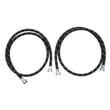
- Replace inlet hoses every 5 years and record the replacement date
- Periodically inspect hoses for bulges, kinks, cuts, wear, or leaks
- Keep the washer level to reduce vibration and component fatigue
- Run periodic cleaning cycles as described in the manual’s “Washer care” section
| Item | Recommended interval | Why it helps |
|---|---|---|
| Water inlet hoses | Every 5 years | Reduces risk of hose failure and leaks |
| Hose inspection | Periodically | Catches wear before a leak or fill problem |
| Washer leveling check | If it vibrates or moves | Protects bearings, tub support, and drive parts |
| Cleaning cycle / washer care routine | Regularly (per manual) | Prevents odor, residue, and performance issues |
A washer near the end of its expected life often shows early warnings (noisy spin, slow drain, inconsistent agitation). Addressing those symptoms early can prevent damage to higher-cost assemblies like the drive motor or outer tub.
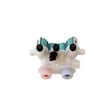
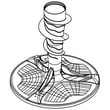
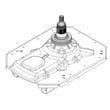
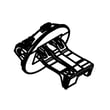
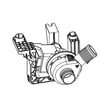
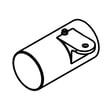
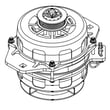
If you are troubleshooting symptoms that could shorten lifespan (no drain, no spin, loud operation), common related parts for this model include the pump assembly, drain W11399437, washer water inlet valve W11165546, and Whirlpool washer drive pulley W10721967.
Last updated: February 2026
What is the most common problem with Whirlpool washers?
The most common problems we see with Whirlpool washers like model WTW5105HC1 are draining or spinning issues, leaks, and “won’t start” symptoms. Many of these trace back to a clogged or kinked drain hose, an unbalanced load, or a failed lid lock or drain pump; check your WTW5105HC1 owner's manual for the exact checks and cycle behavior.
- Won’t drain or won’t spin: drain hose restriction, drain pump problem, or lid lock not engaging
- Leaking: loose inlet hoses, worn hose clamp, or a valve that is seeping
- Won’t start: power supply issue, lid not fully closed, lid lock or lid strike problem
- Loud noise or burning smell: drive system wear (pulley or motor) or something caught under the washplate
- Poor cleaning or residue: too much detergent, interrupted cycles, or dispenser residue buildup
- Confirm the washer is plugged into a grounded 3-prong outlet (no extension cord).
- Make sure the load is balanced; redistribute items and retry a Rinse and Spin.
- Inspect the drain hose for kinks and verify the standpipe or drain path is not restricted.
- Check inlet hoses for tight connections and look for drips at the faucets and valve.
- Run the Clean Washer cycle as directed; leave the lid open afterward to dry the interior.
If the basic checks do not change the symptom, these parts are common culprits on top-load Whirlpool washers:
| Symptom | Common part involved | Example part on this model page |
|---|---|---|
| Won’t drain / stops full of water | Drain pump | Pump assembly, drain W11399437 |
| Won’t start / won’t lock | Lid lock or strike | Lid lock-sol W11700916 and washer lid strike W11457841 |
| Won’t fill / fills slowly | Water inlet valve | Washer water inlet valve W11165546 |
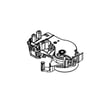
| Won’t agitate / weak movement | Shift actuator or drive system | Actuator, shift W11481722 or Whirlpool washer drive pulley W10721967 |
Drain, spin, and lid-lock problems can look like “the washer is dead,” but they often come from a single safety interlock (lid lock) or a restricted drain path. Catching the root cause early helps prevent repeat cycle failures and water left sitting in the tub.
Last updated: February 2026
Is WTW5105HC1 discontinued?
We treat Whirlpool washer model WTW5105HC1 as a supported model for repairs because service information and replacement parts are available for it. If you are trying to confirm current production status, use the model identification details and documentation in the WTW5105HC1 owner's manual.
For most owners, the important question is parts and serviceability, not whether the model is still being produced.
- If parts are available, the washer is fully repairable.
- If a specific part is backordered, you may need to wait for restock.
- If a part is no longer made, you typically repair using the exact approved substitute listed for the model.
- If you are comparing similar models, match by model number suffix (WTW5105HC1 vs. WTW5105HC).
Use these steps before ordering parts so you do not buy a component for the wrong variant.
- Find the model and serial tag on the washer cabinet (often under the lid or on the rim).
- Confirm the full model number includes the suffix WTW5105HC1.
- Cross-check the wiring, hose routing, and maintenance sections in the manual.
- If you are troubleshooting a symptom, note when it happens (fill, agitate, drain, spin).
If your goal is to keep the washer operating, these are frequent fixes for top-load Whirlpool washers.
| Symptom | Likely area | Example part for WTW5105HC1 |
|---|---|---|
| Won’t start or stops mid-cycle | Lid sensing | Lid lock-sol W11700916 |
| Won’t fill or fills slowly | Water supply control | Washer water inlet valve W11165546 |
| Won’t drain or won’t spin | Drain system | Pump assembly, drain W11399437 |
Confirming support and matching the exact model number helps you order the correct Whirlpool parts, avoid repeat repairs, and follow the right maintenance steps for your washer.
Last updated: February 2026