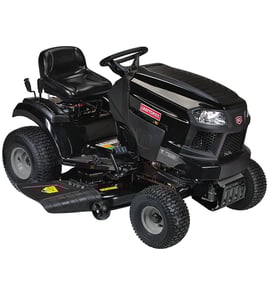
What riding mower has the least problems?
Riding mowers with the fewest problems are typically higher-end machines with proven engines (often Kawasaki or Kohler), a strong hydrostatic transmission, and easy-to-service maintenance items. For a Murray lawn tractor like model 8-36568, reliability comes most from choosing the right build quality and keeping up with tune-ups.
- Engine quality: V-twin engines generally run smoother and last longer than basic single-cylinder designs.
- Transmission type: A serviceable hydrostatic setup usually holds up better than light-duty, sealed units.
- Deck construction: Thicker steel decks resist flexing and cracking; spindles with grease fittings are a plus.
- Parts access: Easy access to the air filter, oil drain, and battery makes maintenance more consistent.
- Dealer-grade vs. entry-level: Heavier frames, better bearings, and stronger steering components reduce long-term issues.
| Type | Usually fewer issues with | Common trouble spots | Best for |
|---|---|---|---|
| Gas lawn tractor | Regular maintenance | Fuel system, battery, belts, safety switches | Larger yards, towing, long run time |
| Electric riding mower | Minimal routine maintenance | Battery aging, charger issues | Smaller to mid-size yards, low upkeep |
- Choose the heaviest-duty model that fits your yard and budget.
- Prioritize engine brand and transmission over extra features.
- Confirm the deck size matches your terrain (too wide can stress belts and spindles on rough ground).
- Plan on a yearly tune-up (oil, filters, spark plug, blade condition).
- Stock common wear items ahead of time using Sears PartsDirect.
Most “problem” complaints on riding mowers come from preventable wear (belts, blades, batteries) or neglected maintenance (old fuel, dirty air filters). A solid engine and transmission reduce failures, but consistent upkeep is what keeps a mower dependable year after year.
For a quick reliability win on any riding mower, follow a seasonal maintenance routine like how to tune up a riding lawn mower video.
Last updated: February 2026
What year is my Murray lawn mower?
To estimate the year of your Murray lawn tractor (model 8-36568), we use the model and date information printed on the mower’s data tag. On many Murray tractors, the model-number format (dash vs. no dash) helps narrow the build era, then the date code on the tag points to the specific year.
Look for the data tag (also called the model tag or ID label). Common locations on a front-engine Murray riding mower include:
- Under the seat pan or on the seat bracket
- On the frame near the rear wheels
- Under the hood near the engine compartment
- Near the footrest area on the frame rail
Murray used different model-number patterns over time. Use these quick checks:
- Pre-2001 (common pattern): 5 digits, a dash, then 1 digit (example:
12345-6) - Post-2001 (common pattern): 5 or 6 digits with no dash (example:
123456) - If your model number has a dash, the date code on the tag is especially important because it can be misread by a decade (for example, 1994 vs. 2004)
| What you see on the tag | What it usually means | What to do next |
|---|---|---|
Model number includes a dash (like #####-#) |
Often an older Murray format (commonly pre-2001) | Use the date code to confirm the exact year |
| Model number has no dash (5 or 6 digits) | Often a newer Murray format (commonly 2001 and later) | Use the date code to pinpoint the year |
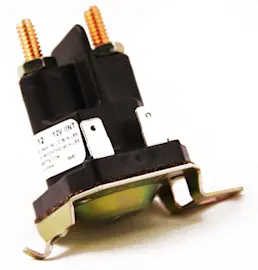
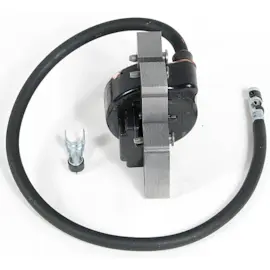
Knowing the correct year helps us match the right Murray lawn tractor parts (belts, blades, battery, ignition switch, starter solenoid, and deck hardware) and avoid ordering parts that look similar but do not fit your exact build.
If your tractor is having starting or electrical issues while you are checking the tag, use our DIY walkthrough: riding lawn mower engine clicks but doesnt turn over video.
Last updated: February 2026
Where to find model number on Murray riding mower?
On a Murray riding mower like model 8-36568, we typically find the model number on an ID label under the seat or on the rear of the tractor near the hitch or frame. Once you have the model number, you can match parts and diagrams accurately.
Look for a sticker or metal tag in these spots:
- Under the seat (lift the seat and check the seat pan and frame)
- Rear of the tractor (near the hitch plate, rear frame, or fender area)
- Under the hood (on the frame rails near the engine, not on the engine itself)
- Along the left or right frame rail near the footrest
- Near the transaxle area on the rear frame
Most Murray lawn tractor ID labels include a few different identifiers. Use the model number first when searching parts.
| Label item | What it’s used for | Example format |
|---|---|---|
| Model number | Finds the correct parts diagrams | 8-36568 |
| Serial number | Identifies your exact unit build | Numbers/letters |
| Engine model/type/code | Used for engine-specific parts | Varies by engine brand |
- Wipe the area with a damp rag and mild cleaner; avoid soaking the label
- Use a flashlight at a low angle to make faded printing easier to see
- Take a close-up photo and zoom in to read worn characters
- Write the number exactly as shown, including dashes
Murray riding mowers can use different decks, belts, blades, and electrical parts across similar-looking tractors. Using the exact model number (like 8-36568) prevents ordering the wrong spindle, drive belt, or ignition switch.
For more mower identification and maintenance basics, we recommend starting with riding mower and tractor common questions.
Last updated: February 2026
Why is my Murray lawn mower not turning over?
If your Murray 8-36568 front-engine lawn tractor is not turning over, the most common causes are a weak battery, dirty/loose battery connections, a failed starter solenoid, or a safety interlock switch not being made (brake, PTO, or seat switch). Start with the battery and interlocks before replacing parts.
- Set the parking brake fully and make sure the PTO/blade switch is OFF.
- Sit firmly in the seat (or verify the seat switch plunger moves freely).
- Check battery terminals for corrosion and looseness; clean and tighten.
- Try starting in neutral; move the shifter slightly and try again.
- Listen for symptoms:
- Single click: usually solenoid or battery connection issue.
- Rapid clicking: usually low battery voltage.
- No sound: often interlock switch, key switch, or wiring.
| What you see/hear | Most likely cause | What we check next |
|---|---|---|
| Rapid clicking | Battery low or bad connection | Battery voltage, terminal tightness, ground cable |
| One solid click, no crank | Solenoid contacts, starter, seized engine | Voltage at starter lug, try turning engine by hand |
| No click, no crank | Safety interlock circuit, key switch, fuse/wiring | Interlock continuity, fuse, key switch output |
| Cranks slowly | Weak battery, bad cables, starter drag | Voltage drop on cables, starter current draw |
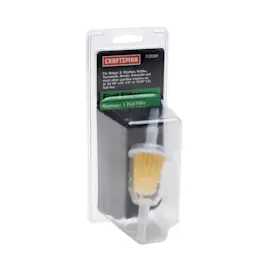
A clogged fuel filter or stale fuel can keep the engine from starting, but it usually does not stop the engine from turning over. If the starter spins the engine but it will not fire, use riding lawn mower engine spins but wont start video.
The starting system on a riding mower is a chain (battery, cables, interlocks, solenoid, starter). One weak link can stop cranking completely, so checking in order prevents unnecessary parts replacement and gets you mowing faster.
Last updated: February 2026