Owner’s manual
 Error Codes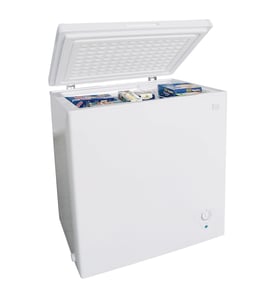





Does a chest freezer use a lot of electricity?
A Haier HCM050EB chest freezer typically does not use a lot of electricity compared with many other household appliances because it cycles on and off and chest designs hold cold air well. Your actual cost depends most on room temperature, lid openings, and how well the lid seals.
What affects electricity use the most
- Location temperature: Hot rooms and garages make the compressor run longer.
- Airflow clearance: Keep space around the cabinet so heat can escape.
- Thermostat setting: Colder settings increase run time.
- Lid openings: Frequent openings dump cold air and add run time.
- Frost buildup: Heavy frost acts like insulation in the wrong places and reduces efficiency.
- Power cord and outlet condition: A damaged cord or poor connection can create heat and waste energy.
Model-specific setup tips (HCM050EB)
Your HCM050EB is designed to run on a properly grounded 115V, 15A outlet and needs breathing room around the cabinet. We also recommend avoiding unheated locations below 55°F, since this model is not designed to operate properly in colder ambient temperatures. For the exact placement and safety requirements, follow the owner's manual.
Recommended clearances
| Area around freezer | Typical clearance for this model |
|---|---|
| Sides | 4 in (102 mm) |
| Top | 4 in (102 mm) |
| Back | 4 in (102 mm) |
Quick ways to lower operating cost
- Set the control to the warmest setting that still holds 0°F for frozen food.
- Defrost when frost gets thick (unplug first; do not use sharp tools).
- Let hot foods cool before loading.
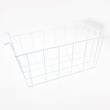
- Keep the basket organized so the lid stays open less time.
- Check the lid closes evenly and nothing is pinched in the seal.
Why it matters
Lower run time means steadier food temperatures, less wear on the compressor, and lower electric bills, especially if the freezer sits in a warm space.
Last updated: February 2026
Is it cheaper to run a chest freezer or upright freezer?
Yes. A chest freezer like the Haier HCM050EB is typically cheaper to run than an upright freezer because it loses less cold air when you open the lid, so the compressor runs less often to recover temperature. For model-specific operating guidance, use the owner's manual.
Why chest freezers usually cost less to operate
Chest freezers are naturally more energy-efficient in everyday use because cold air stays “pooled” in the cabinet when the lid is opened.
Common reasons chest models cost less to run:
- Less cold-air spill when opened (cold air sinks)
- Often better temperature stability with frequent openings
- Typically fewer air leaks around the opening than many uprights
- Less frost and moisture intrusion when the lid is opened briefly
What matters most for your electric bill
Your actual cost depends more on usage and setup than on the freezer style alone.
We see the biggest swings in energy use from:
- Room temperature and humidity (hot garages increase run time)
- How often and how long the lid or door is opened
- Lid gasket condition and sealing
- Airflow clearance around the cabinet
- Temperature control setting (colder setting increases run time)
Setup tips for the Haier HCM050EB that affect efficiency
The manual recommends keeping clearance around the freezer for proper air circulation. Use these clearances as your baseline:
| Location around freezer | Recommended clearance |
|---|---|
| Sides | 4 in (102 mm) |
| Top | 4 in (102 mm) |
| Back | 4 in (102 mm) |
Why it matters
Lower run time means lower operating cost and steadier food temperatures. Good airflow and a good lid seal also reduce temperature swings that can contribute to freezer burn over time.
Last updated: February 2026
Is it worth repairing a chest freezer?
Yes; repairing a Haier HCM050EB chest freezer is worth it when the problem is a straightforward, non-cooling issue (lid hardware, hinge trim, light cover) and the freezer still holds safe temperatures. If it will not cool or shows sealed-system symptoms, replacement is the better value.
Quick way to decide
- Repair it if it freezes solid and the issue is a lid/hinge part, trim, or a small interior component.
- Replace it if it will not cool at all, runs constantly with warm temps, or repeatedly trips the breaker.
- Start with safety: unplug the freezer before cleaning or repairs; never use sharp tools or electrical devices to speed defrosting (see the HCM050EB owner's manual).
Cost vs. value checklist
Use these rules to make a clear call:
- Freezer is under 10 years old
- Repair total is under 50% of replacement cost
- Problem is mechanical or cosmetic (hinge, cover, trim)
- No signs of sealed-system trouble (no cooling, oily residue, loud continuous running)
Common “worth repairing” fixes for HCM050EB
If the freezer cools properly, these repairs are typically straightforward:
| Symptom | Likely area | Example part on this model | Typical difficulty |
|---|---|---|---|
| Lid feels loose or misaligned | Lid hinge | Haier hinge RF-3450-139 | Easy to moderate |
| Broken/missing hinge trim | Hinge cover | Haier hinge cover RF-1950-178 | Easy |
| Light cover cracked/missing | Light cover | Bulb cover RF-1950-95 | Easy |
Why it matters
Chest freezers are efficient for long-term food storage. A targeted repair restores sealing and usability, helps maintain stable temperatures, and prevents food loss without the cost of replacing the entire appliance.
Last updated: February 2026
What is the super freeze function?
Super freeze (also called quick freeze) is a feature that temporarily runs your freezer harder to freeze newly added food faster, helping it reach safe storage temperature sooner. For your Haier HCM050EB, use the normal temperature control settings described in the owner's manual.
What super freeze does (and when to use it)
Use super freeze when you add a large amount of unfrozen food or want to speed up initial freezing.
- Freezes fresh food faster by increasing cooling time and compressor run time
- Helps reduce large ice crystals (better texture for many foods)
- Useful after stocking up, meal prep, or loading warm groceries
- Not needed for day-to-day storage once food is already frozen
How to use it on a chest freezer like the HCM050EB
Many chest freezers use a simple temperature control knob rather than a dedicated “Super Freeze” button.
- Turn the temperature control toward the coldest setting before loading a large amount of food.
- Keep the lid closed as much as possible for the next 24 hours.
- After the food is frozen solid, return the control to your normal setting.
Typical timing guidance
| Situation | What to do | How long |
|---|---|---|
| Adding a lot of fresh food | Pre-cool freezer | About 24 hours before loading |
| After loading fresh food | Keep on coldest setting | About 24 hours (sometimes longer for very full loads) |
| Normal use | Return to normal setting | After food is fully frozen |
Why it matters
Faster freezing helps food quality and can reduce temperature swings inside the cabinet. It also prevents partially frozen items from warming nearby frozen foods.
Tips to get the best results
- Package food tightly and leave space for air circulation between items.
- Let hot food cool before placing it in the freezer.
- Avoid frequent lid openings during the first day.
- If you experience a power interruption, wait about 5 minutes before plugging the freezer back in.
Last updated: February 2026