Error Codes


Is a top mount or bottom mount fridge better?
A bottom-mount refrigerator like Maytag model MFF2258VEM6 is usually better for everyday convenience because fresh foods sit at eye level and the freezer is in a pull-out drawer. A top-mount refrigerator is often the better pick if you want the simplest layout and typically lower purchase cost.
Quick comparison (what most homeowners notice)
| Feature | Bottom-mount (like MFF2258VEM6) | Top-mount |
|---|---|---|
| Fresh food access | Easier (less bending) | More bending |
| Freezer access | Drawer style, organized | Shelf style, easy to see |
| Organization | Strong (baskets, drawers) | Basic |
| Energy use | Often slightly higher | Often slightly lower |
| Repairs | More drawer/rail parts | Fewer moving parts |
Choose bottom-mount if you want
- Fresh foods at eye level (produce, dairy, leftovers)
- Better day-to-day organization with drawers and baskets
- A freezer drawer that keeps items from falling out
- A layout that works well for frequent cooking and meal prep
Choose top-mount if you want
- A simpler design with fewer drawer mechanisms
- Typically lower upfront cost for similar capacity
- Easy access to frozen foods without pulling out a drawer
- A good fit for garages or secondary-use refrigerators (when temperatures allow)
Why it matters
Most people open the refrigerator section far more than the freezer. With a bottom-mount design, you reduce bending and keep the most-used items in the most accessible spot, which improves daily usability even if the freezer drawer takes a little more effort to load.
Parts note for bottom-mount owners
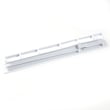
If your freezer drawer starts sticking or not closing smoothly, the slide system is a common wear point on bottom-mount designs. For this model, the matching replacement is the refrigerator freezer slide rail W11658402.
Last updated: January 2026
What is the average lifespan of a Maytag refrigerator?
Most Maytag refrigerators, including the Maytag MFF2258VEM6 bottom-mount refrigerator, typically last 10 to 15 years. With consistent maintenance (cleaning coils, keeping door gaskets sealing, and fixing small issues early), it’s common for a refrigerator to reach the upper end of that range.
What affects lifespan the most
- Condenser coil cleanliness: Dusty coils make the compressor run hotter and longer.
- Door seal condition: Air leaks force longer run times and can cause frost and moisture issues.
- Airflow and loading: Overpacking blocks vents and stresses the evaporator fan system.
- Water and ice system upkeep: Clogged filters and low water pressure strain the inlet valve and ice maker.
- Room temperature and ventilation: Tight cabinets and hot garages shorten component life.
Typical lifespan by major system (what to expect)
| System | Typical lifespan | Common “end-of-life” symptom |
|---|---|---|
| Compressor and sealed system | 10 to 15 years | Warm fridge, long run times, clicking/humming |
| Electronic controls | 8 to 15 years | Erratic temps, no cooling cycle changes |
| Ice maker and water system | 5 to 10 years | No ice, small cubes, leaks |
| Door gaskets | 5 to 10 years | Condensation, frost, doors not closing well |
Maintenance that helps your Maytag last longer
- Vacuum coils and the toe-kick area regularly.
- Keep doors closing easily; level the cabinet if doors swing open.
- Replace worn gaskets before they tear or harden.
- Use the correct water filter and change it on schedule; follow how to replace the water filter in a Maytag refrigerator.
- Address water leaks quickly; they can lead to corrosion and fan icing.
Why it matters
A refrigerator usually fails early from heat stress (dirty coils, poor ventilation) or air leaks (bad gaskets). Preventing those two issues reduces compressor run time, stabilizes temperatures, and protects expensive components.
Last updated: January 2026
What is the most common problem with Maytag refrigerators?
The most common Maytag refrigerator problem (including the Maytag MFF2258VEM6 bottom-mount) is poor cooling, often caused by airflow or heat-release issues like dirty condenser coils, a door that is not sealing, or an evaporator fan problem. Ice maker water-supply issues are a close second.
Most common symptoms and what they usually point to
- Fridge not cold enough: dirty condenser coils, blocked vents, weak evaporator fan, damper stuck
- Freezer cold but fridge warm: damper not opening, evaporator fan issue, frost buildup on evaporator
- Runs constantly: dirty coils, warm room, door gasket leak, control or sensor issue
- No ice or slow ice: clogged filter, low water pressure, frozen fill tube, inlet valve issue
- Water leaks or puddles: clogged/iced drain, cracked drain tube, door left ajar
Quick checks we recommend first (10 to 20 minutes)
- Set temps to typical targets: 37°F fresh food, 0°F freezer
- Clean condenser coils and confirm the condenser fan area is clear
- Make sure packages are not blocking air vents in the freezer or fresh-food section
- Check door closing and gasket contact all the way around
- If you have an ice maker, confirm the shutoff arm or switch is in the ON position
Common parts that match these problems on MFF2258VEM6
| Symptom | Likely system | Example part for this model |
|---|---|---|
| Warm fridge, freezer OK | Airflow/damper | Refrigerator damper control assembly WPW10196393 |
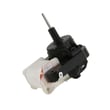
| Warm temps, noisy or no airflow | Evaporator fan | Refrigerator evaporator fan motor WPW10128551 |
| No ice, no water fill | Water supply | Refrigerator water inlet valve assembly WP2315576 |
| Frost buildup, warming over time | Defrost system | Refrigerator defrost heater WP12729128 |
Why it matters
Cooling and ice maker complaints usually start with airflow, sealing, or water supply. Catching those early helps prevent food spoilage, reduces run time, and can avoid more expensive sealed-system repairs.
Helpful DIY guidance
- How to diagnose a faulty refrigerator water inlet valve
- How to fix your evaporator cooling fan
- How to fix a fridge door seal
Last updated: January 2026
How to lower wheels on Maytag refrigerator?
On a Maytag MFF2258VEM6 bottom-mount refrigerator, you typically “lower the wheels” by raising the front leveling legs so the front rollers carry more weight and the cabinet sits lower in front. Most adjustments are made from the front, behind the toe grille.
How to lower the front (common method)
- Unplug the refrigerator or switch off power at the breaker for safety.
- Remove the toe grille (kick plate) at the bottom front.
- Locate the two front leveling legs (one at each front corner).
- Turn the leveling legs counterclockwise to lower the front (or clockwise to raise it).
- Recheck door swing and sealing after each small adjustment.
What to check before you adjust
- Flooring: Soft vinyl or uneven tile can make the cabinet rock even when “level.”
- Door closing: Most refrigerators work best with a slight backward tilt so doors self-close.
- Gasket contact: If the door doesn’t seal evenly, adjust leveling before replacing parts.
Quick troubleshooting guide
| Symptom | Likely cause | What to do |
|---|---|---|
| Doors swing open | Front too low | Raise front leveling legs slightly |
| Doors won’t close on their own | Front too high | Lower front leveling legs slightly |
| Cabinet rocks | Uneven floor or legs not contacting | Adjust legs until stable |
| Warm spots or moisture at door | Poor seal | Level first; then inspect gaskets |
Why it matters
Proper leveling helps the doors close and seal correctly, which protects temperatures, reduces frost, and prevents the compressor from running longer than necessary.
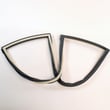
If the door still won’t seal after leveling, a worn gasket can be the cause; for this model, common gasket options include gasket-fip W10830162 (right) and refrigerator gasket panel (gray) W10830283 (left).
Last updated: January 2026