

Are Whirlpool washer parts interchangeable?
Whirlpool washer parts are interchangeable only when the replacement part is listed as compatible with your exact washer model, such as Whirlpool LSR8233JQ1. Even within Whirlpool, similar-looking parts can differ by fit, wiring, mounting, or cycle design, so we match parts by model to prevent leaks, noise, or no-spin issues.
Parts interchange when they share the same design specs and are approved for the same model series. For a direct-drive top-load Whirlpool like LSR8233JQ1, the safest approach is to choose parts from the model’s parts list.
Common examples where “close” is not close enough:
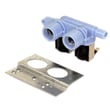
- A water inlet valve with different electrical terminals or flow restrictors
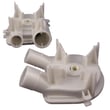
- A drain pump with a different hose port angle or mounting pattern
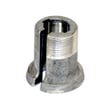
- A drive coupling that fits the motor shaft but fails under load
- A timer with different cam contacts (fills, agitation, spin timing)
Use your model number (LSR8233JQ1) as the deciding factor, then match the exact part ID.
- Confirm the full model number from the washer’s ID tag
- Compare the part name and part ID, not just the part number
- Replace related wear items together when appropriate (for example, coupling plus clutch symptoms)
- If the washer won’t drain or spin, diagnose first so you do not replace the wrong part
A few model-matched examples from this page:
| Washer symptom | Part that commonly relates | Example part on this model page |
|---|---|---|
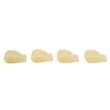
| Won’t agitate well | Worn agitator dogs | Agitator dog 80040 |
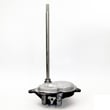
| Won’t drain | Pump jam or failed pump motor | Washer drain pump WP3363394 |
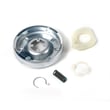
| Won’t spin, grinding | Drive coupling wear | Coupling 285753A |
| Overfills or wrong water level | Water-level sensing issue | Washer water-level switch W10820051 |
Using a non-matched part can create new problems (leaks, vibration, electrical issues) and can also mask the real failure, which increases repair time and cost. Matching parts to Whirlpool LSR8233JQ1 keeps the repair predictable and restores proper wash and spin performance.
Last updated: February 2026
What is the most common problem with Whirlpool washers?
The most common Whirlpool washer problem is a no-start or no-agitate condition caused by a failed lid switch or a worn drive system component. On a Whirlpool LSR8233JQ1 top-load washer, we see this most often when the washer fills but will not agitate or spin.
- Fills but will not agitate or spin: lid switch issue or drive coupling failure
- Agitates weakly or skips: worn agitator dogs
- Drains slowly or not at all: drain pump problem or a blockage
- Spins but makes a burning/rubbing smell: clutch or brake components wearing
- Won’t fill or fills incorrectly: inlet valve or water-level switch/pressure hose issue
These are the parts we most often replace for the symptoms above:
| Symptom | Common cause | Part to check first |
|---|---|---|
| No agitate / no spin | Motor-to-transmission connection slipping | Coupling 285753A |
| Agitator “ratchets” or won’t move clothes | Worn agitator dogs | Agitator dog 80040 |
| Won’t drain / won’t spin because it can’t drain | Pump not moving water | Washer drain pump WP3363394 |
| Overfills / wrong water level | Pressure system issue | Hose-wl WP353244 |
- Confirm the lid closes and latches firmly; many top-load Whirlpool washers will not spin with the lid open.
- Listen for the motor during agitate and spin. If the motor runs but the tub does not move, the drive coupling is a top suspect.
- Watch the drain flow into the standpipe. Weak or no flow often points to the pump or a restriction.
- Inspect the agitator action. If the agitator moves but does not “grab” clothes, the agitator dogs are commonly worn.
Catching the root cause early prevents secondary damage. For example, a washer that cannot drain can appear to have a spin problem, and a slipping drive coupling can leave you with a full tub and unfinished cycles.
If your washer won’t drain or spin, we use this walkthrough to narrow it down quickly: troubleshooting a top load washer that wont drain or spin video.
Last updated: February 2026
What is the average life of a Whirlpool washer?
Most Whirlpool washers, including the Whirlpool LSR8233JQ1, typically last 10 to 13 years with normal household use. Lifespan depends most on load size, how often you run cycles, and whether wear parts are replaced before they cause bigger drive or drain problems.
- Load size and balance: frequent overloading or consistently unbalanced loads shortens tub, suspension, and drive life.
- Drain performance: slow draining strains the motor and can lead to no-spin issues.
- Agitation and spin wear: worn agitator and drive components reduce cleaning and increase stress on the drivetrain.
- Water quality and hoses: sediment can affect fill performance and valves.
- Routine maintenance: clearing pockets, using correct detergent amount, and keeping the tub clean reduces long-term wear.
If your washer still fills and runs but performance is slipping, replacing common wear items often restores normal operation:
| Symptom | Common cause | Example part for LSR8233JQ1 |
|---|---|---|
| Agitator moves but doesn’t “grab” clothes well | Worn agitator dogs | Agitator dog 80040 |
| Washer won’t drain or drains slowly | Weak or jammed drain pump | Washer drain pump WP3363394 |
| Won’t spin or agitates inconsistently | Worn motor coupling | Coupling 285753A |
- Keep loads below the top row of holes in the basket and distribute items evenly.
- Use cold or warm when possible; hot-only washing accelerates wear on some components.
- If you notice slow draining, address it early (pump clogs and pump wear compound quickly).
- Run an occasional cleaning cycle (hot water with a washer cleaner or white vinegar, then an extra rinse).
- Stop using the washer if you hear grinding, burning smells, or repeated loud banging; those signs often point to drive or suspension wear.
A washer that is maintained and repaired early usually costs less to keep running than one that is operated with a slipping drive, poor draining, or constant out-of-balance spinning. Catching wear symptoms early helps protect higher-cost assemblies like the basket and gear case.
Last updated: February 2026
Is it worth repairing a Whirlpool washer?
Yes, it’s usually worth repairing a Whirlpool washer like model LSR8233JQ1 when the fix is a common wear item (agitator, coupling, drain pump, inlet valve) and the machine is otherwise in solid condition. If the repair requires major drive-system or basket components, replacement often makes more sense.
Use these checks to make a clear call before you buy parts:
- Repair cost vs. replacement cost: If the repair total is over about 50% of what you’d spend to replace the washer, replacement is typically the better value.
- What failed: Simple mechanical parts are usually a good repair; major drive or tub work is usually not.
- How it’s been running: If it has been noisy, leaking, or out of balance for a long time, multiple parts may be worn.
- Parts availability: This model has key parts available, which supports repairing.
- Your timeline: If you need it running fast, a straightforward part swap is often the quickest path.
These are frequent fixes on direct-drive top-load washers and are typically cost-effective:
- Agitation problems (worn dogs): agitator dog 80040
- Won’t spin or makes grinding noises (drive coupling): coupling 285753A
- Won’t drain or leaves water in tub (pump): washer drain pump WP3363394
- Won’t fill or fills slowly (valve): washer inlet valve 285805
- Timer stalls or cycles incorrectly (control timing): washer timer WP3953146
| Symptom | Most likely area | Example part on this model |
|---|---|---|
| Agitator moves weakly or “ratchets” | Agitator drive | Agitator dog |
| Motor runs but tub won’t spin | Drive connection | Coupling |
| Water won’t pump out | Drain system | Drain pump |
| No water or wrong temp | Fill system | Inlet valve |
These repairs can be higher cost and labor on a top-load washer:
- Gearcase or major drive/brake work (for example: clutch 285785)
- Basket/drive tube issues (for example: drive tube WP64208)
- Repeated out-of-balance and tub movement issues that persist after basic checks
A targeted repair keeps a dependable Whirlpool washer running for far less than replacing it, but big drive-system jobs can stack up quickly. Matching the symptom to the right part is what makes the repair “worth it.”
Last updated: February 2026