Installation guide
 Owner’s manual


Is it worth fixing a dryer that doesn't heat?
Yes, it’s usually worth fixing a Whirlpool WED6620HW0 dryer that runs but doesn’t heat, because the most common causes are straightforward (power supply, airflow, or a failed heating or safety part). If the dryer also has major noise, drum, or control problems, replacement can make more sense.
Quick decision checklist
- Drum tumbles normally and the cycle runs to completion
- No burning smell and no signs of overheating
- Vent airflow is strong at the outside vent hood
- You are not seeing repeated “L2” low voltage messages
- The dryer is otherwise in good condition (door closes well, no severe rust, no multiple failures)
What to check first (most common, lowest cost)
- Cycle and settings: Use a heated Timed Dry cycle; avoid “Air Only.” (This is a common setup issue during troubleshooting.)
- Power supply (electric dryers): Many “no heat” complaints are caused by a 240 V supply problem. Electric dryers can tumble with partial power but not heat.
- Airflow and venting: Blocked or crushed venting reduces airflow and can cause poor heating performance or repeated safety shutoffs. Proper venting also reduces dry time and saves energy.
Likely repair parts for “no heat” on WED6620HW0
If power and venting check out, these parts are common suspects:
| Symptom | Common cause | Example part on this model page |
|---|---|---|
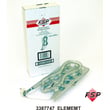
| Runs but no heat | Failed heater circuit component | Dryer heating element WP3387747 |
| Heats briefly then stops | Overheat protection opened | Thermal fuse W10909685 |
| Temperature swings, long dry times | Temperature sensing issue | Dryer thermistor WP8577274 |
| Repeated overheating | Airflow restriction or limit control issue | Dryer high-limit thermostat WP8557403 |
Why it matters
A dryer that doesn’t heat is often a single-point failure. Fixing it restores normal dry times, helps prevent repeat overheating, and can be far less expensive than replacing the entire appliance.
For model-specific diagnostics, wiring, and cycle guidance, use the owner's manual.
Last updated: February 2026
What is the average lifespan of a whirlpool dryer?
A Whirlpool dryer typically lasts about 13 years on average. For your Whirlpool WED6620HW0, lifespan depends most on airflow (venting), routine lint removal, and avoiding repeated overheating that can damage components like the heating system and thermostats; see the owner's manual.
Typical lifespan and what affects it
Most dryers reach their full service life when heat and airflow stay in the normal range and the drum support system stays smooth.
Common factors that shorten dryer life:
- Restricted venting (long runs, too many elbows, clogged hood)
- Running with a clogged lint screen
- Frequent overheating events (blown thermal fuse, tripped high-limit thermostat)
- Overloading (extra strain on drum rollers, idler pulley, and motor)
- Skipping periodic internal lint cleanout
Maintenance that helps you reach the average
These steps are the biggest “lifespan multipliers” for WED6620HW0:
- Clean the lint screen before every load.
- Confirm strong airflow at the outside hood; weak airflow usually means the vent needs cleaning.
- Use 4-inch venting and keep the vent run as short and straight as practical.
- Keep the dryer level so the drum tumbles correctly and sensor cycles work properly.
- If drying times suddenly increase, address airflow first before replacing parts.
Parts that commonly wear as a dryer ages
If your dryer is noisy, squealing, thumping, or taking longer to dry, these are common wear items:
| Symptom | Common wear area | Example part for WED6620HW0 |
|---|---|---|
| Thumping or rumbling | Drum support | Dryer drum support roller WPW10314173 |
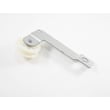
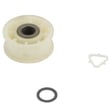
| Squealing | Belt tension system | Dryer idler pulley W10837240 |
| No heat or weak heat | Heating circuit | Dryer heating element WP3387747 |
| Stops mid-cycle or won’t heat after overheating | Safety temperature limit | Thermal fuse W10909685 |
Why it matters
Knowing the typical 13-year lifespan helps you decide whether to maintain and repair (often cost-effective for airflow or wear-item fixes) or plan for replacement when major components like the motor or control system fail.
Last updated: February 2026
How do I know if my thermal fuse is blown?
On your Whirlpool WED6620HW0 dryer, a blown thermal fuse most often shows up as a dryer that will not run at all, or a dryer that runs but will not heat (depending on the circuit design). The most reliable way to know is to unplug the dryer and test the fuse for continuity with a multimeter; see the owner's manual for access and safety guidance.
Common symptoms of a blown thermal fuse
- Dryer will not start or appears completely dead
- Drum tumbles but there is no heat on heated cycles
- Cycle stops early after a short run time
- You recently had restricted airflow (clogged lint screen or vent)
- You find excessive lint buildup inside the cabinet or vent duct
Quick checks before you replace parts
Before assuming the thermal fuse is the only problem, we recommend these basics because power and airflow issues can mimic a blown fuse:
- Confirm the door is fully closed and START/PAUSE is pressed with your fingertip (not a fingernail)
- Check house power: many electric dryers use two fuses or two breakers; one can trip and the dryer may still run without heat
- Run a Timed Dry heated cycle (not Air Only) to confirm the symptom
- Clean the lint screen and verify strong airflow at the outside vent hood
How to test the thermal fuse (safe, accurate method)
- Unplug the dryer (and shut off gas if you have a gas model).
- Access the fuse location as shown in the installation guide.
- Remove at least one wire from the fuse terminal.
- Meter test: a good fuse reads closed/continuity; a blown fuse reads open/no continuity.
What the results mean
| Test result | What it indicates | What to do next |
|---|---|---|
| Continuity (closed) | Fuse is good | Check airflow, thermostats, heating element, and wiring |
| No continuity (open) | Fuse is blown | Replace the fuse and correct the overheating cause |
Parts that are commonly involved
If the fuse is blown, we also look for the overheating cause so it does not happen again.
- Thermal fuse W10909685
- Dryer high-limit thermostat WP8557403
- Whirlpool dryer thermal cut-off fuse kit (352-degree f) 280148
- Dryer thermistor WP8577274
Why it matters
The thermal fuse is a one-time safety device; once it opens, the dryer may stop running or stop heating to prevent overheating. Restoring proper venting and airflow is just as important as replacing the failed fuse.
Last updated: February 2026