Owner’s manual
 Error Codes


What is a bottom mount refrigerator?
A bottom-mount refrigerator puts the freezer compartment on the bottom and the fresh food compartment on top, so everyday refrigerated items sit closer to eye level. Your Kenmore Elite 79574024412 uses this layout to make fresh-food access easier while keeping frozen storage below.
- Fresh food section is on top (most-used shelves and bins are easier to reach).
- Freezer is a pull-out drawer or lower compartment.
- Cold air is circulated by fans and controlled by temperature settings.
- Many models include an ice maker and water system that needs proper water pressure.
For best performance, we install and operate a bottom-mount refrigerator like the 79574024412 with the right space, temperature range, and utilities. Details and diagrams are in the 79574024412 owner's manual.
- Allow at least 2 inches between the back of the refrigerator and the wall.
- Allow at least 24 inches in front so the doors can open fully.
- Operate it where room temperature stays about 55°F to 110°F.
- If it has an automatic ice maker, water pressure should typically be 20 to 120 psi.
| Feature | Bottom-mount refrigerator | Top-mount refrigerator |
|---|---|---|
| Fresh food access | Higher, easier reach | Lower, more bending |
| Freezer access | Lower drawer | Upper door |
| Best for | Frequent fresh-food use | Frequent freezer use |
This design reduces bending for fresh foods and helps you plan your kitchen space. Proper clearance, leveling, and correct room temperature help prevent cooling issues, door-closing problems, and higher energy use.
Last updated: January 2026
What are the common problems with Kenmore Elite refrigerators?
Common problems on the Kenmore Elite 79574024412 bottom-mount refrigerator include weak or no cooling, frost buildup, water or ice maker issues, and unusual noises. Most fixes start with airflow and filtration checks, then move to the defrost system, fans, and sealed-system components as needed; see the 79574024412 owner's manual for model-specific troubleshooting steps.
- Not cooling or warm temperatures: dirty condenser coil, restricted airflow, failed evaporator fan, or a sealed-system issue
- Frost or ice buildup (freezer or back wall): defrost sensor/defrost system problem, door left ajar, or gasket sealing issue
- Ice maker not making ice: clogged water filter, frozen fill tube, low water pressure, or ice maker failure
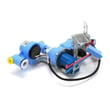
- Water dispenser slow or not dispensing: plugged filter, kinked water line, or inlet valve problem
- Buzzing, clicking, or rattling noises: condenser fan area debris, ice buildup contacting the fan, or compressor/start components
- Confirm the controls are set correctly and vents are not blocked by food packages.
- Clean dust from the condenser area (restricted airflow is a top cause of poor cooling).
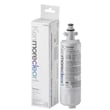
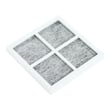
- Replace overdue filters (water and air) to restore flow and reduce odors.
- Check doors close fully and seals are clean and making full contact.
- If the unit has a diagnostic feature, use it as directed in the manual.
| Symptom | Common part involved | Example part for this model |
|---|---|---|
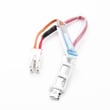
| Frost buildup, temperature swings | Defrost sensing/control components | Refrigerator defrost sensor assembly 6615JB2005R |
| Ice maker not producing ice | Ice maker assembly | Lg refrigerator ice maker AEQ73130004 |
| Slow water dispensing, bad taste/odor | Water filter | Genuine Kenmore refrigerator water filter 9690 AGF80300801 |
| Warm fridge section, weak airflow | Air diffuser/fan assembly | Refrigerator air diffuser ADJ73252235 |
Cooling and ice maker complaints often start with airflow and filtration. Addressing those first prevents unnecessary part replacement and helps protect major components like the compressor.
Last updated: January 2026
Why is my refrigerator not getting cold at the bottom?
When a Kenmore Elite 79574024412 is warm at the bottom, the cause is restricted airflow in the fresh-food section (blocked vents, overpacked shelves, doors not sealing) or poor heat removal from dirty condenser coils. Start with door, airflow, and coil cleaning checks.
- Confirm both doors close fully and stay closed; reduce long or frequent openings.
- Avoid overpacking; leave space in front of air vents for circulation.
- Move high-water-content items away from vents to prevent localized freezing and airflow blockage.
- Let hot food cool to room temperature before loading.
- Adjust temperature controls one increment at a time, then wait for temperatures to stabilize.
Dirty condenser coils make the cooling system run longer and can leave the refrigerator compartment warm, especially low in the cabinet.
- Unplug the refrigerator (controls set to OFF do not remove power to the light circuit).
- Access the condenser area (rear or bottom, depending on installation).
- Vacuum and brush the coils and the condenser fan area.
- Restore power; allow several hours for temperatures to recover.
A brief temperature rise can happen after a defrost cycle; the manual notes temperatures may rise slightly and condensation can form on the back wall. Waiting about 30 minutes after defrost completes helps confirm cooling returns.
| What you notice | Most likely cause | Best first step |
|---|---|---|
| Bottom shelves warm, top OK | Airflow blocked or diffuser issue | Clear vents, reduce packing, adjust controls |
| Whole fresh-food section warm | Dirty coils or door not sealing | Clean coils, verify door closure |
| Moisture on back wall | Defrost cycle effect | Wait, then recheck temps |
- Refrigerator air diffuser ADJ73252235 (weak airflow into fresh-food section)
- Refrigerator condenser coil ACG73645004 (damaged or restricted coil)
Warm bottom temperatures spoil food faster and force longer run times, increasing moisture and energy use.
For control-setting guidance and troubleshooting steps specific to this model, use the 79574024412 owner's manual.
Last updated: January 2026
What does DH mean on Kenmore Elite refrigerator?
On Kenmore Elite refrigerator model 79574024412, a DH message is used as a defrost-related alert. It points you to check for frost buildup and confirm the defrost system is working so airflow through the evaporator is not being blocked.
- Make sure both doors fully close and the gaskets seal all the way around.
- Look for heavy frost on the freezer back wall or weak airflow from vents.
- Confirm vents are not blocked by food packages.
- Power reset: unplug for 5 minutes, plug back in, then monitor temperatures for 24 hours.
- If the freezer back panel is iced over, plan on a defrost-system inspection.
| What you see | What it usually means | What to do next |
|---|---|---|
| Heavy frost behind freezer rear panel | Defrost system not clearing frost | Inspect defrost sensor and wiring; check heater circuit (service-level) |
| Temps warming in fresh food first | Airflow restricted by frost or fan issue | Clear obstructions; verify fan operation after frost is removed |
| Intermittent cooling, then warming | Defrost cycle not completing consistently | Follow troubleshooting steps and diagnostics in the manual |
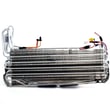
If you confirm a defrost problem (ice buildup on the evaporator area), these are typical components to evaluate:
- Defrost sensing: refrigerator defrost sensor assembly 6615JB2005R
- Wiring connections at the evaporator and control harness
- Main control logic (diagnosis often requires a meter and schematic)
For model-specific troubleshooting flowcharts and any display-message definitions, use the 79574024412 owner's manual.
When defrost heat and sensing do not clear frost from the evaporator, airflow drops. The compressor can run longer, temperatures rise in the refrigerator section, and food quality suffers even though the unit still sounds like it is running.
Last updated: January 2026