Installation guide
 Owner’s manual
 Error Codes


What dishwasher brands are made by Whirlpool?
Whirlpool Corporation manufactures several dishwasher brands; the most common Whirlpool-owned brands you’ll see include Whirlpool, KitchenAid, Maytag, JennAir, and Amana. For brand-specific features, cycles, and care guidance on your Whirlpool WDF320PADS3 dishwasher, use the WDF320PADS3 owner's manual.
Whirlpool-owned dishwasher brands (common in the U.S.)
These brands are widely recognized as part of Whirlpool’s portfolio:
- Whirlpool
- KitchenAid
- Maytag
- JennAir
- Amana
How to confirm who made your dishwasher
Brand ownership can be confusing because labels and styling change over time. The most reliable way to confirm what you have is to identify the model and serial information.
- Open the door and look along the right or left interior edge for the model/serial tag
- Match the model number exactly (for this unit: WDF320PADS3)
- Use the model number when ordering parts like a heating element, drain pump, or water inlet valve
- Keep the model/serial info handy when troubleshooting or calling for service
Quick reference: brand name vs. manufacturer
| What you see on the front | Who makes it (in this context) | What to do next |
|---|---|---|
| Whirlpool, KitchenAid, Maytag, JennAir, Amana | Whirlpool Corporation | Use the model number to find the correct parts and instructions |
Why it matters
Knowing the manufacturer helps you get the right repair information and parts the first time. On a Whirlpool-built dishwasher like the WDF320PADS3, parts fit and troubleshooting steps are tied to the exact model design, not just the brand name.
Last updated: February 2026
How to troubleshoot common Whirlpool dishwasher problems?
For Whirlpool model WDF320PADS3, we troubleshoot most common dishwasher problems by confirming power, door latch, cycle selection, and water supply first; then we check draining (filter, air gap, drain hose) and cleaning performance (detergent, rinse aid, spray action). Use the WDF320PADS3 user manual for model-specific checks.
Quick checks that fix the most issues
- Make sure the door is fully closed and latched; many cycles will not run if the latch is not engaged.
- Confirm the cycle is selected correctly, then press Start/Resume.
- Close the door within 3 seconds after pressing Start/Resume; otherwise the Start/Resume light can flash and the cycle will not begin.
- Verify the house breaker is on (or fuse is good) and the dishwasher has power.
- Confirm the water supply valve to the dishwasher is turned on.
If it will not start or stops mid-cycle
Some pauses are normal during the main wash, but a no-start is usually one of the basics above.
| Symptom | Most likely cause | What to do first |
|---|---|---|
| Start/Resume light flashing | Door not closed in time | Press Start/Resume again; close door within 3 seconds |
| No lights or dead unit | No power | Check breaker/fuse; verify outlet power |
| Starts then stops | Door not latched or normal pause | Re-latch door; wait through brief pauses |
If it is not draining
Start with the items that clog most often.
- Clean the filter area; a restricted filter can slow or stop draining.
- If your setup uses an air gap, clean it; a blocked air gap commonly causes poor draining.
- Inspect the drain hose for kinks, crushing, or a blockage.
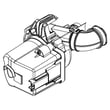
- If you suspect a failed drain pump, the dishwasher drain pump W10876537 is the model-matched replacement part.
If it is not cleaning or drying well
- Use high-quality detergent packs or tablets and use rinse aid for daily care.
- Run a cleaning cycle periodically; avoid frequent vinegar rinses because repeated acid exposure can damage components.
- Confirm spray arms can rotate freely (no tall items blocking them) and load dishes so water can reach surfaces.
Why it matters
Starting with power, door, and water supply prevents unnecessary part replacement. Drain and filter checks protect the pump and help prevent odors, standing water, and poor wash results.
Last updated: February 2026
What does F3 mean on a Whirlpool dishwasher?
On a Whirlpool dishwasher like model WDF320PADS3, an F3 code points to a water-heating problem (the dishwasher is not sensing the expected temperature rise). The most common causes are the heating circuit (heater, wiring, control) or the temperature sensor circuit.
What to check first (fast, no parts)
- Cancel the cycle and restart a Normal cycle after a 5-minute pause.
- Confirm the hot water supply is on and hot; run the kitchen faucet until hot before starting.
- Make sure the door is fully closed and latched.
- Check for excessive suds (wrong soap or too much detergent can disrupt heating and sensing).
- Reset power at the breaker for 1 minute, then retry.
Likely causes and what they mean
| What’s failing | What you’ll notice | Common fix |
|---|---|---|
| Heating element circuit | Water stays cool; poor drying | Inspect heater wiring; replace heater if open |
| Temperature sensing (NTC/thermistor) | Code appears when water should be heating | Check sensor connection; replace sensor if out of range |
| Control board relay/heater control | Intermittent heating; code comes and goes | Repair wiring; replace control if relay is not switching |
Parts that commonly relate to an F3 heating issue
If your WDF320PADS3 is not heating, these model-matched parts are often involved:
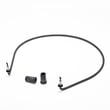
- Element assembly W10518394 (heater that warms wash water and supports drying)
Why it matters
When the dishwasher cannot heat water correctly, cleaning performance drops, cycle time can increase while it tries to heat, and drying results suffer. Fixing the heating or sensing issue restores normal wash temperatures and cycle behavior.
For model-specific diagnostics steps and any stored fault code behavior, follow the troubleshooting guidance in the WDF320PADS3 owner’s manual. You can also reference our Whirlpool dishwasher error codes guide for code patterns and symptom matching.
Last updated: February 2026
Why is my Whirlpool dishwasher leaking from the bottom?
A bottom leak on your Whirlpool WDF320PADS3 dishwasher usually comes from a drain or fill issue, a loose clamp, or a failing pump seal. Start by checking for oversudsing, then inspect the drain hose and pump area for drips, because small leaks often show up only during drain or wash.
Quick checks we recommend first
- Cancel the cycle and let the unit drain; then look for fresh water under the front center and both corners.
- Check for oversudsing (wrong soap or too much detergent); suds can push water out of places that normally never leak.
- Confirm the dishwasher is level and the door closes tightly.
- Inspect the drain path for kinks or loose connections.
- Turn off power at the breaker before removing any panels.
Most common leak points on WDF320PADS3
| Where you see water | Most likely cause | What to do next |
|---|---|---|
| Under front, during drain | Drain hose or drain pump leak | Inspect hose routing and pump outlet; replace if cracked |
| Under center, during wash | Sump or motor seal leak | Check for dripping at the pump housing; plan for pump/motor service |
| Under left/front, during fill | Water inlet valve or supply connection | Tighten fittings; replace valve if it seeps |
Parts that often fix a bottom leak
- If the leak happens when draining, the dishwasher drain pump W10876537 is a common source.
- If you see a split, soft spot, or pinhole, replace the dishwasher drain hose 8269144A (use the hose that matches your routing).
- If the leak is at a hose connection, a loose or distorted clamp such as the clamp WP596669 can let water drip under pressure.
- If the leak appears during filling, the dishwasher water inlet valve W11175771 can seep or drip.
Why it matters
Even a slow leak can damage flooring and cabinets, and it can also lead to poor washing if the dishwasher cannot maintain the right water level. Fixing the leak source early prevents repeat failures of electrical and motor components.
What to reference while troubleshooting
Use the WDF320PADS3 owner’s manual for safety steps and care guidance, including detergent and suds warnings, and the WDF320PADS3 installation guide for correct water and drain connection practices.
Last updated: February 2026