Owner’s manual
 View engine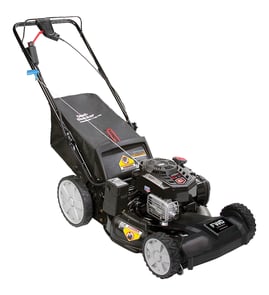


What is the model number of my lawn mower?
For this Craftsman walk-behind mower, the model number is 917388380. On the mower itself, you’ll typically find the model and serial number on a decal attached to the rear of the mower housing; confirm it matches 917388380 before ordering parts.
Where to find the model number on a Craftsman 917388380
We recommend checking these common locations first:
- Rear of the mower housing (decal/label on the back of the deck)
- Near the handle mounting area on the deck
- On the side or top of the mower deck, depending on production run
- In your documentation, such as the 917388380 owner’s manual
Model number vs. engine model number (important)
Your mower has a mower model number and an engine model number; they are not the same.
| What you’re identifying | Example for this mower | Where it’s found | Why it matters |
|---|---|---|---|
| Mower model number | 917388380 | Mower deck/housing decal | Ensures the correct Craftsman chassis parts |
| Engine model number | 12H802-2675-E1 | Stamped/printed on the engine | Helps match engine-specific parts and tune-up items |
Why it matters
We use the mower model number to match the correct diagrams and manufacturer-approved parts. Using the engine model number by itself can lead to ordering the wrong blade, cable, or hardware for the Craftsman deck.
Quick tip before ordering parts
- Write down the full model number exactly as shown
- Record the serial number too (helpful for production variations)
- If the decal is worn, use the manual’s model identification section as a cross-check
Last updated: January 2026
Should I use 87 or 89 gas for lawn mower?
For Craftsman model 917388380, we recommend using fresh, clean regular unleaded gasoline with a minimum of 87 octane; higher octane (such as 89) is not required for normal operation. This matches the fuel guidance in the 917388380 owner’s manual.
What to use (and what to avoid)
- Use 87 octane (regular unleaded) or higher if that’s what you have available.
- Use fresh fuel; buy only what you can use in about 30 days.
- Do not mix oil with gasoline (this is a 4-cycle engine).
- Avoid old fuel; stale gas is a common no-start and rough-running cause.
- For storage longer than about 30 days, plan to drain the tank or use a fuel stabilizer.
Quick comparison: 87 vs 89 for this mower
| Fuel choice | Works in 917388380? | When it makes sense |
|---|---|---|
| 87 octane (regular) | Yes (minimum recommended) | Everyday mowing, best value |
| 89 octane (mid-grade) | Yes | If it’s already in your gas can; not a performance requirement |
Why it matters
Using the correct octane helps your Craftsman mower run as designed, but fuel freshness matters more than octane. Stale or water-contaminated gas can cause hard starting, surging, and loss of power.
If the mower runs poorly after fueling
If you’re still having trouble after adding fresh 87 octane, check common maintenance items first:
- Air filter condition
- Spark plug condition and connection
- Fuel age and signs of water contamination
- Built-up grass/debris under the deck (can load the engine)
If you’re doing a tune-up, a compatible kit can simplify routine service; see the briggs & statton tune-up kit 5140B.
Last updated: January 2026
Is it cheaper to repair or replace a lawn mower?
For the Craftsman 917388380, the owner’s manual doesn’t set a dollar threshold for when repair becomes “too expensive,” so we can’t give a model-specific cost cutoff. In practice, it’s usually cheaper to repair when the issue matches the manual’s routine maintenance or troubleshooting items; replacement is more likely when damage is extensive or repairs stack up.
What we can confirm for model 917388380
The 917388380 owner’s manual includes a maintenance schedule and a troubleshooting chart that point to several fixable, service-type causes (for example: dirty air filter, stale fuel, bad spark plug, loose blade, or grass buildup under the deck). Those are typically repair scenarios because they involve inspection, cleaning, adjustment, or replacing common wear parts.
Common manual-listed issues that are often repairable:
- “Does not start” from dirty air filter, stale fuel, or bad spark plug
- “Loss of power” from grass buildup under the mower or cutting too much grass
- “Poor cut” from a worn, bent, or loose blade, or uneven wheel height settings
- “Excessive vibration” from a worn/bent/loose blade
- “Starter rope hard to pull” from blade dragging in grass or a broken blade adapter
A practical way to decide (cost and condition)
Use this quick comparison to keep the decision grounded in what you can verify on the mower.
| What you find | Usually points toward | Why |
|---|---|---|
| One clear cause from the troubleshooting chart | Repair | Targeted fix, limited parts and labor |
| Multiple symptoms plus visible impact damage | Compare repair estimate vs. replacement | Damage can involve several components |
| Safety-related damage (guards, deck, controls) | Repair only if it can be restored to safe operation | Safe operation matters more than cost |
Parts that commonly factor into “repair” decisions
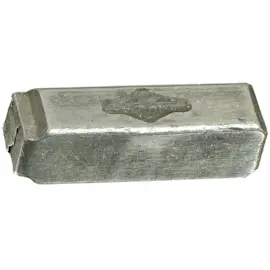
If vibration or hard starting traces back to the blade mounting area, a frequent wear item is the blade adapter; for this model, see lawn mower blade adapter 581547901.
Why it matters
A mower that vibrates, has a dragging blade, or has damaged guards can be unsafe and can cause additional wear. Using the manual’s troubleshooting steps first helps you avoid paying for unnecessary parts or labor.
Last updated: January 2026