 Installation guide
 Owner’s manual


How do I know if my Kenmore dryer thermal fuse is blown?
A blown thermal fuse on your Kenmore dryer model 11078002010 typically shows up as a dryer that will not start, or a dryer that runs but will not heat. The sure way to know is a continuity test with a multimeter after unplugging the dryer and accessing the fuse.
Quick symptoms to look for
- Dryer will not start even though the door is shut
- Motor hums but the drum will not tumble (varies by design)
- Dryer tumbles but there is no heat on a heat cycle
- Problem started after long dry times or restricted airflow
- Lint buildup in the vent path or a crushed/kinked vent behind the dryer
Confirm it with a continuity test (best check)
- Unplug the dryer (the installation instructions stress using a properly grounded outlet and avoiding extension cords). See the 11078002010 installation guide.
- Access the thermal fuse (commonly on the blower housing or exhaust duct area).
- Pull at least one wire off the fuse terminal.
- Meter the fuse for continuity:
- Good fuse: near 0 ohms or continuity tone
- Blown fuse: open circuit (no continuity)
Fix the root cause first (airflow)
A thermal fuse usually opens because the dryer overheated. Before you run the dryer again, correct airflow issues.
- Clean the lint screen and the lint screen housing
- Check the vent hose for crushing, kinks, or long runs
- Clear lint from the wall duct and outside vent hood
- Make sure the dryer is not pushed tight against the wall
- Verify the dryer is level and the vent is not crushed (called out in the install checklist)
Airflow check you can do right away
| What you check | What “good” looks like | What to fix |
|---|---|---|
| Outside vent hood | Strong, steady airflow | Remove lint blockage, replace stuck hood |
| Vent hose behind dryer | Smooth, not kinked | Shorten, reroute, replace crushed hose |
| Dry time | Normal for load size | Clean venting, inspect blower wheel |
Why it matters
The thermal fuse is a safety device; if it is blown and you only replace the fuse without fixing restricted venting, the replacement fuse can blow again quickly and the dryer can keep overheating.
Last updated: February 2026
How do I tell what model my Kenmore dryer is?
Your Kenmore dryer’s model number is printed on the model and serial rating plate; on Kenmore model 11078002010, that plate is typically in the door opening (door well). Once you have the full model number, we can match the correct parts, diagrams, and specifications.
Where to look for the model number
Check these common locations on Kenmore dryers:
- In the door opening on the rating plate (often the fastest place to find it)
- On the inside of the door itself
- On the back panel of the dryer cabinet
- Behind the lower toe panel (if your model has one)
- In your paperwork, such as the 11078002010 installation guide
What to write down (and why)
Record both the model number and serial number exactly as shown. They help us identify the correct version of your dryer and the right replacement parts.
| Item to record | Example format | Why it matters |
|---|---|---|
| Model number | 110XXXXXXXXXX | Matches parts lists and diagrams |
| Serial number | Letters and numbers | Helps confirm production series |
| Fuel type (gas/electric) | Gas or electric | Ensures correct heating and venting parts |
Quick tips to avoid ordering the wrong part
- Copy the model number character-for-character (no spaces added)
- Use the full model number, not just the “110” prefix
- If the rating plate mentions gas type, note it (natural gas vs LP conversion is technician-only)
- Use the model number to confirm fit before buying wear items like the dryer door switch WP3406107
Why it matters
Kenmore model numbers can look similar, but small differences change which drum support roller, idler pulley, electronic control, or gas burner parts fit. Using the exact model number keeps troubleshooting and part selection accurate.
Last updated: February 2026
What is an F1 code on a Kenmore dryer?
On a Kenmore dryer, an F1 code points to a control problem, most often the electronic control board (or its wiring) detecting an internal fault. On Kenmore model 11078002010, start by resetting power, then check harness connections; if the code returns, the control typically needs service or replacement.
Quick checks we recommend first
- Unplug the dryer (or switch off the breaker) for 5 minutes, then restore power and try a cycle.
- If the code returns, unplug again and inspect wire harness plugs at the control for loose fit, corrosion, or backed-out pins.
- Confirm the dryer is installed on a level floor; poor leveling can affect sensor cycles and operation.
- Make sure the dryer is not operated below 45°F (7°C); low temperatures can cause abnormal cycle behavior.
- If you recently moved the dryer, re-check installation clearances and vent routing.
What usually causes an F1 code
| Likely cause | What you may notice | Typical fix |
|---|---|---|
| Electronic control fault | F1 appears soon after start or mid-cycle | Replace/control service (after checks) |
| Loose harness connection | Intermittent F1, starts then stops | Reseat connectors, repair terminals |
| Moisture/heat damage at control | Random errors, odd button response | Inspect control area, replace damaged parts |
| Power issue (surge/unstable supply) | Code after outage or flicker | Reset, verify outlet/breaker, then retest |
If you need to access the control area
Follow the disassembly steps and safety notes in the 11078002010 installation guide. Before disconnecting anything, we recommend taking a clear photo of each connector so every wire harness goes back to the correct location.
Why it matters
The control board manages heat, motor operation, and cycle timing. When it detects an internal failure, it can stop the dryer to prevent unsafe operation or repeated overheating.
Last updated: February 2026
How to hard reset a Kenmore dryer?
To hard reset a Kenmore dryer model 11078002010, we recommend a simple power reset: turn the dryer off, unplug it (or switch the breaker off) for 2 minutes, then restore power and try a cycle again. This clears most control glitches and many temporary error conditions.
Hard reset steps (safe, works for most Kenmore dryers)
- Press Power/Cancel to stop the cycle.
- Unplug the dryer (or turn the circuit breaker off).
- Wait 2 minutes.
- Restore power.
- Open and close the door once, then select a cycle and press Start.
- If the control is still unresponsive, repeat the reset with a 5-minute power-off.
If the dryer still will not start after a reset
A reset will not fix a failed safety device or a mechanical problem. These checks pinpoint the most common causes:
- Confirm the door fully closes and the latch engages; a failed door switch can prevent starting.
- Check airflow: clean the lint screen and make sure the vent is not crushed or kinked.
- If the drum will not turn or you hear squealing, inspect the belt and idler system.
- If it runs but shuts off quickly, check for overheating from restricted venting.
- If it is a gas dryer and it tumbles but will not heat, ignition components may be involved.
Quick part checks for this model
| Symptom | What to check first | Example part for 11078002010 |
|---|---|---|
| Won’t start, door seems “closed” | Door switch continuity and actuator | Dryer door switch WP3406107 |
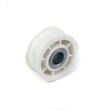
| Runs but noisy or drum not turning | Idler pulley and drum support rollers | Dryer idler pulley 279640 |
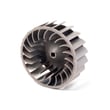
| Poor drying, long dry times | Lint screen, ducting, blower wheel | Dryer blower wheel WP697772 |
Why it matters
Resetting restores the electronic control to a known state, but dryers also stop for safety when airflow is restricted or when a start-interlock (like the door switch) fails. Good venting also helps the moisture sensing system work correctly.
Model-specific notes from the installation instructions
- The vent connection should be secured with a 4-inch (102 mm) clamp, and the dryer should be positioned to avoid crushing or kinking the vent.
- The dryer must be level for the moisture sensing system to operate correctly.
For control behavior, cycle selection, and any model-specific reset or diagnostic steps, follow the 11078002010 owner’s manual.
Last updated: February 2026
What is the average life of a Kenmore dryer?
Most Kenmore dryers last 10 to 13 years. With good airflow, routine cleaning, and correct installation, a Kenmore 11078002010 dryer commonly reaches the upper end of that range (and beyond) before major parts like the drive motor or drum components wear out.
Typical lifespan and what affects it
A dryer’s life is mostly determined by heat stress, airflow restriction, and mechanical wear.
- Vent restriction (long runs, too many elbows, crushed duct) raises heat and shortens component life
- Lint buildup increases run time and strain on the blower wheel and motor
- Overloading accelerates wear on drum rollers, belt, and idler pulley
- Low room temperature can extend cycle time (installation guidance notes avoiding operation below about 45°F)
- Leveling and stability matter; an uneven floor can affect tumbling and sensor-cycle performance
Maintenance that extends dryer life
Use these habits to reduce breakdowns and keep drying times consistent.
- Clean the lint screen every load; replace it if torn or warped (see screen W10120998)
- Inspect and clean the vent path regularly; keep it as straight and short as possible
- Use rigid metal venting when possible and minimize 90° turns
- Do not overload; leave room for clothes to tumble freely
- Listen for early warning noises (squeal, thump, rumble) and address them promptly
Venting guidance (why it matters)
The installation instructions warn that vent runs longer than the vent chart allows can reduce performance and shorten dryer life. Use the vent chart in the 11078002010 installation guide to match your setup.
| Vent setup (rigid metal) | Max length with box/louvered hood | Max length with angled hood |
|---|---|---|
| 0 elbows | 64 ft | 58 ft |
| 2 elbows | 44 ft | 38 ft |
| 4 elbows | 27 ft | 21 ft |
When “end of life” is really a wearable part
Many “old dryer” symptoms are caused by common wear items, not the cabinet itself.
- Rumbling or thumping: drum support rollers (see support WPW10314173)
- Squealing or belt slip: idler pulley (see dryer idler pulley 279640)
- Long dry times: venting issues or a failing blower wheel (see dryer blower wheel WP697772)
Why it matters
A dryer that dries slowly runs hotter and longer, which increases energy use and accelerates wear on sensors, thermostats, and drive components. Keeping airflow strong is the simplest way to maximize lifespan.
Last updated: February 2026
How do I remove the front panel of my Kenmore dryer?
To remove the front panel on your Kenmore dryer model 11078002010, we start by disconnecting power, then open up the top and remove the mounting screws that secure the front panel to the cabinet. Once the panel is free, we lift it off the lower retaining tabs and disconnect any wiring as needed.
Safety first
- Unplug the dryer (or switch off the breaker) before opening the cabinet.
- If you have a gas model, shut off the gas supply valve before servicing.
- Wear cut-resistant gloves; cabinet edges can be sharp.
- Do not reach into the dryer if the drum is moving.
- Keep the area around the exhaust opening free of lint buildup (lint is a fire risk).
For model-specific cautions and handling notes, follow the 11078002010 installation guide.
Front panel removal steps (typical for this Kenmore 110 series style)
- Remove the lint screen (if it is on the top panel) and any screws near the lint screen housing (some versions have them).
- Release the top panel: insert a putty knife a few inches in from each front corner to release the spring clips, then lift the top.
- Remove front panel screws: look for screws at the inside top corners of the front panel (under the raised top) and remove them.
- Disconnect door switch wiring (if the harness is attached to the front panel). If the switch is mounted in the front panel, the connector typically pulls off the switch terminals.
- Lift and pull the front panel off: lift the panel up to clear the bottom tabs, then pull it forward.
If the door switch is in the way
If the door switch wiring is short or the connector is damaged, replacing the switch is common during cabinet service. Use the exact part for this model: dryer door switch WP3406107.
What you can access after the front panel is off
| Area you can reach | Common reason | Example part for this model |
|---|---|---|
| Drum support area | Thumping, rumbling | Drum support roller/support components |
| Belt and idler area | Squealing, belt slipping | Idler pulley |
| Blower housing | Loud vibration, poor airflow | Blower wheel |
Why it matters
Removing the front panel correctly prevents bent cabinet tabs, broken door switch wiring, and air leaks that can reduce drying performance and increase lint accumulation.
Last updated: February 2026








