Error Codes

What is a common problem with a dehumidifier?
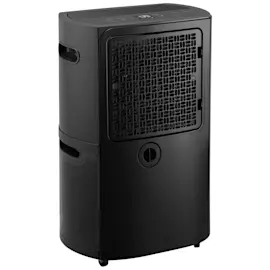
A common problem with the Frigidaire FFAD5033W10 dehumidifier is that it runs but does not collect water. In most homes, this happens because airflow is restricted (dirty filter or blocked grille), the room conditions are not right (too cool or too dry), or the bucket and drain setup are not seated correctly.
- Runs but no water in the bucket: humidity setting too high, room air too cool, or poor airflow
- Leaks water: bucket not fully seated, drain hose loose, unit not level
- Frost on the coil: low room temperature, restricted airflow, or long run time
- Noisy operation: fan blade rubbing, loose screws, unit not level
- Won’t turn on: full bucket switch engaged, power issue, or control problem
For deeper troubleshooting by symptom, use our dehumidifier repair guide landing page.
- Confirm the room conditions: Most compressor-style dehumidifiers collect best in warmer rooms; below about 65°F, water removal can drop and frost can form.
- Check the air path: Make sure the intake and exhaust are not blocked by curtains, furniture, or dust buildup.
- Verify bucket fit: Reseat the bucket firmly so the “bucket full” safety switch can close.
- Inspect the drain setup (if used): Make sure the hose slopes downward with no kinks.
- Clean the unit: A dirty filter and dusty coil reduce airflow and performance; follow our how to clean a dehumidifier steps.
| What you see | Most likely cause | What to do next |
|---|---|---|
| Running, no water | Airflow restriction or conditions | Clean filter/coil; lower humidity setpoint; close windows |
| Water on floor | Bucket or drain issue | Reseat bucket; level unit; tighten hose connection |
| Ice on coil | Cold room or low airflow | Warm room; clean filter; allow defrost time |
| Loud rattling | Loose panel or fan contact | Level unit; tighten screws; check for rubbing |
When a dehumidifier can’t move enough air across the evaporator coil, it can’t condense moisture efficiently. Fixing airflow, placement, and drain/bucket seating prevents most “not collecting water” and leaking complaints and reduces strain on the compressor and fan motor.
Last updated: January 2026
Are Frigidaire dehumidifiers any good?
Frigidaire dehumidifiers (including the Frigidaire FFAD5033W10) are a solid choice for dependable moisture removal and everyday home use; they typically perform best in damp basements, laundry rooms, and larger living areas. Most customer satisfaction comes from strong water extraction and practical features, while the most common tradeoff is compressor and fan noise.
A good dehumidifier consistently lowers humidity, collects or drains water reliably, and runs without frequent icing or shutdowns.
Common strengths we see with Frigidaire units:
- Strong moisture removal in humid spaces
- Straightforward controls and humidity setpoint operation
- Bucket-full shutoff and easy emptying on most designs
- Continuous drain capability (when you use a hose)
- Widely available service and repair guidance
Even a good dehumidifier can disappoint if the room conditions or setup are off.
- Noise level: Compressor-based units are usually louder on high fan settings
- Drain setup: A kinked hose or poor slope can cause “not draining” complaints
- Temperature: Cooler basements can lead to frost on the coil
- Airflow: A dirty filter or blocked grille reduces moisture removal
- Expectations: Very large, very wet spaces may need a higher-capacity unit or longer run time
| What you notice | Most likely cause | Best first step |
|---|---|---|
| Runs but little water collected | Airflow issue or humidity already low | Clean filter and confirm room humidity |
| Water on floor | Drain/bucket seating issue | Re-seat bucket, check hose routing |
| Frost on coil | Room too cool or airflow restricted | Raise room temp, clean filter |
| Won’t start | Power, bucket switch, or control issue | Verify outlet, re-seat bucket |
A dehumidifier that is correctly sized and maintained protects floors, drywall, and stored items from mold-friendly humidity; it also helps your HVAC system feel more comfortable at higher thermostat settings.
For maintenance and common fixes that keep performance high, use how to clean a dehumidifier and dehumidifier doesn't remove moisture.
Last updated: January 2026
Can I look up Frigidaire parts by model number?
Yes. For your Frigidaire dehumidifier model FFAD5033W10, looking up parts by the full model number is the most reliable way to match the correct replacement part because it filters results to the exact version of your unit.
Use the complete model number exactly as shown on the rating label (including all letters and numbers), then search parts using that model.
- Check the rating label on the cabinet (commonly on the back, side, or near the bucket area)
- Write the model number exactly: FFAD5033W10
- If a search asks for a “model” and “serial,” use the model for parts lookup
- Match the product type too (dehumidifier) to avoid cross-matches with other Frigidaire products
- When you see multiple similar results, confirm the model number characters again (O vs 0, I vs 1)
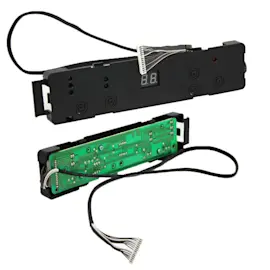
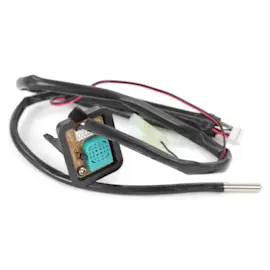
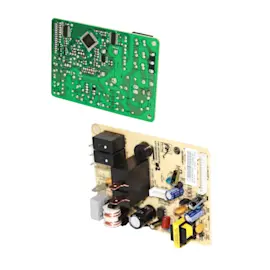
Searching by model number typically narrows parts to assemblies used on that exact platform (controls, sensors, fan components, bucket and drain-related items).
| Search method | Best for | Risk of wrong part |
|---|---|---|
| Model number (FFAD5033W10) | Exact fit and compatibility | Low |
| Part number only | Reordering a known part | Medium |
| Description only (example: “humidity sensor”) | Early troubleshooting | High |
Start with the symptom first, then confirm the part using the model number.
- Unit not running: check power, bucket seated, and control settings
- Not collecting water: verify room temperature, airflow, and humidity setting
- Leaking: confirm bucket alignment and drain routing
- Frost on coil: check airflow and room temperature
- Error codes: use the code to narrow the likely circuit or sensor
For step-by-step troubleshooting and repair paths, use our DIY dehumidifier resources such as dehumidifier repair guide landing page.
Frigidaire often releases multiple versions within a model family; using FFAD5033W10 helps prevent ordering a control board, sensor assembly, or bucket component that looks right but does not mount or connect correctly.
Last updated: January 2026
How big of a dehumidifier do I need for a 2000 sq ft house?
For a 2,000 sq ft house, we typically recommend a 50 to 70-pint dehumidifier; choose the lower end for moderate dampness and the higher end for very damp conditions. Your Frigidaire dehumidifier model FFAD5033W10 is in the common “whole-floor/large area” size class, but actual needs depend on moisture load.
Use the dampness level in the worst area (often a basement) to pick capacity.
- Moderately damp (musty odor, slightly clammy air): 50-pint
- Very damp (visible condensation, damp walls, frequent wetness): 70-pint
- Extremely wet (water intrusion, standing water history): consider multiple units or a whole-home solution
- Hot, humid climates usually need the next size up
- If you want faster dry-down after storms, size up
- If you only need comfort control, size to the middle
A 2,000 sq ft home can behave like a much smaller or much larger moisture problem depending on conditions.
| Factor | What it does | What to do |
|---|---|---|
| Basement or crawlspace | Adds major moisture load | Size up; run continuously |
| Poor air sealing | Pulls humid outdoor air inside | Seal leaks; size up |
| Low indoor temps | Can cause coil frost | Keep room warmer; ensure airflow |
| Drain setup | Limits run time if bucket fills | Use gravity drain or pump |
- Runs all day and never reaches set humidity
- Bucket fills very quickly (or drain runs constantly)
- Humidity stays above 55% to 60% in problem rooms
- You still see condensation on windows or smell mustiness
- The unit short-cycles (turns on/off often) and humidity swings widely
Correct sizing helps your dehumidifier remove moisture efficiently, avoid long run times, and reduce issues like odor, condensation, and comfort problems. If your unit is undersized, it can run constantly without ever catching up.
For more detail on matching capacity to square footage and dampness, use our guide: what size dehumidifier do i need.
Last updated: January 2026
Can a Frigidaire dehumidifier be repaired?
Yes. A Frigidaire dehumidifier such as model FFAD5033W10 is designed to be repairable; most problems come from a few serviceable areas like airflow, drainage, sensors, or the electronic controls. We recommend troubleshooting the symptom first, then replacing the failed component if needed using a proven repair process like dehumidifier repair guide landing page.
- Poor moisture removal caused by a dirty air filter or blocked airflow
- Water not collecting due to a full bucket switch issue or incorrect humidity setting
- Not draining through a hose because of a kinked line or clogged drain outlet
- Frost on the coil from low room temperature or restricted airflow
- Not running due to power, float switch, or control board problems
- Noisy operation from a loose fan blade or worn fan motor
- Power and settings: Confirm the unit is on, humidity is set below room humidity, and the fan is running.
- Airflow: Clean the filter and keep the intake and exhaust clear.
- Drainage: Reseat the bucket fully or verify the drain hose slopes downward with no kinks.
- Room conditions: Dehumidifiers can ice up in cooler spaces; move it to a warmer area and let it thaw.
| What it’s doing | Most common cause | Best next step |
|---|---|---|
| Runs but doesn’t remove moisture | Dirty filter, blocked coil, sensor issue | Clean first; then follow dehumidifier doesn't remove moisture |
| Leaks water | Bucket not seated, drain path issue | Inspect bucket and drain using how to stop dehumidifier leaks |
| Won’t drain with hose | Clogged outlet, hose routing | Follow dehumidifier not draining |
| Not running at all | Power, float switch, control issue | Use dehumidifier not running |
Fixing the root cause (airflow, drainage, or a failed sensor/control) restores normal humidity control, prevents water on the floor, and reduces compressor strain so the dehumidifier runs more efficiently.
Last updated: January 2026
How long does a Frigidaire dehumidifier last?
A Frigidaire dehumidifier like model FFAD5033W10 typically lasts 3 to 7 years. In our experience, lifespan depends most on run time (daily hours), coil cleanliness, airflow, and whether the unit is kept draining properly instead of frequently shutting off on a full bucket.
Most portable dehumidifiers fall into a predictable range; the same is true for Frigidaire units.
- 3 to 4 years: heavy use (basement year-round, high humidity, minimal cleaning)
- 5 to 7 years: average use with routine cleaning and good airflow
- Shorter lifespan: frequent icing, clogged filter, dirty coils, or repeated overflow events
- Longer lifespan: steady drainage, clean air path, and stable room temperatures
These steps reduce strain on the compressor, fan motor, and humidity sensor.
- Clean the air filter regularly so airflow stays strong
- Keep the intake and exhaust grilles clear (avoid pushing the unit against a wall)
- Clean dust from the coil and fan area during seasonal maintenance
- Use a gravity drain or pump setup when possible to avoid constant bucket full shutoffs
- Run the unit in a warm-enough space to reduce frost buildup on the coil
For a simple routine, follow our guide: how to clean a dehumidifier.
| What you notice | What it usually means | What to do next |
|---|---|---|
| Runs but collects little water | Airflow restriction, low room humidity, sensor issue | Check filter and room conditions; see dehumidifier doesnt collect water |
| Frost on coil | Low temperature, airflow problem | Improve airflow and room temp; see dehumidifer frost on the coild |
| Water on floor | Drain/bucket seating issue, clog, tilt | Inspect drain path; see how to stop dehumidifier leaks |
| Won’t start or stops quickly | Control, float switch, power issue | Basic checks; see dehumidifier not running |
Knowing the typical 3 to 7 year lifespan helps you decide whether to invest time in cleaning and troubleshooting, replace a wear item like a sensor, or plan for replacement if the compressor or sealed system performance drops.
Last updated: January 2026