Error Codes


How to read a GE refrigerator model number?
On your GE refrigerator, the model number (for example, CZS22MP2NDS1) identifies the exact design series so we can match the correct parts and diagrams. The serial number is different; it’s used to determine the manufacturing date and production details.
Where to find the model and serial tag
Most GE side-by-side refrigerators place the rating tag in one of these spots:
- Inside the fresh food compartment on a side wall
- On the ceiling of the fresh food compartment near the light
- Behind the crisper drawers or near the temperature controls
- On the cabinet frame near the door hinge area
How to decode a GE model number (what each section usually means)
GE model numbers are built in “chunks.” Using CZS22MP2NDS1 as the example:
- Prefix letters (CZS): product platform/series (helps identify the refrigerator family)
- Number block (22): capacity class or size family (used for grouping similar designs)
- Middle letters (MP): feature package or configuration (options vary by series)
- Suffix letters/numbers (2NDS1): engineering revision, color/finish, and production variation
Quick reference table
| What you’re reading | Example | What it’s used for |
|---|---|---|
| Model number | CZS22MP2NDS1 | Correct parts lookup and diagrams |
| Serial number | (varies) | Manufacturing date and production run |
How to use the serial number to determine age
GE serial numbers commonly include a letter for the month and a letter or number for the year (the exact pattern depends on the series). If you’re trying to date your refrigerator, use the serial number characters, not the model number.
Why it matters for parts and troubleshooting
Reading the model number correctly prevents ordering the wrong part when symptoms overlap across similar GE refrigerators. For example, on model CZS22MP2NDS1, common repairs often involve:
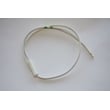
- Cooling and temperature sensing (example part: GE profile refrigerator temperature sensor WR55X10025)
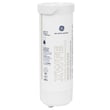
- Water and ice supply issues (example part: GE refrigerator water filter XWFE)
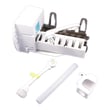
- Ice production problems (example part: mech ice mak WR30X10093)
Last updated: February 2026
Is GE Cafe considered high end?
Yes. GE Café is considered a high-end (premium) appliance line within the GE brand; it typically focuses on upgraded design finishes, more advanced features, and a more built-in, “pro-style” look than GE’s standard lines.
How GE Café fits in the GE lineup
GE positions multiple tiers across its refrigerator and kitchen appliance families. In general, Café sits above standard GE offerings and is marketed as a premium step-up line.
- Premium styling and finishes (often with customizable hardware options)
- Feature-forward designs (more convenience and control features)
- Higher typical price point than standard GE lines
- Often compared with other premium series for kitchens and built-in aesthetics
What “high end” usually means in practical terms
“High end” is less about one single feature and more about the overall package: materials, fit and finish, feature set, and how the appliance is intended to look and perform in a kitchen.
| Category | Standard GE (typical) | GE Café (typical) |
|---|---|---|
| Styling | Classic, practical | Premium, design-focused |
| Features | Core features | More advanced convenience features |
| Price tier | Mid-range | Premium |
| Target buyer | Value and reliability | Design plus performance |
Why it matters when you own a GE refrigerator
Even if your current refrigerator is GE model CZS22MP2NDS1 (a side-by-side), understanding GE’s “tier” helps set expectations for:
- Replacement part costs (premium lines often use higher-cost components)
- Feature complexity (more sensors, controls, and dispenser features)
- Maintenance planning (filters, ice maker components, dispenser parts)
If you are troubleshooting water or ice performance on a premium-style GE refrigerator, we often start with the basics: filter condition, inlet valve flow, and dispenser door sealing. For example, the GE refrigerator water filter XWFE is a common maintenance item that directly affects taste, flow rate, and ice maker fill.
Related DIY help we recommend
For GE refrigerator owners comparing features or maintaining performance, these guides are especially useful:
- How to replace the water filter in a GE refrigerator
- How to disassemble the ice and water dispenser on a GE refrigerator
- How to prevent water dispenser and ice maker problems
Last updated: February 2026
What are common problems with integrated fridge freezers?
Common problems with integrated fridge freezers (including built-in style units like the GE CZS22MP2NDS1 side-by-side refrigerator) include temperature swings, frost buildup, water leaks, and dispenser or ice maker issues. Most symptoms trace back to airflow restrictions, defrost failures, or water-supply component wear.
Most common symptoms and what they usually mean
- Noisy operation (buzzing, clicking, cracking, or popping): Normal expansion and contraction sounds are common; persistent loud buzzing can point to a fan or compressor area issue.
- Warm fridge or freezer: Often caused by poor airflow (blocked vents, overpacked shelves) or an evaporator fan problem.
- Frost buildup on the back wall or on coils: Commonly tied to a defrost system problem.
- Water under the fridge or inside fresh food section: Frequently a clogged/iced drain path or a water-supply component issue.
- Ice maker not making ice or slow production: Can be water supply, inlet valve, or ice maker mechanism related.
- Water dispenser slow or not dispensing: Often a clogged filter, air in the line, or a valve/reservoir issue.
Quick checks we recommend before replacing parts
- Set temperatures to typical targets: 0°F freezer, 37°F fresh food.
- Confirm doors close fully and gaskets seal all the way around.
- Clear vents and avoid packing food tightly against the rear wall.
- If you have a water dispenser, replace the filter on schedule and purge air after changes.
- If frost is heavy, listen for the evaporator fan; it should run when cooling is called.
Parts that commonly solve these problems (when symptoms match)
| Symptom | Common culprit | Example part for CZS22MP2NDS1 |
|---|---|---|
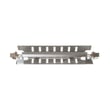
| Frost buildup, warm temps | Defrost system failure | Refrigerator defrost heater WR51X10055 |
| Warm temps, poor airflow | Evaporator fan not moving air | Motor dc evap fan asm WR60X10307 |
| No ice or no water | Water supply not opening correctly | Refrigerator water inlet valve WR57X30890 |
| Slow water, bad taste/odor | Restricted filter | GE refrigerator water filter XWFE |
Why it matters
Integrated and built-in refrigerators rely on tight airflow paths and consistent defrosting. When airflow is restricted or the defrost system falls behind, temperatures drift, frost builds, and the unit can run longer, which increases noise and energy use.
For dispenser-related troubleshooting steps specific to GE designs, we use: how to disassemble the ice and water dispenser on a GE refrigerator.
Last updated: February 2026
What fridge to stay away from?
We don’t recommend “avoiding” a specific refrigerator brand across the board; instead, we recommend staying away from any fridge design that has a long history of the exact failure you want to avoid (most often ice maker and dispenser issues, cooling fan noise, or water leaks). For a side-by-side like GE model CZS22MP2NDS1, simpler ice and water systems usually mean fewer repairs.
What to avoid (based on the problems that drive most repairs)
- Complex in-door ice systems with lots of moving parts (more jam points and air leaks)
- Dispensers that drip or leak (often tied to the inlet valve, reservoir, or filter head)
- Units with chronic frost buildup symptoms (can point to defrost system or airflow issues)
- Loud or intermittent fan noise (often evaporator fan motor or fan blade related)
- “Feature-heavy” models where a single control failure disables multiple functions
What to look for instead (more reliable buying signals)
- Proven cooling performance first; consistent temps in both compartments
- Straightforward ice maker design and easy access to service parts
- Readily available replacement parts for common failures (filter, valve, sensors, fan)
- Good door sealing and stable door alignment (prevents frost and temperature swings)
Quick guide: common complaint to the system involved
| Complaint you want to avoid | Usually involves | Example part for CZS22MP2NDS1 |
|---|---|---|
| No ice or small cubes | Ice maker or water supply | Mech ice mak WR30X10093 |
| Water dispenser slow or no water | Filter, filter head, inlet valve | GE refrigerator water filter XWFE |
| Puddles or dripping at dispenser | Inlet valve, reservoir, tubing | Refrigerator water inlet valve WR57X30890 |
| Warm fridge, freezer OK (or vice versa) | Airflow and sensing | GE profile refrigerator temperature sensor WR55X10025 |
| Frost buildup, warming, then recovers | Defrost system | Refrigerator defrost heater WR51X10055 |
Why it matters
Most “bad fridge” experiences come from repeat service calls on the same subsystem. If you choose a model with a simpler ice and water path and strong parts support, you reduce the chance of expensive, recurring repairs.
Helpful DIY reading before you decide
- How to prevent water dispenser and ice maker problems
- Common refrigerator ice maker problems and solutions
- How to diagnose a faulty refrigerator water inlet valve
Last updated: February 2026