Installation guide
 Owner’s manual



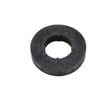


What is the spinning thing at the bottom of a dishwasher called?
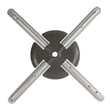
The spinning thing at the bottom of your KitchenAid dishwasher model KUDW03CTBL0 is commonly called the lower spray arm (also referred to as a spray arm). It rotates during the wash to spray water and detergent up onto dishes for cleaning.
What the lower spray arm does (and why it matters)
The lower spray arm is one of the main wash-action parts in the tub. If it is blocked or not turning, you can get poor cleaning, gritty residue, or detergent left behind.
- Sprays pressurized water through small jet holes
- Rotates to cover a wide area of the lower rack
- Helps dissolve and distribute detergent
- Works with the circulation pump and filters to keep water moving
- Can be affected by overloading or tall items blocking rotation
Quick checks if it is not spinning
Before replacing parts, we recommend these basic checks:
- Make sure nothing (cookie sheets, cutting boards, utensils) is stopping the arm from turning
- Spin the arm by hand; it should move freely without scraping
- Clean clogged spray holes (food, hard-water scale) with a toothpick or soft brush
- Confirm the lower rack is seated correctly on the track
- Run a short cycle and listen for normal wash sound (steady spraying, not just draining)
For model-specific loading and care tips, follow the guidance in the KUDW03CTBL0 owner’s manual.
Related parts that affect spray performance
If the spray arm is clear but wash pressure seems weak, these parts are common suspects:
| Symptom | Often related to | Example part for KUDW03CTBL0 |
|---|---|---|
| Weak spray, poor cleaning | Circulation motor not pumping strongly | Pump motor (WPW10780877) |
| Standing water, wash stops early | Drain system issue | Dishwasher drain pump (WPW10348269) |
| Not filling enough | Water supply problem | Dishwasher water inlet valve (WPW10158389) |
When to use error codes
If your dishwasher is showing a fault code or beeping pattern, use the KitchenAid he dishwasher error codes guide to match the code to the most likely cause and next steps.
Last updated: January 2026
What are the components of a dishwasher?
A KitchenAid dishwasher like model KUDW03CTBL0 is built around a wash system (spray and filtration), a drain system, and electrical controls that manage filling, washing, heating, drying, and draining. Your KUDW03CTBL0 owner's manual shows the key features and safe-use details for your exact unit.
Core components you will find in most dishwashers
These parts work together to circulate water, remove soil, and dry dishes:
- Wash system (spray arms and internal wash module that moves water to the dishes)
- Filtration and food handling (coarse strainer plus a chopping device that breaks down food particles)
- Circulation pump and motor (pushes wash water through the spray system)
- Drain system (drain pump and drain hose that send water to the sink drain or disposer)
- Water inlet system (water inlet valve and fill line connection)
- Heating and drying system (heater element plus venting for steam during drying)
- Electronic controls and user interface (control board and touchpad)
- Racks and door sealing (upper and lower racks, door seal, and hinges)
KUDW03CTBL0 components called out in the documentation
Your manual highlights several functional systems that are especially important for performance and safety:
- Chopping device: reduces food items so they can be carried away with the wash water.
- Coarse strainer: helps keep large objects out of the pump area; it should be checked periodically.
- Vent system: you may see steam escaping during drying; the vapor is hot, so avoid touching the vent.
- Optical sensor wash: monitors water temperature and soil level, then automatically adjusts the cycle.
Common part categories (with examples for this model)
If you are troubleshooting, these are the parts customers most often match to symptoms:
| Symptom | Most likely system | Example part for KUDW03CTBL0 |
|---|---|---|
| Not draining | Drain system | Dishwasher drain pump WPW10348269 |
| Not filling | Water inlet system | Dishwasher water inlet valve WPW10158389 |
| Poor drying | Heating and venting | Heater element WPW10082892 |
| Dead or erratic controls | Electrical | Dishwasher electronic control WPW10084141 |
Why it matters
Knowing the main components helps you diagnose faster: a “not draining” issue points to the drain pump or drain hose, while “not drying” points to the heater circuit and venting. It also helps you choose the right repair steps and parts the first time.
Last updated: January 2026
Does a dishwasher have a reservoir?
Yes. Your KitchenAid dishwasher model KUDW03CTBL0 holds water in the tub and sump area during a cycle, but it does not use a separate “reservoir tank” like some appliances. Many dishwashers also have small compartments for detergent and rinse aid, depending on the design (not a salt reservoir on most U.S. models).
What “reservoir” can mean on a dishwasher
Dishwasher terminology varies, so customers often mean one of these:
- Wash water in the tub/sump: water sits in the bottom area briefly during washing and draining.
- Detergent dispenser cup: holds detergent until it opens during the cycle.
- Rinse aid dispenser: stores rinse aid and meters small amounts during rinsing.
- Drain system (hose/air gap): not a reservoir, but it affects standing water and drainage.
For diagrams and feature locations specific to KUDW03CTBL0, use the KUDW03CTBL0 owner's manual.
What you should see as “normal”
A small amount of water in the bottom after a cycle can be normal, but it should not be deep or foul-smelling.
- A little water near the filter/sump area can help keep seals from drying out
- Steam escaping from the door vent during drying is normal (hot vapor)
- Dishes should dry better when the heater and venting are working correctly
Quick troubleshooting if you’re seeing standing water
If you mean “reservoir” because water is not draining:
- Check the sink drain and/or drain air gap (if your plumbing uses one)
- Make sure the drain hose is routed correctly and not kinked
- Clear debris from the coarse strainer/filter area
- If the dishwasher hums but will not drain, the drain pump can be the issue
Common parts related to “won’t drain”
| Symptom | Most likely area | Example part for this model |
|---|---|---|
| Water left in tub | Drain pump or blockage | Dishwasher drain pump WPW10348269 |
| Slow drain or backflow | Drain hose routing/clog | Dishwasher drain hose 8269144A |
Why it matters
Knowing whether you mean stored rinse aid, detergent, or standing wash water helps you fix the right problem. A dishwasher is designed to hold and move water through the sump, pump, spray arms, and drain system; it is not designed to store large amounts of water between cycles.
Last updated: January 2026
What are the commonly replaced parts in a dishwasher?
On the KitchenAid KUDW03CTBL0 dishwasher, the most commonly replaced parts are the drain and wash components (pump, motor, hoses), water fill parts (inlet valve), heating and drying parts (heater), and door-related parts (hinge, seal). These parts directly affect draining, cleaning, and leaking.
Commonly replaced dishwasher parts (and what they do)
- Drain system: moves dirty water out; clogs or pump wear can cause standing water
- Wash/circulation system: drives spray pressure; weak washing often points here
- Water inlet valve: controls fill water; failures can cause no-fill or slow-fill
- Heating element: boosts water temp and drying; failures can cause poor drying
- Door seal and hinge hardware: keeps water in and door aligned; wear can cause leaks or door issues
- Electronic control and fuse: manages cycles and power; failures can cause no-start or dead unit
Parts on this model that are frequently replaced
Here are examples of common replacement parts available for KUDW03CTBL0:
| Symptom you notice | Part that often fixes it | Example part for this model |
|---|---|---|
| Water won’t drain, water left in tub | Drain pump or drain hose | Dishwasher drain pump WPW10348269, dishwasher drain hose 8269144A |
| Not filling or fills slowly | Water inlet valve | Dishwasher water inlet valve WPW10158389 |
| Poor drying or water not heating | Heater element | Heater element WPW10082892 |
| Leaks at the door | Door seal | Dishwasher door seal W11196317 |
| Dead, no power, intermittent power | Fuse or control | Fuse W10258275, dishwasher electronic control WPW10084141 |
Why it matters
Replacing the right part first saves time and prevents repeat failures. For example, a “not draining” complaint can be a blocked hose, a failing drain pump, or an installation issue like a kinked drain line. Using the correct troubleshooting steps helps you avoid replacing good parts.
Quick checks before you buy a part
- Reset power at the breaker for 1 minute, then try a cycle again
- Check the sink drain and garbage disposer inlet (a common drain restriction point)
- Inspect the drain hose routing for kinks and confirm a proper high loop/air gap setup
- Look for obvious leaks around the door perimeter (seal alignment and debris)
- If the door drops or won’t stay in position, check spring tension and hinge hardware
For model-specific guidance on installation clearances, door spring tension adjustment, and securing the dishwasher to prevent tipping, use the KUDW03CTBL0 installation guide.
Last updated: January 2026