 Installation guide
 Error Codes


Where can I find my Roper dryer model number?
On your Roper commercial dryer model REK2950KQ1, the model number and serial number are printed on the serial-rating plate. You will typically find that plate in the door well (the opening area you see when the dryer door is open). See the installation guide for the exact location and what the plate looks like.
- In the door opening (door well) on the cabinet frame
- Around the inside edge of the front panel near the door switch area
- On the back of the cabinet near the top (less common on this style)
- On the side panel near the front edge (occasionally)
Record both numbers exactly as shown:
- Model number: REK2950KQ1
- Serial number: (unique to your dryer)
These numbers help us match the correct Roper parts list, wiring information, and installation requirements.
| Item | What it’s used for | Example |
|---|---|---|
| Model number | Ensures parts fit your exact dryer design | REK2950KQ1 |
| Serial number | Identifies production series and revisions | Varies |
| Gas type info (if applicable) | Confirms burner setup and conversion needs | Listed on plate |
Many dryers share similar-looking doors, timers, and thermostats, but use different drum belts, door switches, or thermal safety parts. Using the serial-rating plate info prevents ordering the wrong replacement part and reduces downtime.
Last updated: February 2026
What are common dryer part failures?
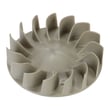
On the Roper REK2950KQ1 commercial dryer, the most common part failures involve heat safety parts (thermal cut-off, thermostats), drum drive parts (belt, idler, rollers), and airflow components (blower wheel, venting). These issues typically show up as no heat, no tumble, overheating, or long dry times; see the installation guide for venting and safety requirements.
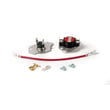
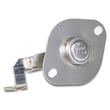
- No heat or shuts off mid-cycle: thermal cut-off fuse kit, high-limit thermostat, operating thermostat
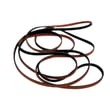
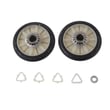
- Drum won’t turn or squeals/thumps: belt, idler pulley, drum support rollers (often serviced as a kit)
- Long dry times or overheating: restricted venting, lint buildup, blower wheel problems
- Won’t start: door switch, timer, motor, power supply issues
- Clean the lint screen and confirm strong airflow at the outside exhaust hood.
- Verify you are using 4-inch metal venting and the vent run is as short and straight as possible.
- Inspect and clean the entire exhaust duct periodically (a restricted duct is a top cause of overheating).
- If the dryer is gas, follow all gas safety steps and keep flammables away from the appliance.
- Disconnect power before opening panels or testing electrical components.
| Symptom | Most likely area | Parts that commonly fix it |
|---|---|---|
| Drum won’t tumble | Drive system | Dryer drum belt 341241, idler pulley, drum rollers (often via a kit) |
| Runs but no heat | Heating safety/control | Thermal cut-off fuse kit, operating thermostat, high-limit thermostat |
| Takes too long to dry | Airflow/venting | Vent cleaning, blower wheel, lint restrictions |
| Won’t start | Start/interlock/control | Door switch, timer, motor |
On a commercial dryer like the REK2950KQ1, airflow and heat safety parts work together. A clogged or incorrect vent (plastic, foil, undersized, or too many elbows) can overheat the dryer and repeatedly trip thermal protection, leading to repeat “no heat” failures.
Last updated: February 2026
What is the most expensive part to replace on a dryer?
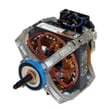
On the Roper REK2950KQ1 commercial dryer, the motor is the part that most often ends up as the highest-cost single replacement because it is a major mechanical and electrical component and takes time to access. Other big-ticket items include the timer and large cabinet or door assemblies.
On dryers like the REK2950KQ1, total cost is usually a mix of part price plus labor time. These parts commonly land at the top:
- Motor (major component; more disassembly)
- Timer or control (specialty part)
- Cabinet and door panels (large assemblies)
- Commercial coin slide and meter-case hardware
- Multiple drum support items replaced together (rollers, shafts, bulkhead)
These examples match common “expensive” categories for this model:
| Part category | Example part | Why it can be costly |
|---|---|---|
| Motor | Motor 279827 | Major component; access and wiring transfer add labor |
| Timer/control | Tmr 60 c1 279737 | Specialty control part; often higher part cost |
| Commercial hardware | Commercial laundry coin slide assembly W11244229 | Commercial-specific mechanism |
| Large metal assembly | Cabinet 8533643 | Large part; more handling and installation time |
Use these checks to avoid replacing a high-cost part when the root cause is elsewhere:
- Verify the symptom (no start, hums, runs but no heat, weak airflow)
- Check for mechanical drag (worn belt, seized rollers, tight drum)
- Inspect wiring connections and terminals for heat damage
- Test safety devices and thermostats if overheating is suspected
- Correct venting problems first; restricted airflow can overheat and damage components
For commercial venting and installation requirements (including shared exhaust guidance), follow the REK2950KQ1 installation guide.
The most expensive repair is often the one that does not fix the underlying issue. Fixing airflow restrictions and mechanical drag helps prevent repeat failures of the motor, thermostats, and other high-cost components.
Last updated: February 2026








