 Owner’s manual
 Error Codes


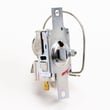
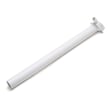
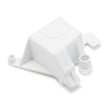
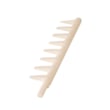
What is the name of the fridge part?
The part is commonly called the machinery compartment. On an Amana bottom-mount refrigerator like model BB20VPSE-P1321302WE, it’s the lower rear area that houses key cooling-system components such as the compressor and condenser fan.
What you’ll typically find in the machinery compartment
Depending on the exact configuration, this compartment commonly contains:
- Compressor (the main pump for the sealed system)
- Condenser coil (releases heat)
- Condenser fan (moves air across the condenser)
- Condensate/drip tray (collects defrost water for evaporation)
- Filter-drier and refrigerant tubing (sealed-system components)
- Drain tubes and wiring harness connections
Where it is and how to access it safely
In most bottom-mount refrigerators, the machinery compartment is accessed from the back lower panel area.
- Unplug the refrigerator before removing any rear access panel
- Pull the unit straight out to avoid damaging the water line (if equipped)
- Use a vacuum and soft brush to remove dust buildup
- Reinstall panels and any toe grille securely before restoring power
Related maintenance that helps cooling performance
Your BB20VPSE-P1321302WE owner documentation calls out routine condenser-coil cleaning to maintain performance.
| Task | Typical frequency | Why it helps |
|---|---|---|
| Clean condenser coil | Every 3 months | Improves cooling and reduces energy use |
| Clear lint/dust near fan area | Every 3 months | Helps airflow and prevents overheating |
| Check for unusual fan noise | As needed | Can indicate a failing fan motor or obstruction |
For model-specific cleaning steps and panel locations, use the owner's manual.
Why it matters
When the machinery compartment is dusty or airflow is blocked, the refrigerator can run longer, cool poorly, and put extra strain on components like the compressor and fan.
Last updated: February 2026
What number should my Amana freezer be set at?
For your Amana BB20VPSE-P1321302WE bottom-mount refrigerator, we set the freezer (Deepfreeze) control to a mid-range setting first (typically 2) and then fine-tune after temperatures stabilize. The goal is 0°F in the freezer for normal operation; allow a full day for changes to take effect.
Recommended target temperatures
Use these targets to confirm the control setting is doing its job:
- Freezer (Deepfreeze): 0°F
- Fresh food section: 37°F to 40°F
- Check temps with a thermometer placed in a cup of water (fresh food) and between packages (freezer)
- Recheck after 24 hours before adjusting again
How to dial in the right setting
If you are not hitting 0°F, adjust in small steps and wait:
- If freezer is warmer than 0°F, turn the freezer control colder by 1 number
- If freezer is colder than 0°F (items freezing too hard), turn the control warmer by 1 number
- Avoid frequent changes; the compressor and fans need time to respond
- After adding a lot of warm food, expect temps to run warm temporarily
Quick adjustment guide
| What you observe | What it usually means | What we do next |
|---|---|---|
| Freezer above 0°F | Not enough cooling or heavy load | Set freezer control colder; wait 24 hours |
| Freezer below 0°F | Overcooling | Set freezer control warmer; wait 24 hours |
| Temps swing a lot | Door leaks, airflow issues, dirty coils | Check gasket seal, vents, and condenser coils |
Why it matters
A freezer near 0°F keeps food safely frozen and helps the ice maker work consistently. If the setting is too warm, ice cream gets soft and ice production drops; too cold can increase frost and energy use.
If the freezer still will not hold temperature
These checks solve most “won’t stay at 0°F” complaints:
- Make sure the door gasket seals fully (no gaps)
- Keep vents clear; do not pack food tightly against air returns
- Clean condenser coils
- Confirm the refrigerator is on a dedicated, properly grounded outlet as described in the owner's manual
Last updated: February 2026
Why is my Amana freezer not making ice?
If your Amana BB20VPSE-P1321302WE freezer is not making ice, the most common causes are the ice maker being switched off (arm up), the freezer not cold enough yet, or a water supply issue (kinked line, low pressure, or no water reaching the inlet valve). See the owner's manual for the exact ice maker on/off position and checks.
Quick checks we recommend first
- Confirm the ice bucket is installed correctly and fully seated.
- Make sure the ice maker arm is down (on position).
- Give the refrigerator time: after the freezer reaches normal temperature, allow 24 to 48 hours for the first ice.
- Verify the household water supply is turned on and the supply line is not kinked.
- Check that the ice maker wiring harness is fully inserted and connections are secure.
What to inspect if the basics look good
Water supply and fill problems
A weak or interrupted water supply can stop ice production.
- Look for kinks in copper or plastic tubing.
- Confirm water is reaching the refrigerator water valve.
- If ice forms in the inlet tube, low water pressure can cause the valve to seep and freeze the tube.
Freezer temperature and airflow
Ice makers need a properly cold freezer to cycle.
- Make sure the freezer section is operating at the correct temperature.
- If you hear unusual fan noise or airflow seems weak, the evaporator fan area may need attention.
Parts that commonly solve “no ice” symptoms
If troubleshooting points to a failed ice maker assembly or ice storage issue, these model-compatible parts are common fixes:
| Symptom | What it often points to | Example part for this model |
|---|---|---|
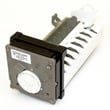
| No ice at all, arm down, water supply OK | Ice maker assembly failure | Refrigerator ice maker D7824706Q |
| Ice maker cycles but bin is cracked/missing | Ice storage problem | Refrigerator ice bin WP67001255 |
| Ice maker shuts off unexpectedly | Shutoff arm issue | Arm shut o WP67004028 |
Why it matters
When the ice maker arm is up, the unit is intentionally off; when water flow is restricted or freezer temperature is off, the ice maker cannot fill or harvest properly. Fixing the root cause prevents repeat clogs, frozen fill tubes, and inconsistent ice production.
Last updated: February 2026
Why is my Amana refrigerator leaking water on the floor?
Water on the floor around your Amana BB20VPSE-P1321302WE bottom-mount refrigerator is usually caused by a clogged defrost drain, a mispositioned or cracked drain pan, or a leaking water supply connection for the ice maker. We recommend checking the drain path first, then inspecting the water line fittings.
Quick checks that fix most leaks
- Unplug the refrigerator or turn off power before inspecting behind panels.
- Look for ice or debris blocking the defrost drain opening (often under the evaporator cover area).
- Flush the drain with hot water (a turkey baster works well) until it flows freely to the drain pan.
- Pull the unit out and confirm the drain pan is centered and not cracked.
- If you have an ice maker, check the water line connection at the rear inlet for slow drips.
- Re-level the refrigerator so it tilts slightly back; this helps doors seal and improves drainage.
If the leak is from the ice maker water line
Your manual calls out two common causes of water connection leaks: incorrect fittings and low or improper water supply setup. Use the checklist below.
| What you see | Most likely cause | What to do |
|---|---|---|
| Drip at rear connection | Loose compression nut/sleeve | Tighten snugly (do not overtighten), then recheck after 24 hours |
| Water on floor after moving fridge | No service loop in tubing | Add slack so the line does not pull on the valve |
| Slow fill or intermittent leaks | Low water pressure or poor shutoff valve | Confirm 20 to 100 PSI supply pressure and use a proper shutoff valve |
For model-specific connection and leak-check steps, follow the owner's manual.
Parts that may be involved
If you confirm the leak is tied to the ice maker assembly (not the defrost drain), these model-compatible parts are commonly involved:
- Refrigerator ice maker D7824706Q (cracks or internal seepage can drip into the cabinet)
- Arm shut o WP67004028 (arm position affects ice production; it does not usually cause floor leaks but is often checked during ice maker service)
- Insert tube WPA3223101 (helps support water tubing connections)
Why it matters
A small leak can quickly turn into warped flooring, moldy baseboards, and ice buildup inside the freezer that blocks airflow and causes warm temperatures. Fixing the drain path or a slow water-line drip early prevents repeat puddles.
Last updated: February 2026
Where is the drain pan on my Amana refrigerator?
On your Amana BB20VPSE-P1321302WE bottom-mount refrigerator, the drain pan sits in the machine compartment at the bottom of the cabinet near the compressor area; it collects defrost water from the drain tube so it can evaporate. Use the BB20VPSE-P1321302WE owner's manual diagrams to confirm the exact access point for your cabinet.
How to locate it safely
- Unplug the refrigerator before reaching into the machine compartment.
- Pull the refrigerator straight out to access the lower rear area.
- Look at the base frame around the compressor and condenser area for a shallow pan.
- Trace the defrost drain tube downward; it routes into the drain pan.
- If your model has a lower front grille, check whether the pan is visible from the front after removing the grille.
If you have puddles or water inside the refrigerator
A drain pan rarely “fails” on its own; water problems usually come from a restricted defrost drain (ice or debris) or a drain tube that is out of position.
- Check for ice or water under the freezer bottom or under the crisper area.
- Flush the defrost drain opening with hot water until it runs freely.
- Verify the drain tube end is seated over the pan and not kinked.
- Clean the pan so you can tell whether new water is entering normally.
Quick symptom guide
| Symptom | Most likely cause | First thing to check |
|---|---|---|
| Water under crispers | Defrost drain backing up | Drain opening and tube |
| Water on floor near front | Tube not aimed into pan or pan shifted | Tube position over pan |
| Water on floor near back | Pan cracked or overflowing | Pan condition and level |
Why it matters
The drain pan is part of the defrost water management system. When the drain path is restricted, water backs up into the fresh food section, causes odors, and creates recurring leaks.
Last updated: February 2026





