Owner’s manual
 Error Codes


How to identify Kenmore dryer model?
Your Kenmore gas dryer model is identified by the model and serial number plate on the dryer. On Kenmore model 11076902693, record the full model number and serial number exactly as shown; you will use them to match the correct parts list and the correct instructions in the owner's manual.
Where to find the model number plate
On most Kenmore dryers, the model and serial number plate is located where you can see it when accessing the door area.
- Check along the door opening on the cabinet frame
- Check the inside of the dryer door
- If not found there, check the back panel or a side panel
- Write down both the model number and serial number (they are used together)
How to read the number you find
Kenmore model numbers often start with a 3-digit prefix (for example, many Kenmore dryers start with 110). That prefix helps identify the manufacturing source and ensures you get compatible replacement parts.
| What to capture | Example for this page | Why it matters |
|---|---|---|
| Model number | 11076902693 | Matches the correct parts diagrams and part fit |
| Serial number | (from the plate) | Helps with age, production run, and service history |
| Purchase date | (your records) | Useful for maintenance tracking and warranty paperwork |
Why it matters for parts and troubleshooting
Using the exact model number prevents ordering the wrong gas dryer parts, especially for common repairs like no-heat, no-start, or noisy drum rotation.
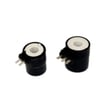
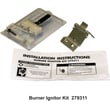
- No heat symptoms often point to ignition or gas burner components such as the dryer igniter 279311 or the dryer valve coil kit 279834
- No start symptoms can involve a door switch or thermal safety device such as the dryer thermal fuse WP3390719
- Squealing or thumping commonly relates to drum support parts such as the support kit WPW10314173 or the dryer idler pulley 279640
Last updated: February 2026
How much does it cost to replace a heating element in a Kenmore dryer?
For a Kenmore gas dryer like model 11076902693, “heating element” cost usually does not apply because gas models heat with a burner assembly (igniter, gas valve coils, and sensors). Typical parts cost to restore heat is about $25 to $120, and professional service commonly brings the total to about $150 to $350. See the owner's manual for model-specific heating and safety details.
What you typically replace on a Kenmore gas dryer that will not heat
On gas dryers, no-heat repairs usually involve these parts (not an electric heater):
- Igniter (glows to light the burner)
- Gas valve coils (open the gas valve)
- Radiant sensor (confirms flame/heat)
- Thermal fuse (opens if the dryer overheats)
- Airflow items (lint screen, venting, blower wheel)
Common model-matched parts from this page include:
- Dryer igniter 279311
- Dryer valve coil kit 279834
- Dryer radiant sensor WP338906
- Dryer thermal fuse WP3390719
Cost breakdown (parts vs. labor)
Actual totals depend on what failed and whether venting issues caused overheating.
| Repair scenario | Typical parts cost | Typical total with labor |
|---|---|---|
| Replace gas valve coils | $25 to $60 | $150 to $300 |
| Replace igniter | $25 to $60 | $150 to $300 |
| Replace thermal fuse (plus fix airflow restriction) | $15 to $40 | $150 to $350 |
| Diagnose intermittent heat (coils, sensor, airflow) | $0 to $120 | $150 to $350 |
Why the vent and lint system matters
A restricted vent can overheat the dryer and trip a safety device, which can look like a “bad heater.” The manual also emphasizes proper exhaust setup and that crushed or kinked venting can cause problems.
Quick checks we recommend before buying parts
- Clean the lint screen and confirm strong airflow at the outside vent hood
- Make sure the vent is not crushed, kinked, or excessively long
- Confirm the dryer door fully closes and the cycle is set to a heat cycle
- If the dryer runs but does not heat, watch for igniter glow (then flame)
- If the dryer heats briefly then stops heating, suspect weak gas valve coils
Last updated: February 2026
How to tell if a dryer gas valve is bad?
On your Kenmore gas dryer model 11076902693, a “bad gas valve” symptom is usually a burner that will not stay lit: the igniter glows but you never get flame, or the flame lights briefly and then goes out, causing long dry times. Before replacing the full valve, we check the valve coils and basic gas supply setup in the owner's manual.
What you’ll see when the gas valve circuit is failing
Common signs during a heat call (timer running, door closed, heat selected):
- Igniter glows, but no flame ever appears.
- Flame lights once, then drops out after a few seconds; the dryer tumbles but stops heating.
- Repeated clicking as the gas valve tries to open (some clicking can be normal).
- Clothes take much longer to dry even with good airflow.
- You smell gas: turn off the gas supply valve immediately and leave the home.
Quick checks we recommend first (safe, no disassembly)
These checks rule out the most common “no heat” causes that mimic a bad valve:
- Confirm the manual shut-off valve for the dryer gas line is fully open (the manual calls for an individual shut-off valve within 6 feet of the dryer).
- Run a full heat cycle for several minutes to purge air from a newly connected gas line (the manual notes a 20-minute full heat cycle and checking for ignition within about 5 minutes).
- Verify the dryer is exhausting properly; restricted venting can cause overheating and shutdowns.
- If the dryer runs but has no heat, inspect for an overheat event; a blown thermal fuse can stop heat.
Parts that commonly fail before the full gas valve
In many Kenmore gas dryers, the gas valve coils fail more often than the valve body itself. If you have “igniter glows, no flame” or “flame drops out,” the first part we replace is typically the coil kit.
| Symptom | Most common fix | Part on this model page |
|---|---|---|
| Igniter glows, no flame | Replace gas valve coils | Dryer valve coil kit 279834 |
| Flame starts then quits | Replace gas valve coils | Dryer valve coil kit 279834 |
| No heat after overheating | Restore airflow; replace fuse if open | Dryer thermal fuse WP3390719 |
Why it matters
A weak or failing gas valve coil can prevent reliable ignition, which leads to poor drying performance and repeated ignition attempts. Fixing the root cause (often coils or airflow) restores steady heat and helps protect other components.
Last updated: February 2026
How to test a dryer temperature switch?
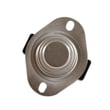
To test the temperature switch (thermostat) in your Kenmore gas dryer model 11076902693, we use a multimeter to check continuity with power off. A good switch shows a clear open or closed reading, and many types change state when warmed and cooled.
Safety first
- Unplug the dryer before opening any panels
- Shut off the gas supply valve on a gas dryer
- Let the dryer cool completely
- Label wires or take a photo before disconnecting
Continuity test (power off)
- Access the temperature switch location using the owner's manual.
- Pull the wire connectors off the switch terminals (pull on the connector, not the wire).
- Set your meter to continuity (beep) or the lowest ohms range.
- Touch one probe to each terminal.
How to read the meter
| Meter reading | What it means | What we do next |
|---|---|---|
| Beep or ~0 to 1 ohm | Switch is closed | Continue diagnosing heat/airflow if symptoms remain |
| OL or very high ohms | Switch is open | If it should be closed at room temp, replace the switch |
Heat-response check (bench test)
Some thermostats are designed to open or close at a set temperature.
- Test at room temperature
- Warm the metal body carefully (hair dryer works well)
- Re-test, then let it cool and test again
Why it matters
On model 11076902693, the temperature switch helps regulate drum temperature and protect the dryer. A failed switch can cause overheating, no heat, or short cycling, and restricted venting can mimic the same symptoms.
Related quick check if the dryer overheats
- Clean the lint screen and housing
- Inspect the vent hose for kinks or crushing
- Confirm strong airflow at the outside vent hood
If the dryer will not run or keeps overheating, also test the dryer thermal fuse WP3390719 for continuity.
Last updated: February 2026