 Installation guide
 Owner’s manual





What is the average lifespan of a GE dishwasher?
A GE dishwasher typically lasts 10 to 12 years. For your GE GDT625PSJ5SS, regular care (especially cleaning and de-odorizing the interior as outlined in the GDT625PSJ5SS owner's manual) helps you reach that average and avoid premature wear.
What affects dishwasher lifespan most
- Water quality: hard water speeds up mineral buildup on internal parts.
- Cleaning routine: periodic interior cleaning helps prevent odors and deposits.
- Loading and detergent use: overloading and excess detergent can reduce performance over time.
- Heat and drying performance: weak heating can leave moisture behind and increase residue.
- Installation quality: a stable, correctly installed unit is easier to service and less likely to be damaged during removal.
Typical lifespan ranges (what we see most often)
| Usage and care level | Typical lifespan |
|---|---|
| Heavy daily use, minimal maintenance | 8 to 10 years |
| Average household use, basic maintenance | 10 to 12 years |
| Light use, consistent maintenance | 12 to 15 years |
Maintenance steps that help you get the full lifespan
- Clean and de-odorize the interior using citric acid or a dishwasher cleaner (per the manual).
- Wipe the control panel with a lightly damp cloth, then dry thoroughly.
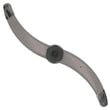
- Keep spray paths clear; if wash performance drops, inspect the lower spray arm for clogs or damage.
- Address draining or standing-water issues quickly so the pump and sump are not stressed.
- If drying gets worse, check for symptoms of a heating problem and troubleshoot early.
Why it matters
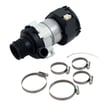
A dishwasher near the end of its expected lifespan often shows up as longer cycles, poorer cleaning, or inconsistent drying. Staying ahead of buildup and wash-system issues helps protect key components like the circulation system and heater.
Last updated: January 2026
Can a clogged drain cause an FTD error?
Yes. On the GE GDT625PSJ5SS dishwasher, an FTD (fail to drain) condition commonly happens when water cannot leave the tub due to a clog or restriction in the drain path (filter, air gap, disposer connection, or drain hose). Use the steps in the installation guide and owner's manual to confirm the drain setup and clear blockages.
What to check first (fast, common fixes)
- Turn power off to the dishwasher at the breaker before inspecting parts.
- Check the sink side first: if the kitchen sink drains slowly, the dishwasher may not drain well.
- If your dishwasher drains into a garbage disposer, run the disposer to clear it.
- If the disposer was recently installed, confirm the disposer drain plug was removed; leaving it in place prevents draining.
- Inspect the drain hose for kinks or crushing where it passes through the cabinet.
- Clean the air gap (if your installation has one).
- Clean the ultra-fine filter in the bottom of the tub.
Drain installation details that can trigger “fail to drain”
The drain line setup matters as much as clogs. For proper drain operation:
| Item to verify | What “good” looks like | What can cause FTD |
|---|---|---|
| Drain connection height | Not more than 72 inches above the bottom of the dishwasher | Water cannot pump up and out reliably |
| Total drain hose length | Not more than 12 feet total | Weak or incomplete draining |
| Hose routing | Smooth path, no sharp bends, not pinched behind the unit | Restricted flow, slow drain |
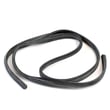
If you need to replace a damaged or split hose, use the exact drain hose for this model, such as the dishwasher drain hose WD24X10062.
Why it matters
When the dishwasher cannot drain, water can remain in the sump area and the control may stop the cycle to prevent overflow or poor wash performance. Clearing the restriction and confirming the drain loop or air gap setup usually restores normal draining.
Last updated: January 2026
Which dishwasher to stay away from?
If you’re shopping for a dishwasher, we recommend staying away from any model line with a consistent pattern of expensive electronic failures, chronic leaking, or poor parts availability. For a GE dishwasher like model GDT625PSJ5SS, use the GDT625PSJ5SS owner’s manual to compare features and maintenance needs, then prioritize reliability and serviceability over extra features.
What to avoid (practical red flags)
- Models with frequent control or touchpad failures (repairs can be costly)
- Units with repeated leak complaints (door seal, tub gasket, sump area)
- Dishwashers that struggle to drain or dry even after basic maintenance
- Designs with hard-to-access pumps or diverters (higher labor time)
- Brands or model lines with limited parts support in your area
Quick reliability checklist (what we look for)
| What you’re evaluating | Better choice | Stay-away signal |
|---|---|---|
| Electronics | Simple controls, proven platform | Frequent “dead panel” or random resets |
| Water management | Solid door sealing, stable tub | Chronic leaking or water in base pan |
| Wash performance | Strong circulation, clean filters | Weak spray, gritty residue, clogged arms |
| Serviceability | Common parts, easy access | Rare parts, complex tear-down |
How this relates to GE model GDT625PSJ5SS
Even within one brand, reliability varies by series and feature set. On GE electronic models, the most expensive “surprise” repairs often involve the user interface or main control. If you’re comparing dishwashers and want to avoid high-risk electronics, check whether replacement parts like a dishwasher electronic control board WD21X24901C are common and reasonably priced.
Before you decide, do these 5 checks
- Confirm the dishwasher is installed level and square; poor leveling can contribute to door leaks
- Make sure the drain hose routing is correct and not pinched
- Clean filters and inspect spray arms for clogs and cracks
- Use only dishwasher detergent (hand soap causes oversudsing and leak-like symptoms)
- Compare error history and symptoms using GE electronic dishwasher error codes
Why it matters
Dishwashers fail most often from water issues (leaks, draining) and electronics (controls, touchpads). Avoiding models with those patterns reduces the chance of repeat service calls and high repair bills.
Last updated: January 2026
What is the most common problem with GE dishwashers?
The most common GE dishwasher problems are “won’t start” and “won’t drain” symptoms, usually tied to power/controls, a door that is not fully latched, or a drain restriction. On the GE GDT625PSJ5SS, we start with the quick checks in the GDT625PSJ5SS owner's manual before replacing parts.
Most common symptoms and what to check first
- Dishwasher won’t run: confirm the breaker is on and any wall switch feeding the dishwasher is on.
- Control panel seems unresponsive: check for a locked control panel and re-enter selections within 30 seconds.
- Suds in the tub: use only automatic dishwasher detergent (hand dish soap causes heavy suds and poor washing).
- Detergent not dispensing: make sure tall utensils are not blocking the detergent cup.
- Poor cleaning: verify spray arms can spin freely and are not clogged.
- Odors or film: clean the interior with citric acid or a dishwasher cleaner per care instructions.
Quick troubleshooting map (symptom to likely area)
| Symptom | Most likely area to inspect | Common next step |
|---|---|---|
| Won’t start | Power supply, door latch, control lock | Reset breaker, confirm latch, unlock controls |
| Won’t drain | Drain path, drain hose, drain pump | Clear restriction, check hose routing |
| Not drying | Heating circuit, rinse aid use | Confirm heat options, check heater operation |
| Not cleaning | Spray arms, circulation, loading | Clean spray arms, improve loading |
Parts that commonly relate to these problems
If basic checks do not resolve the issue, these model-matched parts are often involved:
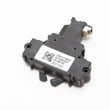
- GE dishwasher door latch lock WD21X10490 (door not latching, unit won’t start)
- Dishwasher electronic control board WD21X24901C (dead or erratic operation)
- Dishwasher drain hose WD24X10062 (drain restrictions or leaks at the hose)
- Dishwasher heating element WD05X30818 (poor drying, water not heating)
Why it matters
Most “GE dishwasher problems” are symptoms caused by a simple condition (power off, control lock, wrong detergent, blocked dispenser) rather than a major failure. Starting with the correct checks prevents unnecessary part replacement and gets the dishwasher back to normal cycle performance faster.
For model-specific installation items that can affect draining and service access (hose routing, removal clearance), follow the GDT625PSJ5SS installation guide.
Last updated: January 2026





