 Installation guide
 Owner’s manual
 Error Codes


What size is a Kenmore Model 11074202200 dryer?
The Kenmore dryer model 11074202200 is a standard full-size dryer; the installation information for this model calls out a minimum 5 1/2-inch clearance behind the dryer for the exhaust vent elbow, and the user guide references 27-inch and 29-inch wide dryer platforms used with dryer racks. For exact cabinet width, depth, and height, use the dimensions diagram in the 11074202200 installation guide.
What we can confirm for this model
From the installation and use-and-care information for Kenmore 11074202200:
- Plan for at least 5 1/2 in. (14 cm) behind the dryer for the vent and elbow.
- Closet or recessed installs need door ventilation openings (top and bottom) when a door is used.
- The manual references racks designed for 27 in. (69 cm) wide and 29 in. (73.7 cm) wide dryers.
Typical overall size you can expect (helpful planning range)
Most Kenmore 110-series, full-size dryers are close to these exterior dimensions:
- Width: 27 to 29 inches
- Depth: 27 to 30 inches (deeper when you include the exhaust connection)
- Height: 43 to 44 inches
Use the 11074202200 installation guide to match the exact diagram to your door style and venting setup.
Quick fit checklist before you buy a pedestal or build a closet
- Measure the space width at the narrowest point (trim, door jambs, etc.).
- Measure depth to the wall, then add room for the vent elbow (minimum clearance noted above).
- Confirm the door swing has room to open fully.
- If installing in a closet, confirm required ventilation openings in the door.
- Leave extra space for service access and to reduce noise transfer.
Clearance summary (at-a-glance)
| Item to plan for | What to allow | Where it matters |
|---|---|---|
| Rear clearance for vent elbow | 5 1/2 in. minimum | Any vented installation |
| Side/top clearance | Extra space recommended | Noise reduction, easier service |
| Closet door ventilation | Openings required | Closet installs with a door |
Why it matters
Dryer “size” is not just the cabinet. Venting clearance, door swing, and closet ventilation affect safety, drying performance, and whether the dryer fits without crushing the exhaust duct.
Last updated: February 2026
Where to find model number for Kenmore dryer?
On Kenmore dryer model 11074202200, the model and serial number label is located at the top inside the dryer door well. We use that label to match the correct parts, wiring diagrams, and troubleshooting steps in the 11074202200 owner's manual.
Common places to check
Look for a sticker or metal tag in these spots:
- Top inside the dryer door well (most common on this model)
- Inside the door opening on the cabinet frame
- Rear panel near the top (some configurations)
- Side panel edge near the door opening
- Behind the lower access panel (less common)
What to write down (and why)
Record the details exactly as shown so we can identify the right Kenmore parts and diagrams.
| Item on label | What it’s used for | Example format |
|---|---|---|
| Model number | Confirms the exact dryer design | 11074202200 |
| Serial number | Helps identify production range | Letters and numbers |
| Purchase date | Useful for service history | Month/day/year |
Why it matters
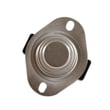
Kenmore dryers can look similar across multiple series, but internal components like the drive motor, door switch, and operating thermostat can vary by model. Using the correct model number prevents ordering the wrong part and saves time on repairs.
Quick tip if the label is hard to read
- Wipe the label gently with a damp cloth
- Take a clear photo with your phone and zoom in
- Copy the model number exactly, including all digits
Last updated: February 2026
What is the average lifespan of 11074202200?
The average lifespan of a Kenmore dryer like model 11074202200 is about 13 years. You can often extend that life with good airflow (clean lint system and venting), correct installation, and timely replacement of wear parts.
What affects lifespan the most
- Vent length and bends: long vent runs and too many elbows reduce performance and shorten dryer life.
- Lint buildup: restricted airflow overheats components and increases wear.
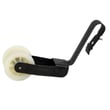
- Wear parts: belts, rollers, and idler pulleys wear gradually and can be replaced.
- Heat system condition (gas models): ignition and flame-sensing parts can fail over time.
- Load habits: frequent overloading strains the motor and drum support.
Maintenance that helps you reach (or beat) the average
Use these as a simple routine:
- Clean the lint screen every load; inspect the housing for buildup.
- Check venting for kinks, crushed flex duct, or heavy lint; keep the route as straight as possible.
- Use the vent length guidance in the installation guide to avoid runs longer than specified.
- Listen for squealing, thumping, or scraping; address it early to prevent secondary damage.
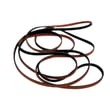
- If the drum stops turning or slips, replace the dryer drum belt 341241.
Common “life-extending” repairs for this model
| Symptom | Likely wear area | Example part on this model |
|---|---|---|
| Drum not turning, burning rubber smell | Belt drive | Dryer drum belt (341241) |
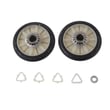
| Squeal or rumble | Drum support components | Dryer repair kit 4392065 |
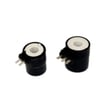
| Runs but no heat (gas) | Ignition or gas valve coils | Dryer gas valve coil kit 279834 |
Why it matters
A dryer that is forced to run hot or run long cycles (often from poor venting) wears out thermostats, sensors, and the motor faster. The installation instructions specifically note that exhaust systems longer than specified shorten dryer life and reduce performance.
Last updated: March 2026








