Owner’s manual
 Error Codes


Where is the model number on a Kenmore side by side refrigerator?
On Kenmore model 10651113711 side-by-side refrigerators, we typically find the model and serial number on the appliance identification label inside the fresh food (refrigerator) compartment, most often along a side wall near the top, or around the door frame. Use the 10651113711 owner's manual to confirm the exact label location for your unit.
Common label locations to check first
- Inside the refrigerator compartment on the left or right side wall
- On the ceiling of the fresh food compartment (near the light housing)
- On the door frame (hinge side) when you open the refrigerator door
- Behind the crisper drawers (on the back wall in some builds)
- On the exterior back panel near the bottom (less common)
How to find it fast (no tools)
- Open the refrigerator door and look along the inner walls and door frame.
- Pull out the top shelf if it blocks your view of the side wall label.
- Check near the crisper area if you do not see a label up high.
- Write down both the model number and serial number exactly as shown.
What the label usually includes
| Item on the label | What it’s used for |
|---|---|
| Model number (example: 10651113711) | Matching parts and diagrams |
| Serial number | Determining production details for service |
| Electrical ratings | Verifying power requirements |
Why it matters
We use the full model number to match the correct Kenmore refrigerator parts (like an ice maker assembly, water inlet valve, or door gasket) because similar-looking side-by-side units can use different components.
Last updated: February 2026
What temperature should a Kenmore freezer be set at?
For Kenmore model 10651113711, we set the freezer to 0°F (-18°C) for normal household use; that keeps ice cream firm and helps food stay safely frozen. Use the freezer control bars (1 = least cold, 5 = coldest) and wait 24 hours between changes (see the 10651113711 owner's manual).
Recommended settings and when to change them
Most households do best at 0°F. Adjust only if you see real symptoms after the refrigerator has had time to stabilize.
- Freezer too warm or too little ice: move the freezer control one setting colder
- Freezer too cold (items freezing solid, excessive frost): move the control one setting warmer
- Air vents blocked: clear packages away from vents before changing settings
- Doors opened often: reduce openings and confirm the door seals close tightly
- Warm food just added: allow several hours for temperatures to recover
Quick guide: temperature target vs. control behavior
| Goal | Target freezer temp | What to do on 10651113711 | What to expect |
|---|---|---|---|
| Everyday frozen food storage | 0°F (-18°C) | Keep a mid-range setting, then fine-tune | Stable temps, firm ice cream |
| Freezer running warm | 0°F but measuring higher | Move one bar colder, then wait 24 hours | More consistent ice production |
| Freezer running too cold | Below 0°F consistently | Move one bar warmer, then wait 24 hours | Less over-freezing and frost |
How we recommend checking freezer temperature
- Put a freezer thermometer between packages (not against a wall)
- Check after the doors have been closed for a while
- Recheck after 24 hours if you changed the control
- Confirm the door closes fully and the gasket is sealing
Why it matters
Keeping the freezer near 0°F protects food quality, supports steady ice maker performance, and prevents over-adjusting the controls (colder settings do not cool faster).
Last updated: February 2026
What is the cubic foot of my Kenmore refrigerator model 10651113711?
Your Kenmore side-by-side refrigerator model 10651113711 has a total capacity of about 21.9 cubic feet. For the exact capacity listing and how Kenmore defines usable space for your specific configuration, we recommend checking the 10651113711 owner's manual.
How to confirm the capacity on your exact unit
Capacity can vary slightly by configuration (shelves, bins, and ice maker setup). We use these quick checks:
- Look up the “Product specifications” or “Features” section in the 10651113711 owner's manual
- Check the model and serial tag inside the fresh food compartment (usually on a side wall)
- Compare your interior layout (ice bin, door bins, glass shelves) to the manual diagrams
- If you have an in-door ice system, confirm the ice storage style matches your unit
Capacity at a glance
| Measurement | What it means | Typical use |
|---|---|---|
| Total capacity (cu. ft.) | Combined refrigerator + freezer volume | Comparing overall size |
| Usable space | Space after shelves/bins/ice components | Real storage planning |
Why it matters
Knowing the cubic feet helps when you are planning kitchen fit, estimating food storage, or comparing replacement parts and accessories (like door bins and ice containers) that can affect usable space.
Last updated: February 2026
How wide is a Kenmore side by side refrigerator?
Most Kenmore side-by-side refrigerators are about 36 inches wide. For Kenmore model 10651113711, our 10651113711 owner's manual lists a normal minimum cabinet cut-out width of 36 inches (91.44 cm) for installation, which is the practical width you should plan around.
What “width” should you measure?
Use the measurement that matches what you are trying to fit:
- Cabinet opening width: the space between cabinets or walls (installation fit)
- Refrigerator case width: the box itself (can be slightly under 36 inches)
- Door swing clearance: extra space needed so doors open fully
- Service clearance: room behind the unit for airflow and water line (if equipped)
Model 10651113711 installation width and clearances
From the manual, plan for these common fit requirements:
| What you are planning for | Typical requirement for this model family | Why you need it |
|---|---|---|
| Minimum cabinet cut-out width | 36 in (91.44 cm) | Lets the refrigerator slide into place |
| Side and top ventilation space | 1/2 in (1.27 cm) | Helps cooling performance |
| Rear clearance | 2 in (5.08 cm) | Allows airflow and room for connections |
| Extra width near a fixed wall (for crisper removal) | 54 in (137.16 cm) recommended | Prevents drawers from hitting the wall |
How we recommend measuring (quick steps)
- Measure the cabinet opening at the narrowest point.
- Measure the refrigerator case (not the handles).
- Add clearance for door swing if the unit sits next to a wall.
- Confirm you have rear space for ventilation and the water line.
- Compare your numbers to the fit guidance in the 10651113711 owner's manual.
Why it matters
A side-by-side refrigerator that is “36 inches wide” often needs more than 36 inches of real-world space once you account for ventilation, door swing, and drawer clearance. Planning around the cabinet cut-out width helps prevent delivery day surprises.
Last updated: February 2026
How to read Kenmore model numbers?
Kenmore model numbers tell us who built the appliance and which design family it belongs to. For Kenmore refrigerator model 10651113711, the 106 prefix identifies the manufacturer family, and the remaining digits narrow down the exact configuration so we can match the correct parts and service information in the 10651113711 owner's manual.
How Kenmore model numbers are structured
Most Kenmore model numbers follow a predictable pattern:
- Prefix (often the first 3 digits): identifies the manufacturer family (for example, 106 is a common Kenmore refrigerator prefix)
- Core model digits: identify the base platform or series
- Suffix digits/characters: identify feature and color variations
- Full model number matters: even one digit off can point to a different door style, dispenser setup, or control system
Where to find the model number on a side-by-side refrigerator
On Kenmore side-by-side refrigerators, we typically see the model/serial tag in one of these places:
- Inside the fresh food compartment on a side wall
- On the ceiling of the fresh food compartment near the light
- Behind the crisper drawers on an interior wall
- Along the door frame when the refrigerator door is open
- Occasionally on the back exterior panel
Why the “106” prefix matters (and what it affects)
For parts lookup and troubleshooting, the prefix helps us quickly narrow down the correct diagrams and components.
| What you’re doing | Why the full model number helps |
|---|---|
| Ordering parts (ice maker, valve, fan) | Prevents mismatched connectors, mounts, and revisions |
| Using wiring/diagnostics info | Ensures the right control and UI instructions |
| Checking filter and water system specs | Matches the correct filtration and water supply requirements |
Why it matters
Using the complete model number (not just the first few digits) is the fastest way to avoid ordering the wrong Kenmore refrigerator parts, especially for water dispenser, ice maker, and electronic control variations.
Last updated: February 2026
What are the most common problems with Kenmore refrigerators?
The most common problems we see on Kenmore refrigerators like model 10651113711 are cooling issues, water and ice dispenser problems, leaks, and unusual noises. Many of these trace back to airflow restrictions, incorrect control settings, or a failing component in the defrost, fan, or water supply system; use the 10651113711 owner's manual to match symptoms to the right checks.
Most common symptoms and what usually causes them
- Not cooling or weak cooling: blocked air vents, dirty condenser area, evaporator fan not running, or a defrost problem causing ice buildup
- Refrigerator runs too much: normal after installation (allow 24 hours to cool), warm room conditions, frequent door openings, or airflow restrictions
- Water dispenser slow or not dispensing: warm or new water supply (allow 24 hours), low water pressure, or a valve issue
- Ice maker not making ice: water supply problem, ice maker failure, or frozen/blocked fill path
- Leaks or puddles: clogged defrost drain, loose water line, or door not sealing well
Quick checks we recommend first (fast, no parts)
- Confirm power and outlet: the manual recommends a grounded 3-prong outlet and no extension cord.
- Give it time after install: allow 24 hours for full cooling after a new installation.
- Check control settings: adjust slightly colder or warmer based on conditions, then recheck in 24 hours.
- Clear blocked vents: remove items directly in front of interior air vents.
- Check door sealing: make sure both doors close fully and seal all the way around.
Common part-related fixes for this model
If the quick checks do not resolve the issue, these parts are common suspects on side-by-side refrigerators:
| Problem area | What it affects | Example model-matched part |
|---|---|---|
| Water supply | No water, no ice, slow fill | Refrigerator water inlet valve WPW10179146 |
| Freezer airflow | Warm freezer, warm fresh food, noise | Refrigerator evaporator fan motor WP2315549 |
| Defrost system | Frost buildup, poor cooling | Refrigerator heater WP2323198 |
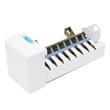
| Ice production | No ice or irregular ice | Refrigerator ice maker assembly WPW10300022 |
Why it matters
Most “big” refrigerator complaints (warm temps, sweating, ice maker failures) start as small airflow, sealing, or water-supply problems. Catching them early helps protect food temperatures and prevents extra frost buildup and longer run times.
Related DIY help
- Use Kenmore 106 model refrigerator error codes if your display shows an error or the user interface acts unusual.
- For dispenser and ice chute issues, follow how to disassemble a Kenmore refrigerator dispenser.
Last updated: February 2026
What's the average lifespan of a Kenmore refrigerator?
Most Kenmore refrigerators average 10 to 15 years of service life. For a Kenmore side-by-side like model 10651113711, reaching the high end of that range is common when basic maintenance is done regularly and cooling and sealing problems are fixed early (see the 10651113711 owner's manual).
Typical lifespan ranges (what to expect)
In real-world use, lifespan usually falls into these buckets:
- 10 to 15 years: typical for most Kenmore refrigerators
- 15 to 20 years: common when coils are kept clean and door seals stay tight
- 20+ years: possible with consistent care and timely repairs
| Lifespan range | What it usually means | What to do next |
|---|---|---|
| 0 to 9 years | Early wear or a single major failure | Check airflow, seals, and water system issues first |
| 10 to 15 years | Normal end-of-life window begins | Plan for a few repairs; keep up maintenance |
| 16+ years | Unit is in “extended life” territory | Prioritize sealing, defrost performance, and fan noise |
Maintenance that extends refrigerator life
These steps reduce compressor run time, prevent frost buildup, and help temperatures stay stable:
- Clean condenser coils and keep the grille area clear for airflow
- Keep door gaskets clean and sealing evenly; fix gaps quickly
- Set stable temperatures (avoid frequent changes and overstuffing vents)
- Keep the ice maker and dispenser area free of clogs and leaks
- Replace worn cooling-air parts promptly if you notice noise or warm spots
Why it matters
A refrigerator usually fails early from heat stress (dirty coils, poor airflow), air leaks (bad door seal), or cooling circulation problems (evaporator fan or defrost issues). Preventing those problems helps the sealed system and compressor last longer.
If you are troubleshooting cooling or noise on this model, common wear items include the refrigerator evaporator fan motor WP2315549 and the gasket, door (beige) 2159075.
Last updated: February 2026
What causes a side-by-side refrigerator to stop cooling?
A Kenmore side-by-side refrigerator model 10651113711 usually stops cooling because power is interrupted, temperature controls are set incorrectly, airflow is blocked, or the sealed system is not moving heat properly. Start with the simple checks first; many “no cool” problems are caused by settings, doors, or airflow.
Quick checks we recommend first
- Confirm the refrigerator is plugged into a grounded 3-prong outlet (no extension cord).
- Check the outlet has power (plug in a lamp) and reset the breaker if needed.
- Verify both refrigerator and freezer controls are still at the factory “mid-setting” (about three bars).
- Make sure air vents inside both compartments are not blocked by food packages.
- Confirm doors are fully closing and the door gaskets are sealing all the way around.
- If it is a new install or was unplugged, allow a full 24 hours to cool before judging temperatures.
For control locations, recommended settings, and the built-in troubleshooting steps, use the 10651113711 owner's manual.
Common causes (easiest to hardest)
| What you notice | Likely cause | What to do next |
|---|---|---|
| No lights, no fans, no sound | No power to unit/outlet | Check outlet power, breaker/fuse, cord connection |
| Runs but both sections are warm | Controls not set correctly or unit still cooling down | Return to mid-setting; wait 24 hours between adjustments |
| Freezer cold but fresh food warm | Blocked vents or weak airflow | Clear vents; listen for evaporator fan operation |
| Clicking/buzzing near back, poor ice/water fill | Water valve cycling (normal) or water system issue | If cooling is also poor, focus on airflow/sealed system first |
| Frost buildup, weak airflow, warming over time | Defrost system problem | Inspect for heavy frost; defrost components may need service |
Parts that are often involved when cooling fails
These are common cooling-related parts for model 10651113711 when diagnosis points beyond settings and airflow:
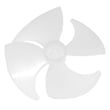
- Evaporator fan motor: moves cold air through the compartments (refrigerator evaporator fan motor WP2315549).
- Defrost heater: helps clear frost off the evaporator so air can flow (refrigerator heater WP2323198).
- Compressor: pumps refrigerant through the sealed system (professional-level repair) (compressor W10233960).
Why it matters
A “no cool” condition can spoil food quickly and can also overwork the compressor. Checking vents, controls, and power first prevents unnecessary part replacement and helps you pinpoint whether the issue is airflow, defrost, or the sealed system.
Last updated: February 2026