Owner’s manual
 Error Codes


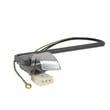
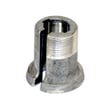
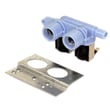
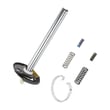
How to identify a Kenmore washer model?
To identify your Kenmore washer model, we look for the complete model number and serial number on the model and serial number plate on the washer cabinet. For Kenmore model 11026842691, recording both numbers helps you match the correct parts, manual, and repair instructions.
On Kenmore top-load washers like 11026842691, the model and serial number are printed on a dedicated plate (label). Check these common locations first:
- Under the lid, around the tub opening
- On the top rim of the washer cabinet
- Along the inside edge of the lid
- On the back of the washer cabinet
- Near the bottom front edge of the cabinet
If the label is hard to read, wipe it gently with a damp cloth and recheck under bright light.
We recommend copying the information exactly as shown on the plate.
- Model number (use the full number, not a shortened version)
- Serial number (helps confirm production details)
- Date of purchase (useful for records and service history)
| Item | Example | What it’s used for |
|---|---|---|
| Model number | 11026842691 | Correct part fit and diagrams |
| Serial number | (varies) | Version and production run |
| Purchase date | (varies) | Ownership records |
Kenmore model numbers can look similar, but internal parts like the lid switch, drain pump, and drive components can differ by model and series. Using the exact model number prevents ordering the wrong replacement part.
For model-specific identification details and record-keeping tips, use the 11026842691 owner’s manual.
Last updated: February 2026
Is it worth repairing a Kenmore washing machine?
Yes, repairing a Kenmore washer is worth it when the problem is a common wear item and the machine is otherwise in good shape. For Kenmore model 11026842691, issues like no drain, no spin, or weak agitation are often fixed with targeted parts and basic service steps from the 11026842691 owner's manual.
Repairs usually make sense when the washer still fills, drains, and runs cycles, and the failure is isolated to a single component.
Common “worth it” repairs on this style of top-load washer:
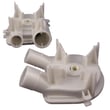
- Won’t drain or leaves water behind: check the washer drain pump WP3363394
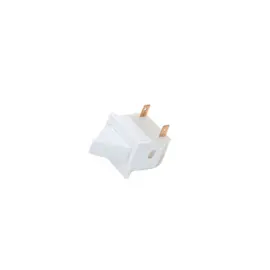
- Won’t spin or stops when the lid closes: check the washer lid switch WP3949238
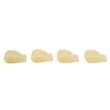
- Agitator moves poorly or “ratchets”: check the agitator dog 80040
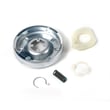
- Loud spin, burning smell, or poor basket engagement: inspect clutch and drive components
- Slow fill or no fill: inspect inlet screens and the inlet valve
If multiple major drive or tub components are failing at once, costs and labor add up quickly.
Red flags that push toward replacement:
- Water leaking from the tub area plus bearing noise
- Repeated out-of-balance shaking even after leveling and load changes
- Multiple symptoms at once (drain + spin + agitation)
- Heavy rust, cabinet damage, or chronic electrical issues
Use this as a practical way to decide what to tackle first.
| Symptom | Likely area | Typical DIY difficulty | Typical “worth it” rating |
|---|---|---|---|
| Won’t drain | Drain pump, hoses | Medium | High |
| Won’t spin | Lid switch, clutch | Medium | High |
| Weak agitation | Agitator dogs/cam | Easy | High |
| Very loud in spin | Gear case, bearings | Hard | Low to medium |
A washer like the 11026842691 is designed for years of dependable operation, and many failures are normal wear items. Starting with the simplest checks (leveling, loading, lid switch, pump) prevents replacing expensive assemblies unnecessarily.
Last updated: February 2026
What is the average lifespan of a Kenmore washer?
A Kenmore washer typically lasts 10 to 14 years with normal household use and basic maintenance. For your Kenmore model 11026842691, following the care and operating guidance in the 11026842691 owner's manual helps you get the most years out of key parts like the drive system, lid switch, and drain pump.
- Load size and frequency (overloading shortens clutch, coupling, and gear case life)
- Installation and leveling (out-of-balance vibration stresses suspension and tub components)
- Water quality and detergent use (excess suds and residue increase wear)
- Drain performance (slow draining strains the pump)
- Lid switch operation (a failing switch can stop cycles and cause repeated restarts)
| Part | What you may notice when it wears | Example part for this model |
|---|---|---|
| Lid switch | Won’t spin or stops mid-cycle | Washer lid switch WP3949238 |
| Drain pump | Won’t drain, humming, water left in tub | Washer drain pump WP3363394 |
| Motor coupling | Motor runs but tub won’t agitate/spin | Coupling 285753A |
| Agitator dogs | Agitator “slips” or won’t move clothes well | Agitator dog 80040 |
- Keep loads balanced and avoid packing the basket tight
- Use the correct amount of HE detergent (too much causes oversudsing and residue)
- Check pockets and wash small items in a mesh bag to reduce pump clogs
- If the washer bangs or walks, re-level the feet and confirm the cabinet is stable
- Address slow draining quickly so the pump is not forced to run longer than normal
Most washer “end of life” problems are really a few high-wear components failing (coupling, clutch, lid switch, pump). Replacing the right part early often restores reliable washing and helps you avoid secondary damage from vibration, leaks, or repeated cycle interruptions.
Last updated: February 2026