Owner’s manual
 View engine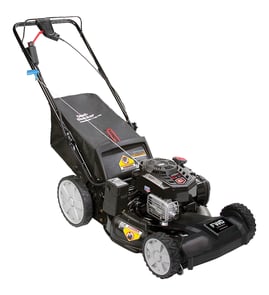




How many hours will a Husqvarna riding mower last?
A Husqvarna riding mower typically lasts 1,000 to 1,500 hours with normal residential mowing and on-time maintenance. This Sears PartsDirect model, 917374461, is a Husqvarna walk-behind mower; use the same hour range as a planning benchmark, and follow the maintenance schedule in the 917374461 owner's manual.
Typical lifespan (hours) for Husqvarna riding mowers
- 1,000 to 1,500 hours: normal residential use with routine maintenance
- 1,500 to 2,000 hours: excellent maintenance, clean operating conditions, careful storage
- Under 1,000 hours: heavy loads, dusty conditions, missed oil changes, stale fuel
What most affects engine hours
- Oil and filter service: the biggest driver of long engine life
- Air filter care: clogged filters increase wear and fuel use
- Fuel habits: fresh fuel and proper off-season storage prevent carburetor issues
- Cooling and cleanliness: grass buildup around the engine raises operating temps
- Blade condition: a dull or bent blade increases load and vibration
Hours-to-years planning guide
| Mowing pattern | Typical hours per year | 1,000 hours equals | 1,500 hours equals |
|---|---|---|---|
| Light (small yard) | 25 to 50 | 20 to 40 years | 30 to 60 years |
| Moderate (weekly season) | 50 to 100 | 10 to 20 years | 15 to 30 years |
| Heavy (large property) | 100 to 200 | 5 to 10 years | 7.5 to 15 years |
Why it matters
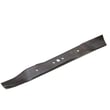
Engine hours help you budget for tune-ups and wear items before performance drops. On your Husqvarna 917374461 walk-behind mower, keeping the cutting system in good shape reduces strain on the engine; if the blade is damaged or won’t hold an edge, replace it with the correct lawn mower blade 532406712.
Last updated: February 2026
What are the different 917374461 part numbers?
For Husqvarna model 917374461, “part numbers” means the individual replacement numbers for each component on the mower (blade, drive belt, cable, hardware, etc.). The correct part number depends on the exact part you’re replacing; the fastest way is to match the part name to the parts list and diagrams in the owner's manual.
Common 917374461 part numbers customers look for
These are examples shown for model 917374461 in the parts list and diagrams:
- Blade: 406712 (part ID lawn mower blade 532406712)
- Drive belt (V-belt): 406580 (part ID belt.rgd.vs 532406580)
- Drive cable: 406258 (part ID lawn mower cable 532406258)
- Return spring: 406558 (part ID return spring 532406558)
- Blade adapter / pulley: 189179 (part ID lawn mower blade adapter 532421176)
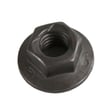
- Flangelock nut: 409148 (part ID lawn & garden equipment nut 532409149)
How we recommend finding the right part number (every time)
Use this quick process so you don’t order a look-alike part that will not fit.
- Identify the system: cutting (blade), drive (belt, cable, pawls), handle controls, wheels
- Use the diagrams to confirm the key number and description for your exact location
- Match the description to the part listing (example: “Blade, 21 in.” vs. a different blade style)
- If replacing hardware, match thread size and type (lock nut vs. standard nut)
- If multiple versions exist, match by mower configuration (self-propelled vs. push)
Quick reference: part number vs. part ID
| What it is | Example | What you use it for |
|---|---|---|
| Manufacturer part number | 406712 | Cross-referencing and confirming the correct component |
| Sears PartsDirect part ID | 532406712 | Ordering the exact part page for that component |
Why it matters
Walk-behind mowers often use similar-looking blades, belts, and fasteners across many models. Using the correct 917374461 part number prevents poor cutting, drive problems, vibration, and premature wear.
Last updated: February 2026
What oil filter does a Husqvarna 917374461 take?
The Husqvarna walk-behind mower model 917374461 uses a Briggs & Stratton 875 Series engine that is designed for regular oil changes, but it typically does not use a spin-on oil filter. Our owner's manual lists the correct oil type (SAE 30 above 32°F; SAE 5W-30 below 32°F) and oil capacity (20 oz), which are the key maintenance specs for this mower.
How to confirm whether your engine uses an oil filter
Most walk-behind mower engines in this class are splash-lubricated and filterless. Use these checks to confirm what you have:
- Look for a spin-on filter canister on the side of the engine block (it would look like a small automotive-style filter).
- Check for oil filter threads or a filter mount near the crankcase.
- Verify the engine model/type/code stamped on the engine shroud (then match it to the maintenance section in the manual).
- If you only see an oil fill/dipstick tube and a drain plug, the engine is typically filterless.
- Follow the oil change procedure and intervals in the owner's manual.
Oil specs for Husqvarna 917374461 (from the manual)
| Item | Specification |
|---|---|
| Oil type (API SG-SL) | SAE 30 (above 32°F); SAE 5W-30 (below 32°F) |
| Oil capacity | 20 ounces |
| Fuel capacity/type | 1.6 quarts (unleaded regular) |
Why it matters
Using the correct oil viscosity and filling to the proper capacity protects the crankshaft, piston, and bearings from heat and wear. On filterless mower engines, clean oil and on-time oil changes do the job an oil filter would normally help with.
Last updated: February 2026
What size yard is the 917374461 good for?
The Husqvarna walk-behind mower model 917374461 is a 21-inch, power-propelled rotary mower; it’s a strong fit for small to medium yards, and it’s commonly used on lots up to about 1/2 acre depending on terrain, obstacles, and how often you mow. For operating guidance and setup details, use the owner's manual.
How yard size really depends on your conditions
Acreage alone does not tell the whole story. These factors determine whether 917374461 feels “right-sized”:
- Terrain: hills and uneven ground reduce effective coverage per hour
- Obstacles: trees, beds, and fences add trimming time
- Grass type and height: thick or overgrown grass slows mowing
- Mowing frequency: weekly mowing is faster than catching up after 2 to 3 weeks
- Bagging vs. mulching: bagging usually takes longer due to stops and heavier load
Quick sizing guide (practical expectations)
Here is a realistic way to match a 21-inch self-propelled mower to yard size.
| Yard size | Typical fit for a 21-inch self-propelled mower | What you’ll notice |
|---|---|---|
| Up to 1/4 acre | Excellent | Fast, easy handling |
| 1/4 to 1/2 acre | Very good | Normal mow times with weekly mowing |
| 1/2 to 3/4 acre | Possible | Longer sessions; more fatigue on hot days |
| Over 3/4 acre | Not ideal | Time-consuming; a larger machine is usually preferred |
Why the earlier “1 to 2 acres” answer doesn’t apply
Model 917374461 is a walk-behind rotary mower (21-inch deck), not a riding mower. Riding mower acreage guidance (often 1 to 2 acres) does not translate to a walk-behind platform.
Tips to get the best performance on larger lots
If you’re near the upper end of what a walk-behind can handle, these steps help:
- Keep the blade sharp; a dull blade slows cutting and leaves ragged grass
- Mow more often so you remove less grass each pass
- Avoid mowing wet grass to reduce clumping and drag
- Clean grass buildup under the deck to maintain airflow
- Use the right blade and hardware when replacing parts (for example, the lawn mower blade 532406712)
Helpful DIY resource
For safer blade service and faster removal, follow lawn mower blade removal tool.
Last updated: February 2026