Owner’s manual
 Error Codes
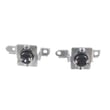


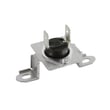
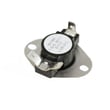
How do I know if my Kenmore dryer thermal fuse is blown?
If your Kenmore Elite dryer model 79681542210 won’t start at all, or it runs but won’t heat, a blown thermal fuse is a top suspect. The sure way to know is a continuity test with a multimeter; a good fuse shows continuity, a blown fuse shows no continuity.
- Dryer is completely dead (no motor run) even though power is present
- Dryer tumbles but produces no heat (common on electric dryers)
- Cycle stops early and the dryer will not restart until it cools
- Burning smell or unusually hot cabinet (often paired with restricted airflow)
- Lint screen area seems clogged or airflow at the outside vent is weak
- Unplug the dryer (or switch off the breaker) before opening any panels.
- Access the fuse location using the disassembly steps in the owner's manual.
- Remove at least one wire from the fuse terminal so you do not backfeed the circuit.
- Set a multimeter to continuity (or the lowest ohms setting).
- Touch a probe to each terminal:
- Continuity/beep or near 0 ohms = fuse is good
- No beep/infinite resistance = fuse is blown and must be replaced
A thermal fuse usually blows because the dryer overheated from poor airflow. Before running the dryer again:
- Clean the lint screen and the lint screen housing
- Check the vent hose for kinks, crushing, or heavy lint buildup
- Make sure the outside vent flap opens fully
- Vacuum lint from the blower area if accessible
| What you’re seeing | What it often points to | Example part on this model |
|---|---|---|
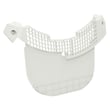
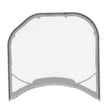
| Lint screen won’t seat, lint bypassing screen | Damaged lint screen or housing | Lint filter - dryer part by lg ADQ56656401 |
| Weak airflow even with a clean vent | Lint buildup at blower housing | (cleaning and inspection) |
| Overheating or heat cycling | Temperature sensing/control issue | Dryer thermistor AGM30045804 or dryer high-limit thermostat 6931EL3001F |
A blown thermal fuse is a safety cutoff; replacing it without correcting venting and lint buildup often leads to repeat failures, longer dry times, and overheating that can damage the heating system.
Last updated: February 2026
What are the most common issues with 79681542210?
The most common issues we see with the Kenmore Elite dryer model 79681542210 are long dry times (airflow restriction), no heat or overheating (heating circuit or thermostats), loud squealing or thumping (belt, idler, rollers), and the drum not turning (belt or motor drive problem). Use the 79681542210 owner's manual for model-specific checks and safety steps.
- Long dry times or clothes still damp: lint buildup, crushed/long vent run, clogged lint screen housing
- No heat: failed heating element, open high-limit thermostat, airflow causing safety cutout
- Overheating or burning smell: restricted exhaust, cycling/high-limit thermostat issues
- Squealing, grinding, thumping: worn belt, idler pulley, drum support rollers, rear drum seal wear
- Drum will not tumble: broken belt, seized idler/roller, motor issue
- Clean the lint screen every load; inspect the lint screen housing for packed lint.
- Confirm strong airflow at the outside vent hood while the dryer runs.
- Check the exhaust duct for kinks, crushing, or heavy lint buildup.
- If noise is present, stop using the dryer until you inspect the belt and rotating supports.
| Symptom | Common part to inspect | Example part for this model |
|---|---|---|
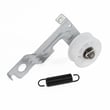
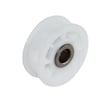
| Drum not turning, squeal | Belt and idler pulley | Dryer drum belt 4400EL2001F, dryer idler pulley 4560EL3001A |
| No heat | Heating element, high-limit thermostat | Lg dryer heating element 5301EL1001H, dryer high-limit thermostat 6931EL3001F |
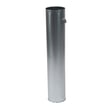
| Long dry times | Lint filter, exhaust duct | Lint filter - dryer part by lg ADQ56656401, dryer exhaust duct 5209EL1006A |
| Thumping/rumble | Drum support rollers, rear seal | Dryer drum support roller 4581EL2002L, dryer drum seal, rear 4036EL3001A |
Airflow problems make this dryer run hotter and longer, which increases wear on the heating system and drum support parts. Fixing venting and lint buildup first often prevents repeat failures.
Last updated: March 2026
What size is a Kenmore Model 79681542210 dryer?
Most Kenmore Elite dryer models like 79681542210 are full-size 27-inch class dryers; the cabinet is typically about 27 inches wide, with overall depth and height varying by door style and leveling legs. For the exact dimensions for your unit, use the specifications section in the owner's manual.
When you are measuring a laundry space for a Kenmore Elite 79681542210, these are the common real-world ranges for full-size front-load dryers:
- Width: about 27 inches
- Height: about 38 to 39 inches (adjustable with leveling legs)
- Depth (cabinet): about 30 to 32 inches
- Depth (overall with door/controls): often 32 to 34+ inches
- Recommended clearance: at least 1 inch on sides/top, more behind for venting
Use a tape measure and capture both “cabinet” and “overall” dimensions so you do not get surprised by the door or control panel.
- Measure width at the widest point of the cabinet
- Measure height from floor to top; check with legs adjusted level
- Measure depth from the back panel to the front edge of the cabinet
- Then measure overall depth including the door (closed) and any protruding controls
- Add space for the vent elbow and duct behind the dryer
| Measurement | What to include | Typical range |
|---|---|---|
| Width | Cabinet side-to-side | ~27 in |
| Height | Floor to top (level) | ~38 to 39 in |
| Depth (overall) | Door/controls included | ~32 to 34+ in |
Dryer “size” affects more than fit. Correct measurements help prevent crushed venting (long dry times), door clearance issues, and installation headaches when you slide the dryer into a tight alcove.
Last updated: February 2026