Error Codes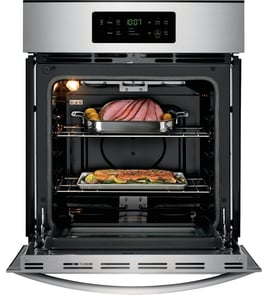



What size breaker and wire for 20 amp wall oven?
For a 20-amp Hotpoint electric wall oven circuit (including model RK746), we use a 20-amp, 2-pole breaker with 12 AWG copper conductors on a dedicated 240-volt circuit. This matches common residential wiring practice for a 20A branch circuit.
- Use a 20A double-pole breaker (240V).
- Use 12/2 with ground cable (or individual THHN/THWN 12 AWG conductors in conduit, per local code).
- Keep the oven on a dedicated circuit (no other loads).
- Use a junction box and strain relief sized for the cable and oven whip.
- Verify the oven’s nameplate amperage and wiring diagram before finalizing.
| Circuit rating | Breaker type | Typical copper wire size | Typical use |
|---|---|---|---|
| 20 amps | 2-pole | 12 AWG | Smaller wall ovens or lower-wattage units |
| 30 amps | 2-pole | 10 AWG | Many standard wall ovens |
| 40 amps | 2-pole | 8 AWG | Higher-wattage or double ovens |
Even if you are planning for “20 amps,” many wall ovens are rated higher than 20A once you check the nameplate (watts or amps). If the oven’s rating exceeds 20A, the correct fix is to size the breaker and wire to the manufacturer’s electrical requirements, not to force it onto a 20A circuit.
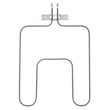
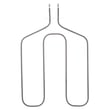
If the oven is wired correctly but won’t heat or heats unevenly, a failed heating element is common. For this Hotpoint model family, check the condition of the range bake element WB44X200 and range broil element WB44X173 (burn spots, blisters, or an open circuit).
A basic continuity test can confirm whether an element is open: how to use a multimeter to test electrical parts video.
Last updated: January 2026
Are electric wall ovens 110 or 220?
Most Hotpoint electric wall ovens like model RK746 are designed to run on a 240-volt (often called 220-volt) circuit, not a standard 120-volt (110-volt) outlet. A dedicated double-pole breaker and properly sized wiring are typically required for safe operation.
Most U.S. electric wall ovens use a 240V supply for the heating elements and may also use 120V for controls and lights (derived from the same 240V circuit).
Common electrical setup details:
- Voltage: typically 240V (sometimes labeled 208V in some buildings)
- Breaker: commonly 30A to 50A, depending on oven size and wattage
- Circuit type: dedicated, double-pole breaker
- Connection: hardwired junction box or a range-style cord (varies by installation)
| Item | Typical voltage | Typical use | What it means |
|---|---|---|---|
| Standard outlet | 120V (110V) | small appliances | not enough power for an electric oven’s heating load |
| Electric wall oven | 240V (220V) | baking and broiling | supports high-wattage bake and broil elements |
- Check the electrical panel for a double-pole breaker labeled “oven” or “wall oven.”
- Look behind the oven location for a junction box or a heavy-duty receptacle.
- Verify wire gauge and breaker size match the oven’s requirements.
- If you are unsure, have an electrician confirm the circuit before connecting power.
Using a 120V outlet for a 240V electric wall oven can prevent the oven from heating correctly and can create unsafe wiring conditions. Correct voltage and breaker sizing protect the control board, wiring, and high-heat components like the bake and broil elements.
If you are troubleshooting heating performance after confirming proper power, a failed heating element is a common cause; for example, the range bake element WB44X200 or range broil element WB44X173 may need testing with a meter.
Last updated: January 2026
Can a 30 inch wall oven fit in a 30 inch cabinet?
A “30-inch” wall oven rarely fits a true 30-inch cabinet opening. For a Hotpoint electric wall oven like model RK746, you typically need a larger cabinet cutout than the advertised oven width so the chassis, trim, and required clearances fit safely.
Most 30-inch wall ovens are designed for a nominal 30-inch cutout, not a 30-inch cabinet box. The actual required opening is commonly a little wider and taller than 30 inches, and the cabinet must also provide proper depth and support.
- Measure the existing cutout width, height, and depth, not just the cabinet size
- Allow space for trim overlap and airflow clearance
- Confirm the cabinet can support the oven’s weight
- Verify you have the correct 240V electrical supply and junction box location
- Plan for a small amount of leveling and shimming during installation
Because we do not have an installation guide for RK746, use these typical wall-oven ranges as a planning baseline and then measure your actual opening.
| Item to measure | Typical for “30-inch” wall ovens | Why it matters |
|---|---|---|
| Cutout width | About 28 1/2 to 30 inches | Prevents binding and allows safe clearance |
| Cutout height | Varies by single vs double oven | Ensures the oven slides in fully |
| Cutout depth | Often 23 to 24 inches minimum | Protects wiring and allows proper seating |
- Turn off power to the oven circuit before checking wiring areas
- Measure the cutout in three places (top, middle, bottom) for width and height
- Check for square by measuring diagonals (uneven openings cause install problems)
- Confirm there is solid mounting material for the oven’s mounting screws
- Make sure the door can open without hitting adjacent cabinets or handles
A too-tight cutout can pinch wiring, prevent proper ventilation, and make the oven sit out of level. A correctly sized opening helps the oven heat evenly, mount securely, and avoid cabinet damage.
If you are also troubleshooting heating performance after installation, checking the condition of the heating elements can help; common replacements include the bake unit WB44X200 and range broil element WB44X173.
Last updated: January 2026